
Lieferung heute & morgen

Qualitätsgarantie

Willkommens-Angebote freischalten: KOSTENLOSE Lieferung | Bis zu 80 % RABATT | Kostenlose 30-Tage-JoyPlus-Testphase
App herunterladen
As a Joybuy Product Recommendation Officer, I see customers struggle daily with choosing the right mobile charging solution. The power bank market is saturated, and marketing promises often lead to disappointment. An unsuitable power bank isn't just a waste of money; it can fail you when you need it most, right when your laptop or phone battery is dead. This guide will help you cut through the noise and make an informed decision.
Before we dive into the key specifications, let's look at the typical pitfalls that lead to a bad purchase. Knowing them helps you make a smarter choice.
To make the right choice, focus on three objective criteria. These define the performance and reliability of an external battery for your laptop and phone.
Capacity, measured in milliamp-hours (mAh), indicates how much energy a power bank can store. However, the crucial figure is the rated capacity. This value, often found in the fine print, describes the actual amount of energy delivered to your device.
Power, measured in watts (W), determines the charging speed. The details are crucial here:
The number and type of ports determine its flexibility. A good model has at least one USB-C port that serves as both an input and an output, as well as additional USB-A ports. For Apple device users, a wireless power bank for iPhone with a magnetic mount is particularly practical, as it works without cables and keeps the device securely attached.
Instead of making a one-size-fits-all recommendation, we have matched products to specific use cases.
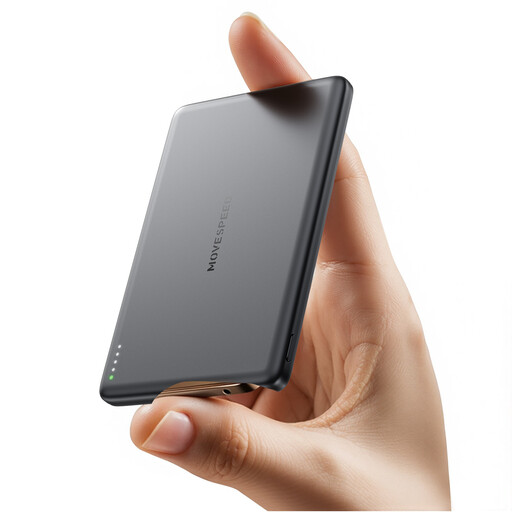
Why This Fits Their Persona: Ideal for the daily commute or a short trip. This power bank is extremely thin and light, attaches magnetically to an iPhone, and provides power without cable clutter. Perfect for getting your smartphone through the day.
The rated capacity of 3000mAh (at 5V/2A) is clearly stated, and the charging power for wireless (7.5W) and wired charging (up to 20W) is precisely specified. No vague promises.
Ultra-slim design (only 7.6 mm) and strong magnetic attachment for iPhone models with MagSafe. CE and RoHS certified for proven safety.
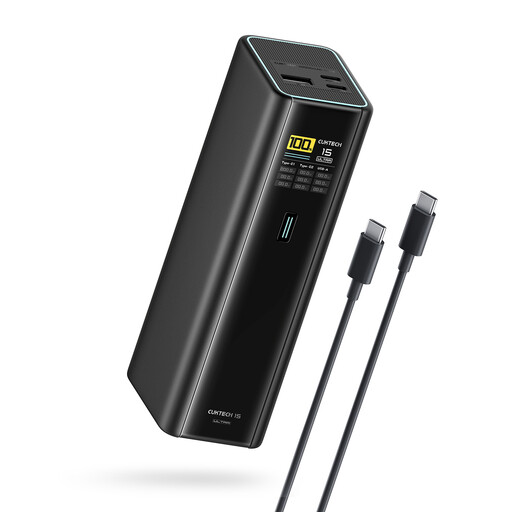
Why This Fits Their Persona: For anyone who depends on maximum performance on the go. This power bank charges demanding laptops like the MacBook Pro 16" at full speed while simultaneously powering a phone and tablet.
Instead of a vague "fast-charging" label, the PD 3.1 standard is clearly specified with a maximum output of 140W. This is a verifiable specification for high-performance charging.
The 140W output is suitable for the most demanding laptops. Three ports allow for simultaneous charging of multiple devices, making it a mobile powerhouse.
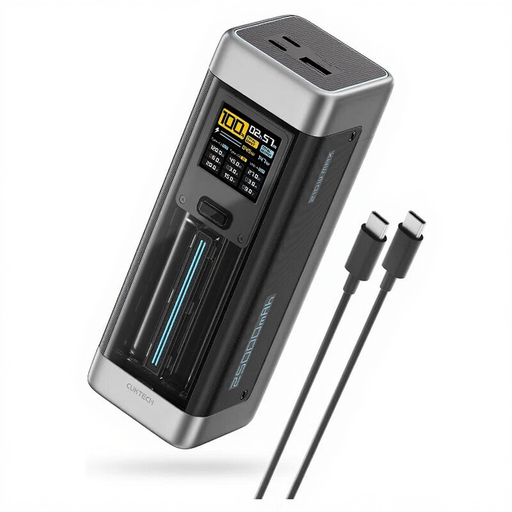
Why This Fits Their Persona: The perfect balance of maximum capacity and high performance for business trips or long weekends. With 25,000 mAh, it offers enough energy for several days and reliably charges a company laptop thanks to its 140W output.
This model combines a high, clearly stated capacity of 25,000 mAh with the verifiable PD 3.1 charging protocol. It delivers proven high performance and avoids the trap of inflated capacity claims.
Maximum capacity that is typically still approved for air travel (under 100 Wh). The combination of 140W power and three ports offers ultimate flexibility.
We have compiled a complete, up-to-date list of products that fully meet these strict selection criteria and rigorous safety standards.
That depends on your device's battery capacity and the power bank's rated capacity. As a rule of thumb: A 20000mAh power bank with a typical rated capacity of around 13,000 mAh can charge a smartphone with a 4,500 mAh battery about 2.5 to 3 times. It can charge a laptop with a 60 Wh battery to about 50–60%, depending on charging efficiency.
Power Delivery (PD) is a fast-charging protocol that works via USB-C. PD 3.1 is an extension of this standard that supports charging power up to 240 watts. A power bank with PD 3.1 can charge even the most power-hungry laptops, which previously required a proprietary power adapter, at maximum speed. This is a crucial feature for a high-performance power bank for laptops and phones.
Yes, as long as they are specifically designed for Apple's MagSafe technology. These power banks contain precisely aligned magnets that ensure optimal positioning of the charging coils. This provides efficient and safe power transfer without interfering with the phone's functions. It's recommended to use either no case or a MagSafe-compatible case to achieve the best attachment and charging performance.