
Lieferung heute & morgen

Qualitätsgarantie

Willkommens-Angebote freischalten: KOSTENLOSE Lieferung | Bis zu 80 % RABATT | Kostenlose 30-Tage-JoyPlus-Testphase
App herunterladen
A low battery on your smartphone or laptop while you're on the go is a common challenge. Whether you're commuting, travelling, or in the middle of a long day of studying, our reliance on mobile devices makes a dependable power source essential. A power bank, also known as a portable charger, offers a convenient solution.
This guide is designed to help you understand the technical specifications and find a model that perfectly suits your individual needs. We'll introduce a selection of top devices and explain the key criteria to inform your purchasing decision.
The selection of power banks is vast, and the technical specs can seem overwhelming at first glance. The following three criteria are the most crucial for the majority of users.
A power bank's capacity is measured in milliampere-hours (mAh) and determines how much energy the portable charger can store.
The charging speed, measured in watts (W), indicates how quickly a power bank can charge your devices. Modern gadgets benefit significantly from a fast-charging power bank.
The design and built-in features can significantly enhance the user experience.
Based on the criteria mentioned, we have curated a selection of models that cover a variety of use cases.
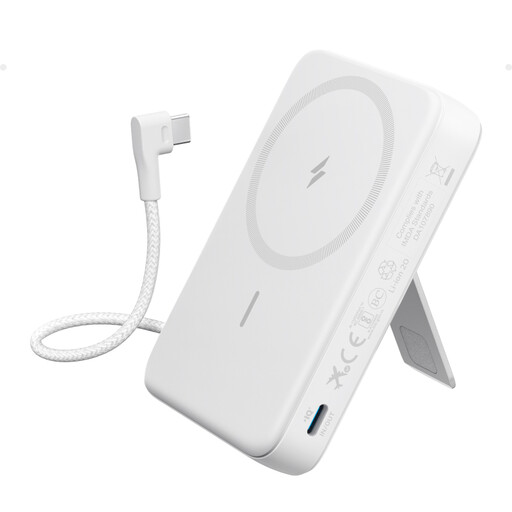
Why it stands out: This model combines several practical features in a compact design. It offers both wired fast charging at 30W via the built-in USB-C cable and wireless charging at 7.5W for compatible devices. A fold-out stand allows you to prop up your smartphone at a comfortable viewing angle while it charges.
Advantages:
Who is it for? Users of newer iPhones or other magnetically chargeable smartphones who are looking for a versatile and convenient everyday charging solution that doesn't require a separate cable.
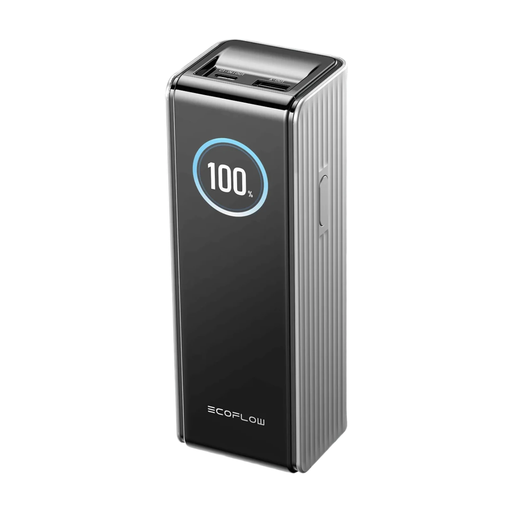
Why it stands out: With a 25,000 mAh capacity and an impressive total output of 170W, this power bank is engineered for demanding tasks. Its two USB-C ports can each deliver up to 140W, enough to charge powerful laptops like a MacBook Pro at full speed. A TFT display provides precise information on the charging status.
Advantages:
Who is it for? Professionals, creatives, and travellers who need a powerful and reliable power source for multiple devices, including laptops and other high-performance electronics.
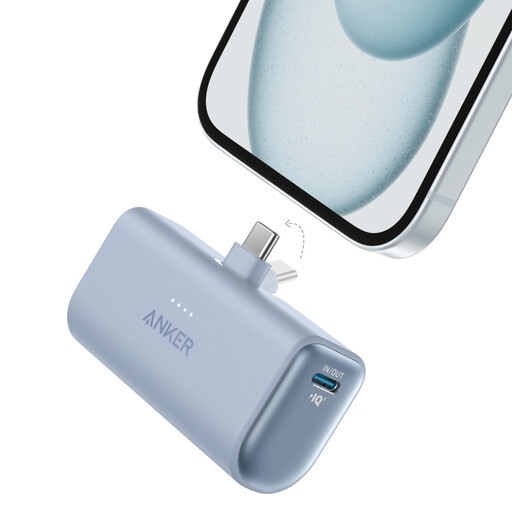
Why it stands out: This small power bank is distinguished by its extremely compact design and integrated, fold-out USB-C connector. It can be plugged directly into a smartphone or other USB-C device, no cable required. Despite its small size, it delivers a charging speed of 22.5W.
Advantages:
Who is it for? Users looking for an ultra-light and hassle-free emergency power bank for their USB-C smartphone, who place the highest value on portability.
If you're specifically looking for other models to give you even more flexibility on the go, you can find a wider selection of power banks with a built-in cable in our category.
Due to energy loss during voltage conversion, the actual usable capacity of a power bank is around 60-70% of its rated value. Therefore, a 10000mAh power bank can fully charge a modern smartphone with a ~4,500 mAh battery about 1.5 times.
Power Delivery (PD) is a fast-charging protocol that works via the USB-C port. It allows for dynamic adjustment of the charging output and can deliver significantly higher wattage than standard USB protocols. This is crucial for efficiently charging devices like laptops and tablets.
Yes, power banks must be transported in your carry-on luggage. Most airlines limit the capacity to 100 watt-hours (Wh) per battery. A capacity of 25,000 mAh at a typical voltage of 3.7V corresponds to approximately 92.5 Wh, which is generally within the permitted limits. However, it is always recommended to check the specific regulations of your airline before you travel.