
Lieferung heute & morgen

Qualitätsgarantie

Willkommens-Angebote freischalten: KOSTENLOSE Lieferung | Bis zu 80 % RABATT | Kostenlose 30-Tage-JoyPlus-Testphase
App herunterladen
A dead battery is never convenient, whether you're on your way to work, travelling, or in the middle of an important call. A power bank, also known as an external battery for your phone, is the obvious solution. But the market is crowded and full of technical promises that don't always deliver. Misleading capacity ratings and incompatible fast-charging technologies often lead to frustration and a bad purchase.
As your Joybuy Product Recommendation Officer, I'm here to help you understand the features that truly matter. This guide will show you what to look for to find a power bank that works reliably and perfectly suits your needs—without falling for exaggerated marketing slogans.
Before we dive into the technical details, let's highlight the most common issues that can lead to a purchase you'll regret.
To avoid these pitfalls, focus on the following three objective criteria.
Capacity determines how much energy the external battery can store. The right choice depends directly on your usage habits:
The charging power, measured in watts (W), is crucial for speed. A power bank with USB-C is the standard today. Make sure the USB-C port functions as both an input (to recharge the power bank) and an output (to charge your devices) and supports the Power Delivery (PD) protocol.
Beyond the core specs, practical aspects play a role. A power bank with a built-in cable saves you from carrying separate cables. For Apple users, a magnetic power bank (compatible with MagSafe) is especially convenient, as it attaches wirelessly to the back of the iPhone.
Here are a few models tailored to specific use cases that meet the criteria mentioned above.
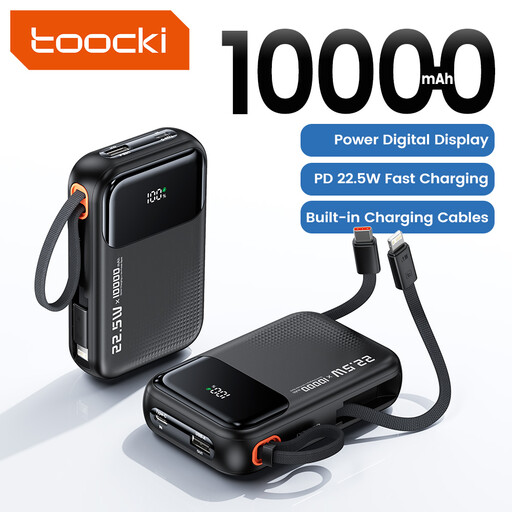
Why it's a good fit: This model is a slim and lightweight companion for daily use. With 10,000 mAh, it provides enough energy for the day without weighing down your bag. Ideal for users who need a reliable way to top up their smartphone on the go.
The 22.5W output with PD3.0 and QC4+ support ensures that compatible devices actually charge quickly. The digital display accurately shows the remaining charge, preventing unpleasant surprises.
USB-C In/Out: A modern port for charging the power bank and your devices. Slim Design: Highly portable and easy to store.
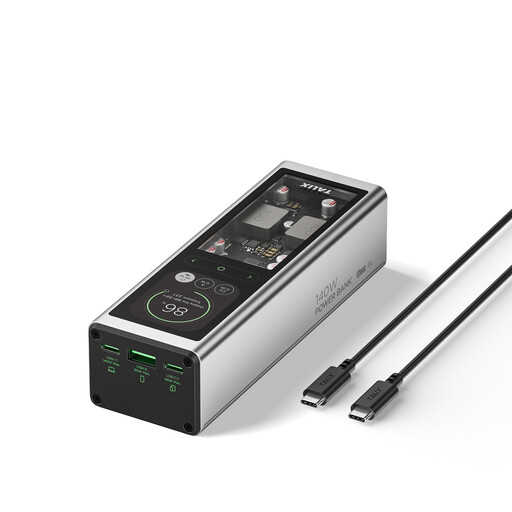
Why it's a good fit: For anyone who needs maximum power for multiple devices, including a laptop. Its high capacity and massive power output make it a mobile power hub for business trips or tech-heavy days.
With 140W PD 3.1 power output, this model avoids the pitfall of insufficient power for laptops. It is proven to deliver enough energy to charge even a 16-inch MacBook Pro at high speed. The three ports enable true multi-device charging.
High Power Output: Charges laptops and other high-performance devices. Three Ports: 2x USB-C and 1x USB-A for maximum compatibility. Smart Display: Shows charging power and battery level in real-time.
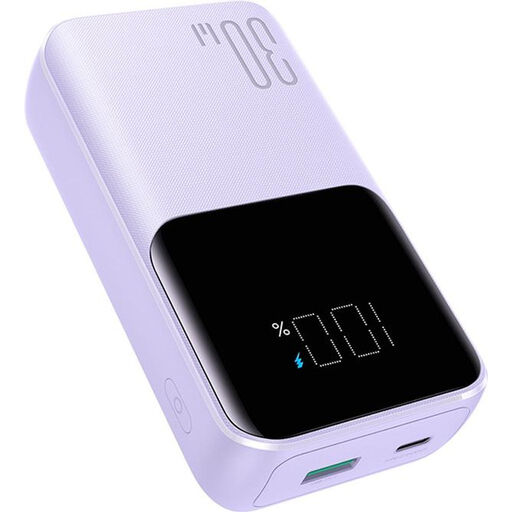
Why it's a good fit: For anyone who doesn't want to carry extra cables. With integrated USB-C and Lightning cables, this power bank is ready to go for most modern Apple and Android smartphones.
The problem of forgotten or incompatible cables is eliminated by the built-in design. The 30W fast-charging capability via the cables and ports also ensures a high charging speed that goes beyond basic, standard power banks.
Two Built-in Cables: USB-C and Lightning always with you. Four Outputs: Charges up to four devices simultaneously. Compact Design: Remains portable despite its high functionality.
We have compiled a complete, up-to-date list of products that fully meet these strict selection criteria and comply with UK & EU safety regulations.
It depends on your phone's battery capacity and the power bank's efficiency. As a rule of thumb: a 10000mAh power bank has a real usable capacity of around 6,000 to 7,000 mAh. You can charge an iPhone 15 Pro (approx. 3,274 mAh) about 1.8 times, or a Samsung Galaxy S23 (3,900 mAh) about 1.5 times.
Yes, but only in your carry-on luggage. International aviation safety authorities limit lithium-ion batteries to 100 watt-hours (Wh) per unit. Almost all common power banks (up to approx. 27,000 mAh) fall below this limit. The exact Wh rating is printed on the power bank's casing. Placing them in checked luggage is strictly prohibited.
No, as long as you use a high-quality power bank with the correct Power Delivery (PD) protocol. Modern devices communicate with the power bank via the PD protocol to negotiate the correct voltage and current. This ensures a safe and efficient charging process that will not damage the laptop's battery. Only use models whose power output (in watts) is specified for your laptop model.