Teams using continuous mains-powered lighting
If lights and other equipment are running at the same time, the power output and energy capacity need to cover the entire shoot.


The key is to work out which devices will be running at the same time and for how long. For mains-powered lights and several chargers, a power station with suitable 230 V outlets may be a good option, while compatible device batteries can save you carrying extra kit on smaller shoots. Compare continuous and peak output separately from energy capacity in Wh, and factor in connections, power losses, transport and the location. If you only need power occasionally, hiring could be an alternative.
If lights and other equipment are running at the same time, the power output and energy capacity need to cover the entire shoot.
If you charge camera and computer equipment on the go, weigh up a compact power station against compatible device batteries and the extra kit you’d need to carry.
If you only need power or lighting for occasional productions, it may be worth comparing a hire option with how often you expect to use it.
A good fit if: You need to run light or charger power supplies alongside a laptop and other equipment, and the combined load is within the station’s limits.
The trade-off: One power source can supply several devices, but it adds weight. The full rated capacity in Wh is not available as AC energy.
A good fit if: You mainly need to power chargers, USB-C devices or a smaller light, and their combined load is within the model’s limits.
The trade-off: Carrying less doesn’t automatically mean you’ll have enough power or energy reserve for high-powered lights.
A good fit if: Your existing equipment specifically supports compatible interchangeable batteries and you don’t need a shared 230 V connection.
The trade-off: Battery format, discharge current and available light output depend on the device.
A good fit if: You only need power occasionally or want to test your requirements before buying.
The trade-off: The hire period, availability, collection or delivery and any accessories you need all have to work for your specific shoot.
First, check whether device batteries or hiring could meet your needs. If not, compare suitable power stations based on the combined load and how long you need to run your equipment. The percentages below relate to people choosing a portable power supply for photography and video production without access to mains electricity.
| What to consider | What to check | Who should pay particular attention? |
|---|---|---|
| Combined power output and connections | Add up the continuous load of all the devices you’ll use at the same time, and check peak loads and the 230 V and USB connections you need. Aputure gives the LS 300x a maximum power consumption of 350 W. | If I’m running a light, laptop and chargers at the same time, I want to know whether the power output and connections will be enough. Around 36% of people focus above all on powering several devices at once. |
| Energy for the entire shoot | Note the power consumption in W and operating hours for each device. The resulting energy requirement in Wh is not the same as the usable AC energy, as conversion losses may occur. | On a long shoot day, I want to avoid running out of power before the last setup. Around 29% of people prioritise having enough power for the full duration of use. |
| Transport, setup location and noise | Check the weight, space required and operating and environmental conditions for the complete device. Noise figures only apply under the stated load conditions. | If I’m often changing locations or recording sound on set, the power station needs to suit the transport and setup location. Around 21% of people pay particular attention to portability and conditions on location. |
| Buying, hiring or using device batteries | Check that your existing batteries and chargers are compatible. If you hire, make sure the hire period, handover and any accessories you need fit your schedule. | If I only have a few shoots, I want to weigh up buying, compatible batteries and hiring. Around 14% of people prioritise this flexible approach to sourcing equipment. |
Wh describes stored energy, while W indicates the power output a device can deliver. A high capacity alone doesn’t tell you whether you can run several devices at the same time.
First check the combined power output in W, then work out the energy you’ll need in Wh for the planned shoot duration.
The number and type of connections can vary by model region. DJI lists two AC outlets for the 220–240 V version of the Power 1000 V2; according to DJI, other regional versions have four.
Before buying, check the full model and regional version, as well as the connections actually included.
A protection rating for one component doesn’t prove that the connections and attached devices have the same protection. EcoFlow’s IP65 rating for the DELTA 3 series applies to the battery pack.
Follow the operating conditions for the complete device and set up suitable protection when shooting outdoors.
The available light output may depend on the battery configuration. Any hired equipment also needs to be available for your shoot and suit the kit you need.
For batteries, check compatibility and discharge current. For a hire, confirm the device, accessories and hire period with the provider.
The C300 is one example of a compact AC power station for lower loads. Other models from the brand should be assessed separately.
According to EcoFlow, the DELTA 3 Plus is a higher-powered, expandable option for setups with several devices.
According to DJI, the Power 1000 V2 combines high continuous AC output with USB-C outlets and product-specific connections.
This Joybuy selection includes portable power stations for photography and video shoots on location. Which one suits your equipment depends on its combined power consumption, the connections you need and how long you’ll be using it.
 No image available
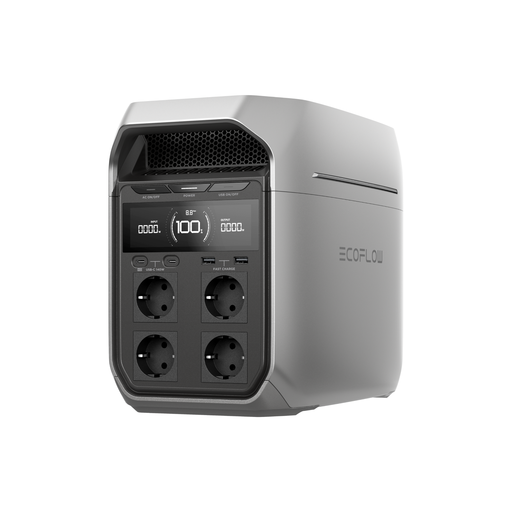
Could be suitable for several devices, provided their combined load is within the power station’s limits.
1,024 Wh and 1,800 W according to the product name. The manufacturer’s guidance rules out use in dusty, wet or rainy environments; the IP65 rating applies to the battery pack.
 No image available
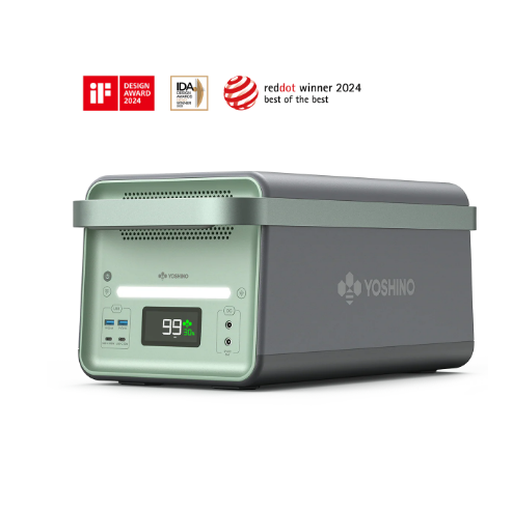
Worth considering for longer shoots if its energy capacity and connections suit your equipment.
The product name lists 3,600 Wh, 2,200 W and six AC, DC and USB-C outputs. Its stated net weight is 23.6 kg, which you’ll need to factor in alongside the rest of your equipment.
 No image available
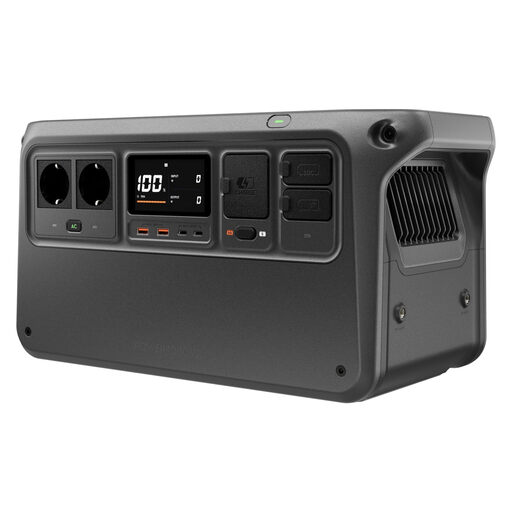
Could be suitable for several devices if its continuous output and connections meet your setup’s requirements.
1,024 Wh and 2,600 W of continuous output. According to DJI, the 220–240 V version has two AC outlets, and the model weighs around 14.2 kg.
For devices that run continuously, multiply their power consumption in W by the number of operating hours, then add up the Wh required. Include chargers and lights used intermittently, based on how long you’ll actually use them. Usable AC energy may be lower than the rated capacity because of conversion losses.
It depends on the light model and which batteries are suitable. For the Aputure LS 300x, the manufacturer specifies 12–16.8 V and recommends a continuous discharge of at least 15 A. According to Aputure, using just one battery limits the light to half its maximum output. Check compatibility with the specific light you have.
Check the protection ratings and operating conditions for the complete device, including its connections, and make sure you follow them on location. EcoFlow’s IP65 rating for the DELTA 3 series applies to the battery pack; it doesn’t mean exposed connections can be used in the rain. For workplace use, the German Social Accident Insurance (DGUV) requires electrical equipment to be suitable for the environmental conditions at the location.
Agree the hire period and collection and return arrangements with the provider, and check which cables and spare batteries you’ll need. Make sure the specific equipment available is suitable for the devices you want to power on location.
For equipment used in a workplace, the risk assessment and the requirements of the German Ordinance on Industrial Safety and Health are relevant. Safe use must be assessed in light of the location and the specific equipment; this does not create a blanket requirement for private individuals.