
Lieferung heute & morgen

Qualitätsgarantie

Willkommens-Angebote freischalten: KOSTENLOSE Lieferung | Bis zu 80 % RABATT | Kostenlose 30-Tage-JoyPlus-Testphase
App herunterladen
A portable power supply promises freedom—whether for camping, in an RV, or as a backup during a power outage at home. But the market for power stations is crowded, and marketing promises often lead to disappointment. Many devices don't deliver on their claims and turn out to be costly bad investments.
As your Joybuy Product Recommendation Officer, I'm here to help you separate the wheat from the chaff. In this guide, I'll show you the most common pitfalls to avoid and which technical features you absolutely must look for to find a reliable and durable power station.
Before you decide on a model, you should be aware of the typical marketing tricks and product flaws that often only become apparent after the purchase.
To make an informed decision, focus on the following three core features. These determine the performance, longevity, and practicality of your portable power supply.
These two values are fundamental but are often confused.
The most important component of a power station is its battery. Here, LiFePO4 (Lithium Iron Phosphate) technology has proven to be superior. Compared to older NCM batteries, LiFePO4 batteries offer decisive advantages:
A good power station is flexible. Look for a variety of charging and connection options.
Here are some models that are suitable for different user groups based on objective technical features.
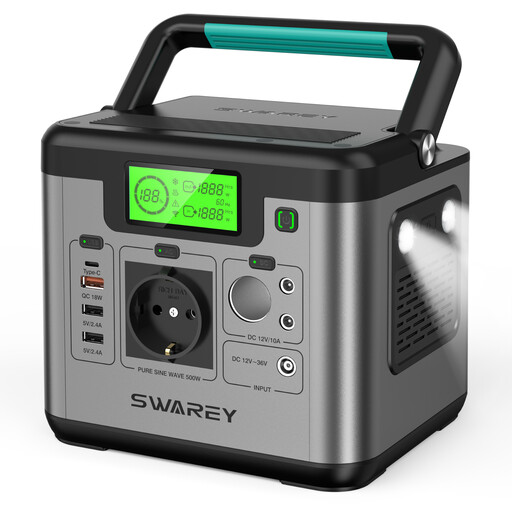
Why This Fits Their Persona: Ideal for users seeking a reliable and compact solution for short trips, festivals, or the garden. The 518 Wh capacity is enough to power laptops, smartphones, and lights over a weekend without breaking the bank.
This model offers a clear balance between capacity (518 Wh) and power (500 W). It features a pure sine wave inverter and a 65W USB-C PD port, which is not a given in this price range.
Excellent Portability: Weighing only about 4 kg and featuring a foldable handle, it's easy to transport. Versatile Ports: Offers 8 outputs, including AC, USB-C PD, and DC.
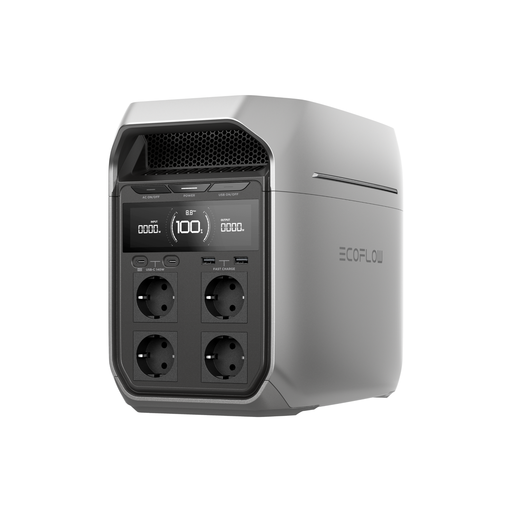
Why This Fits Their Persona: Perfect for users who value longevity, fast charging times, and expandability. Ideal for longer camping trips, use in an RV, or as a flexible emergency power supply at home.
Consistently uses a long-lasting LiFePO4 battery with 4,000 cycles. It bypasses the slow-charging trap with an extremely fast AC charge from 0 to 100% in just 56 minutes (according to the manufacturer).
Extremely Fast Charging: One of the fastest charging times on the market. Expandable Capacity: Can be expanded up to 5 kWh with additional batteries. UPS Function: Switchover time of under 10 ms for an uninterruptible power supply.
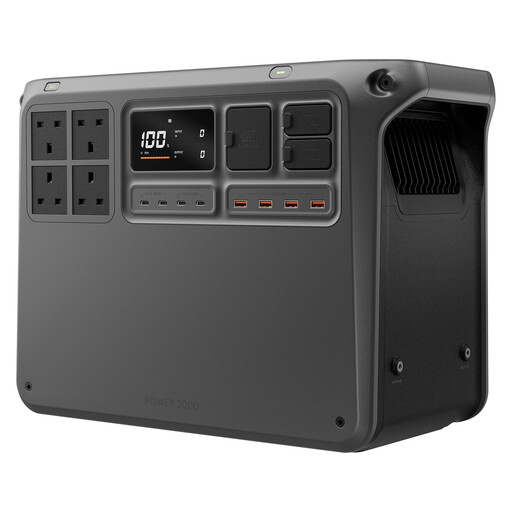
Why This Fits Their Persona: Designed for maximum power and capacity. Ideal as an emergency power supply for the home to run essential appliances during an outage, or for tradespeople who need to use powerful tools on the go.
This model delivers what it promises: a massive 2048 Wh capacity and a high continuous output of 3000 W. It uses a safe LiFePO4 battery and provides a transparent power display via the app.
Massive Power Output: According to DJI, it can power 99% of all household appliances, including kettles or hammer drills. Ultra-Quiet Operation: At only 29 dB during operation, it won't be a disturbance, even at night.
We have compiled a complete, up-to-date list of products that fully meet these strict selection criteria and UK safety regulations.
1. How long does a LiFePO4 battery last in a power station? A high-quality LiFePO4 battery is designed for a long lifespan. Most manufacturers specify a cycle life of 3,000 to 4,000 charge cycles before the remaining capacity drops to about 80% of its original value. With a full discharge and recharge once a week, this corresponds to a theoretical lifespan of over 10 years.
2. Can I charge any power station with a solar panel? No, not every panel is compatible with every station. You must match the technical specifications. Pay attention to the maximum input voltage (in volts, V) and the maximum charging power (in watts, W) that your power station can handle. These values must not be exceeded by the solar panel's specifications. Many power stations function most efficiently as a solar generator with the panels recommended by the manufacturer.
3. What does "pure sine wave" mean and why is it important? A pure sine wave describes the quality of the alternating current (AC) that a power station produces. It exactly matches the quality of power from a household outlet. This is crucial for the safe operation of sensitive electronic devices such as laptops, TVs, drones, or medical equipment. Cheaper devices with a "modified sine wave" can damage this sensitive electronics over time.