Gardeners with several electrical devices
If you want to use lights, chargers or several compatible devices, match the connections, simultaneous output and usable energy to your actual needs. The ADAC covers these criteria in its power station test.


When choosing a power station for your garden or allotment, start by checking that it has the right connections, enough continuous output for the devices you want to run at the same time, and sufficient usable energy. For motorised equipment, you’ll also need to account for the starting power required. If you’ll be carrying it regularly, consider the weight alongside the distance. Solar charging can be a useful way to top up the power station if the unit, panel and location are a good match; otherwise, plan to charge it before you set off.
If you want to use lights, chargers or several compatible devices, match the connections, simultaneous output and usable energy to your actual needs. The ADAC covers these criteria in its power station test.
If you regularly carry the power station between home and your garden, consider the energy reserve, weight and carrying comfort together. The ADAC lists both weight and usable energy in its model tests.
If there’s no socket at your plot, check whether the panel and power station are suitable for the location. The Verbraucherzentrale lists allotments as a possible location for off-grid solar power.
Start with the devices you’ll actually take with you, then work out whether transport or recharging is the bigger constraint. The ADAC lists gardening as a use for portable power stations, while the Verbraucherzentrale identifies allotments as a possible application for off-grid solar power.
| What to consider | What to check before buying | Who needs to consider this? |
|---|---|---|
| Connections, output and runtime | Check that the outputs and continuous power available for simultaneous use match your devices. For motors, also check the starting power required and the watt-hours you’ll need. | If I want to take several devices with me, I need to know whether the connections, load and runtime all work together. Around 31% of consumers put device compatibility first when choosing. |
| Safe positioning | Check the guidance for the exact model on moisture, dust, temperature and allowing sufficient ventilation. | If the power station could be exposed to the elements in the garden, I want to know exactly where it can safely be placed. Around 25% of consumers prioritise safe positioning outdoors. |
| Regular transport | Weigh up the unit’s weight and handle design against the usable energy you need; remember to include the panel and cables when considering what you’ll have to carry. | If I need to carry the power station to my plot regularly, the distance and energy reserve both matter. Around 25% of consumers prioritise portability. |
| Recharging without a socket | Check that the panel connections are compatible and that the solar input is within the permitted limits; consider shade and the panel’s position at your location. | If there’s no socket at my plot, I want to know whether a panel can be positioned suitably there. Around 19% of consumers prioritise recharging without a mains connection. |
The energy available from the AC output may differ from the rated capacity. In the ADAC’s 2025 test, the Anker SOLIX C800 Plus delivered 630 Wh of measured usable AC energy, compared with its rated capacity of 768 Wh.
Plan your runtime based on the usable energy available from the output you’ll actually use. If only rated figures are available, don’t assume that the full capacity will be accessible.
The amount of solar power you can generate depends on factors including the panel’s position and orientation. A maximum PV input rating tells you the power station’s technical limit, not how much energy it will generate at your particular garden location.
Check the permitted connection values for the exact model and consider where you could position the panel. If you can’t rely on solar charging, charge the power station at home before your day in the garden.
You’ll need to carry the panel and, if required, compatible cables in addition to the power station, adding to the load.
An IP rating relates to the specific type of protection stated for that particular device. It doesn’t mean that the entire power station can be exposed to rain or moisture.
Check the guidance for the exact model on positioning, water, temperature and ventilation, and choose a suitably protected spot.
In 2025, the ADAC identified a risk of overvoltage with the Ective BlackBox 10 and Jackery Explorer 1000 v2 when car charging and solar charging were connected at the same time. This finding applies to those models and that charging set-up; it is not a blanket verdict on every product from those brands.
Check the guidance and test results for the exact model name, and don’t use a combination of charging methods that the manufacturer hasn’t approved.
The following information relates to specific model ranges and test results; it is not a general assessment of every product from each brand. ADAC measurements are from its 2025 test, while manufacturer figures are labelled as such.
The AC180P is a useful comparison if you need more energy in a still-portable unit. These figures apply to this model.
The DELTA 3 Plus is aimed at buyers who need several connections and higher output. PV inputs vary between models in the range.
The C800 Plus combines several 230 V outputs with handles and included lights. Other SOLIX models should be assessed separately.
The Explorer 300 Plus is a compact model for shorter carrying distances and smaller compatible devices.
This selection includes portable power stations for temporarily powering devices where there’s no socket. Check each model to see whether its connections, carrying features and solar charging options meet your needs.
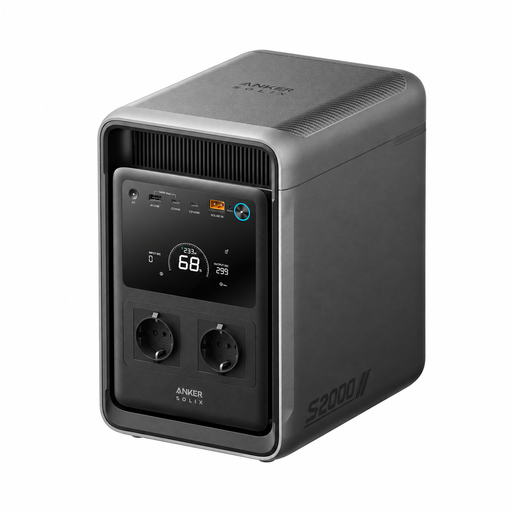 No product image available
The stated capacity and continuous output can help you compare the unit with several devices you plan to use; also check their connections and actual runtime.
2,000 Wh; 1,500 W continuous output; solar input up to 400 W. At 16.2 kg, its weight is worth considering if you’ll be carrying it regularly. The description states that it has no 12 V DC connection.
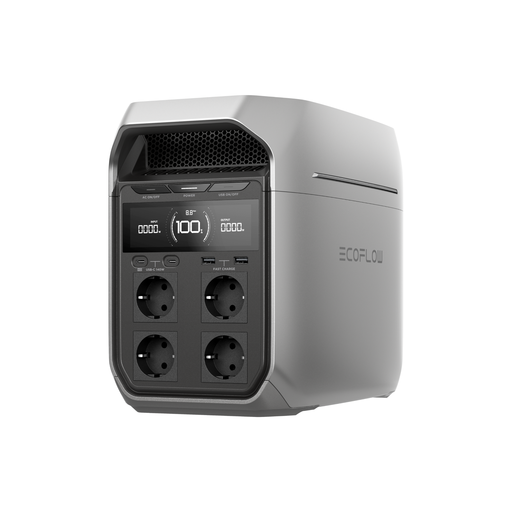 No product image available
The stated capacity and output can help you check whether the unit is suitable for several devices you plan to use; pay attention to the connection requirements of each one.
1,024 Wh; 1,800 W output. The safety instructions prohibit use in wet or rainy conditions. EcoFlow states a maximum PV input of 1,000 W for the DELTA 3 Plus.
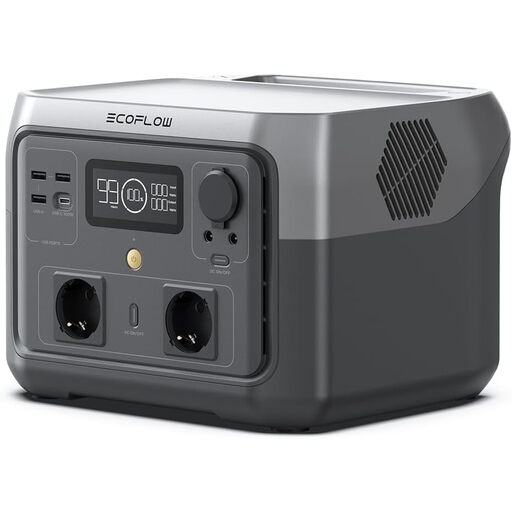 No product image available
The stated capacity can help you compare the unit with your needs for lighting and compatible small devices; runtime depends on the devices connected.
512 Wh; the AC output is rated at 500 W. The description also mentions an integrated handle. Check that the connection types suit your devices.
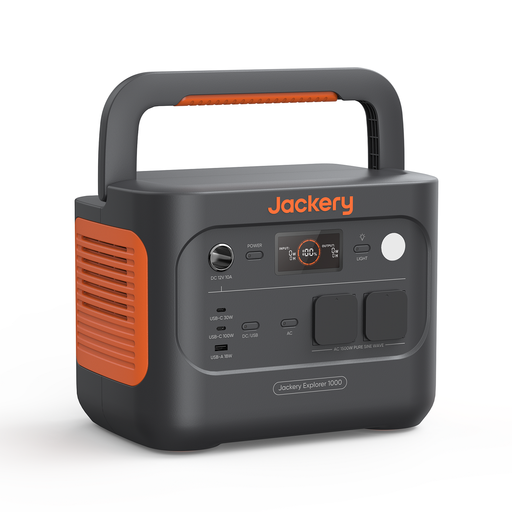 No product image available
The capacity, AC output and USB-C output figures can help you check whether the unit is suitable for several compatible devices. Also consider whether its weight is manageable for your route.
1,070 Wh; 1,500 W rated AC output; USB-C output up to 100 W. The safety instructions call for a dry, well-ventilated location and warn against exposure to rain and water.
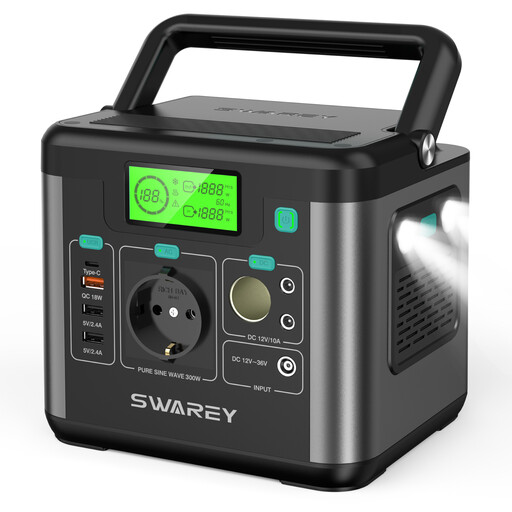 No product image available
The stated capacity and continuous output provide useful comparison figures for smaller compatible devices; check their power consumption and the runtime you need.
222 Wh; 300 W continuous AC output; USB-C output up to 65 W. Solar charging is described with an optional 150 W panel.
Note the power consumption in watts, how long you want to run each device and which devices will be in use at the same time. Compare the resulting energy requirement in watt-hours with the usable energy available from the output you’ll use. The ADAC lists rated capacity and measured usable AC energy separately for the devices it tests. If power consumption varies or is unknown, it isn’t possible to calculate the runtime precisely in advance.
No, not just because it’s advertised for outdoor use. Check the guidance for the exact model on moisture, temperature and ventilation. Information about other models or a solar panel does not mean the power station is generally approved for use in the rain.
Check whether a solar panel and suitable cables are included or need to be bought separately for the way you want to use the power station. If you’ll be carrying it regularly, also consider whether you’ll need to take the panel and cables with you on the way to the garden.
The official MaStR online guidance does not require non-fixed, portable power stations to be registered. This does not apply to fixed installations or systems connected to the electricity grid. The Bundesnetzagentur describes a true off-grid system as one with no direct or indirect connection to the general supply grid.
No. The Bundesnetzagentur describes a plug-in solar device as a system with an inverter and plug for connection to a final circuit. Charging a portable power station is an off-grid power supply instead, so requirements for grid-connected plug-in solar devices should not be applied without checking that they are relevant.