
Lieferung heute & morgen

Qualitätsgarantie

Willkommens-Angebote freischalten: KOSTENLOSE Lieferung | Bis zu 80 % RABATT | Kostenlose 30-Tage-JoyPlus-Testphase
App herunterladen
By Joybuy Product Recommendation Officer, July 22, 2026
Whether you're on a camping weekend, need a backup for a power outage at home, or are working in a location without an outlet, a reliable and mobile power source is becoming increasingly essential. A power station offers a flexible and clean solution. However, the market is vast, and the technical specifications can be overwhelming.
This guide will help you understand how portable power stations work and find the right solution for your needs. We focus on objective criteria like capacity, output, and battery technology to provide you with an informed basis for your decision.
Selecting the right model depends on your individual use case. Three technical parameters are of central importance.
These two values are crucial but are often confused.
Modern power stations increasingly rely on Lithium Iron Phosphate (LiFePO4 battery) technology. Compared to older Lithium-Ion (NCM) batteries, they offer significant advantages:
A good portable power station should offer flexible charging options: via a standard wall outlet (AC), in the car (12V), or sustainably through a solar panel, which turns it into a solar generator.
For emergency power supply at home, a power station with UPS (Uninterruptible Power Supply) functionality is key. During a power outage, it switches to battery power within milliseconds, allowing sensitive devices like computers or medical equipment to continue running without interruption.
Based on the criteria mentioned, we have compiled a few models for different applications.
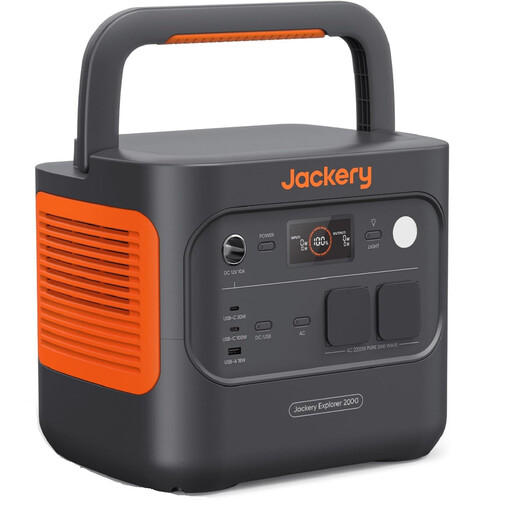
Why it stands out: The Jackery E2000 v2 is a powerhouse for demanding tasks. With a capacity of 2042 Wh and a continuous output of 2200 W, it can not only power multiple devices simultaneously but also run power-hungry tools or household appliances. According to the manufacturer, its CTB technology makes it more compact and lighter than comparable models in its class.
Pros:
Who it's for: Homeowners looking for a reliable backup power supply, as well as RV owners or tradespeople who need high, stable power on the go.
View details for the Jackery E2000 v2
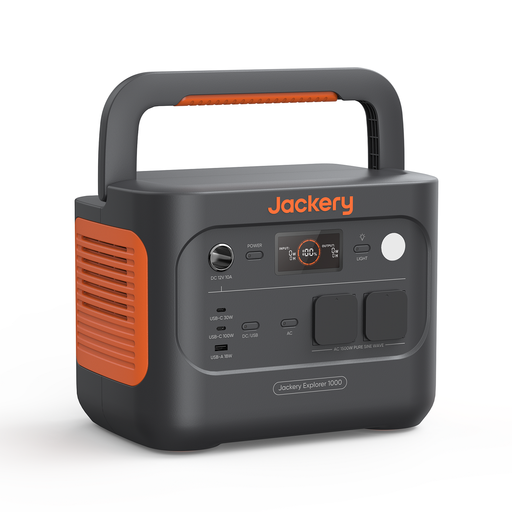
Why it stands out: The Explorer 1000 V2 offers a balanced combination of capacity, power, and portability. With 1070 Wh and 1500 W of continuous output, it's a versatile companion for camping and mobile work. Its weight of approximately 10.8 kg makes it easily portable. A key highlight is the manufacturer's claimed one-hour charging time from a wall outlet.
Pros:
Who it's for: Outdoor enthusiasts, digital nomads, and anyone looking for a powerful yet transportable portable power storage solution for various scenarios.
View details for the Jackery Explorer 1000 V2
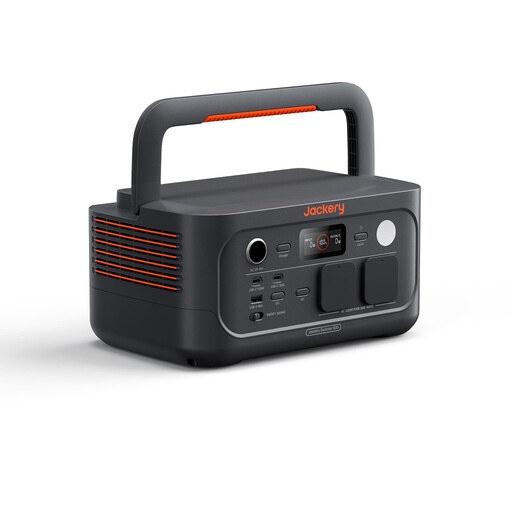
Why it stands out: The Explorer 500 V2 prioritises compactness and weight. At just 5.7 kg, it's easy to carry and fits in any car trunk. The 512 Wh capacity and 500 W output are ideal for shorter trips and running smaller devices like laptops, cameras, or portable coolers. The manufacturer claims an exceptionally high cycle life of 6,000 cycles.
Pros:
Who it's for: Day-trippers, photographers, drone pilots, and anyone who needs a lightweight and straightforward portable power station for on-the-go use.
View details for the Jackery Explorer 500 V2
A power station is an excellent addition to your home and garden, ensuring you're prepared for any eventuality. While planning your energy needs, you might also be thinking about other outdoor projects. If you're looking for garden inspiration, explore our selection of DIY Garden Pergolas to enhance your outdoor space.
A power station is essentially a large portable battery. It operates silently, is emission-free, and can be safely used indoors. A traditional generator produces electricity using a combustion engine, is loud, emits exhaust fumes, and is only suitable for outdoor use. A power station is therefore a quiet generator and more environmentally friendly.
The lifespan is measured in charge cycles. A LiFePO4 battery typically achieves 3,000 to 6,000 full charge and discharge cycles before its capacity drops to about 70–80% of its original value. With regular use, this can correspond to a lifespan of over 10 years, making it a long-term investment.
Yes, many models are suitable as a backup power supply. Ensure you have sufficient capacity (Wh) and output (W) to power your desired devices (e.g., refrigerator, router, lights) for the required duration. A power station with a UPS function is particularly beneficial here, as it ensures an uninterrupted transition during a power outage, thus protecting sensitive electronics.