What should you look for when choosing one?
Start with the appliance you want to power and how long you need to run it, rather than choosing a station based on its rated capacity alone.
| Buying priority |
What to look for |
Who should pay particular attention? |
| Runtime for selected appliances |
Check the power consumption in W and the planned hours of use for each appliance. For 230-volt appliances, compare usable AC energy rather than just the battery’s rated capacity. |
If runtime for my priority appliances matters most, I add up their energy needs in advance; around 37% of consumers put runtime first. |
| Power, start-up behaviour and connections |
Check the plugs and compatible outputs, as well as the combined power consumption. For motors, consider their start-up behaviour; for the station, distinguish between continuous and peak power ratings. |
If you want to connect and run specific appliances at the same time, pay particular attention to the connections and power they require; around 27% of consumers prioritise this compatibility. |
| Safe operation and readiness |
Check the instructions and safety features of the exact model for the connections and charging methods you plan to use, and check its charge level in advance. |
If I want to rely on a prepared backup, I check the safety features and keep the station ready for use according to the manufacturer’s instructions; around 18% of consumers put readiness first. |
| Optional solar charging |
Check the solar input, compatible panel, connection requirements and any cables or adaptors needed. You’ll need a suitable location with enough sunlight. |
If you want to add solar charging to your stored energy supply, check that the components are compatible and that you have a suitable location; around 18% of consumers prioritise this option. |
Joybuy products for appliances connected directly
The portable power stations below are intended for selected appliances connected directly to them. Before buying, check that the capacity, power limits and connections suit the appliances you’ve prioritised. Solar charging is an optional extra.
 No image available
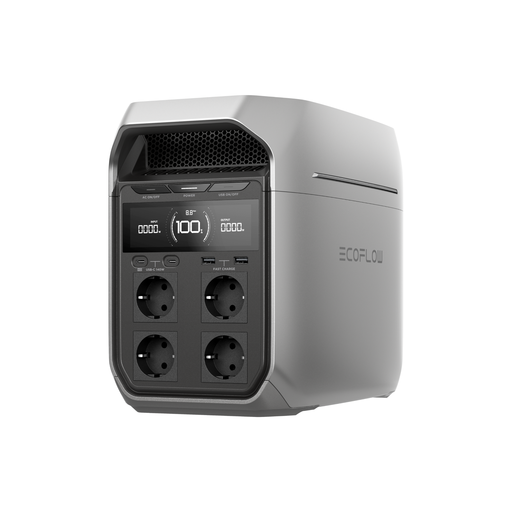
EcoFlow DELTA 3 Plus, 1.024 Wh
Suitable for selected appliances with different types of connection, and for anyone planning to use solar charging as an additional option.
1.024 Wh rated capacity; 1.800 W (3.600 W peak); LiFePO4 battery; AC, USB and 12-volt outputs, plus solar input, according to the product details.
Joybuy
 No image available
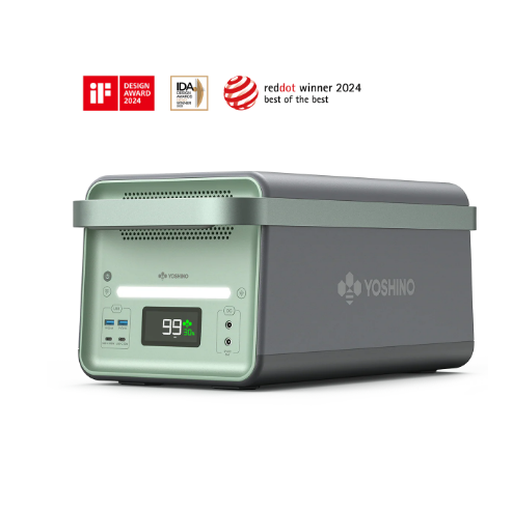
Yoshino B3600SST, 3.600 Wh
An option for anyone who wants to connect selected appliances directly through different outputs and have the option of recharging from the mains or solar power.
3.600 Wh; 2.200 W; six outputs according to the product details, including AC, DC and USB-C connections.
Joybuy
 No image available
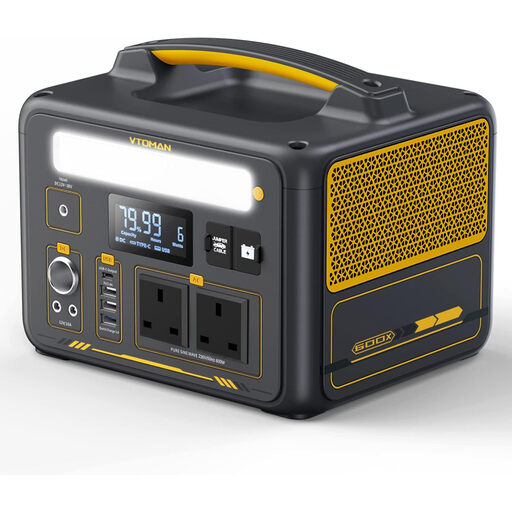
VTOMAN Jump 600X, 299 Wh
For anyone who wants to connect compatible individual appliances directly and consider mains, car or solar charging as possible ways to recharge.
299 Wh; 600 W, 1.200 W peak power; pure sine wave; 60-W USB-C output and three regulated 12-V/10-A DC outputs. Expanding capacity to 939 Wh requires a separate additional battery, sold separately.
Joybuy
 No image available
VTOMAN FlashSpeed 1000, 828 Wh
Suitable for anyone who wants to connect selected appliances directly and consider mains, car or solar charging as additional options.
828 Wh; 1.000 W rated power and 2.000 W peak power; 100-W USB-C output. Expanding capacity to the stated 2.376 Wh requires an optional additional battery.
Joybuy
 No image available
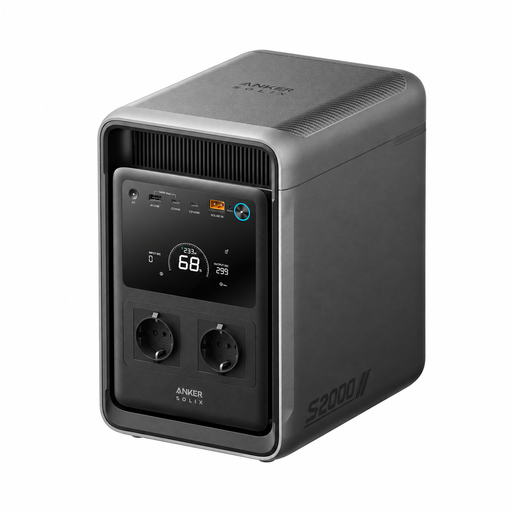
Anker SOLIX S2000, 2.000 Wh
An option for anyone who wants to power several appliances connected directly and use mains charging or the UPS function for those appliances.
2.000 Wh; 1.500 W; several outputs according to the product details. The product description states that the unit has no 12-volt DC connection; this is not intended as an extension to your home’s power supply.
Joybuy
Frequently asked questions
How do I plan my power needs if I don’t yet know how much energy my appliances use?
Start by listing the appliances you want to prioritise and how long you’d like to use them. Find out their power consumption and, for a fridge, how it runs and starts up before estimating its energy needs in Wh. For 230-volt appliances, compare this figure with the usable AC energy. Without these details, it’s not possible to give you an individual runtime estimate.
How do I keep a power station ready to use if I rarely need it?
Check the charge level regularly and follow the charging and storage instructions for the specific model. Consumer advice centres in Germany recommend regularly charging spare batteries and power banks as part of preparing for a power cut; this does not establish one standard storage charge level for all power stations.
What extra costs and terms should I check before buying?
Check whether the solar or car-charging cables or adaptors you need for your intended use are included. In Germany, statutory rights against the seller are separate from a voluntary guarantee; check the relevant terms and conditions.
Do I need to register a portable power station in Germany’s Market Master Data Register?
According to the official online help for Germany’s Market Master Data Register, a power station that is genuinely non-stationary does not need to be registered; portable batteries and power stations are specifically given as examples. This does not automatically apply to stationary, grid-connected installations.
Will a standard plug-in balcony solar system automatically power my home during a power cut?
No. Consumer advice centres in Germany point out that plug-in solar devices need a grid connection to work; they are not the same as a system designed to operate independently of the grid. A power station for individual appliances connected directly to it also does not automatically supply power to your home’s electrical installation.


