
Lieferung heute & morgen

Qualitätsgarantie

Willkommens-Angebote freischalten: KOSTENLOSE Lieferung | Bis zu 80 % RABATT | Kostenlose 30-Tage-JoyPlus-Testphase
App herunterladen
A power strip might seem like a simple product, but the sheer number of options can quickly become overwhelming. Many models lure you in with promises that don't hold up in practice and, in the worst-case scenario, even pose safety risks. As your Joybuy Product Recommendation Officer, I'll help you identify the common pitfalls and make an informed decision based on facts, not marketing hype.
The most common problems arise from three inconspicuous flaws:
This guide will show you which technical details truly matter, so you can find a safe and durable power strip for your home or office.
To distinguish a reliable power strip from a low-quality one, you should check three core parameters. These are crucial for both safety and functionality.
The maximum load capacity of a power strip is determined not just by the advertised wattage, but primarily by the thickness of the copper wires inside the cable. This is specified as the cable cross-section in square millimetres (mm?).
Therefore, always look for the 3G1.5mm? specification in the product data to be on the safe side.
A good multi-socket power strip is more than just an extension cord. It protects your devices and your family.
Everyday usability depends on the practical design.
Here are some recommendations tailored to specific user profiles and the quality criteria mentioned above.
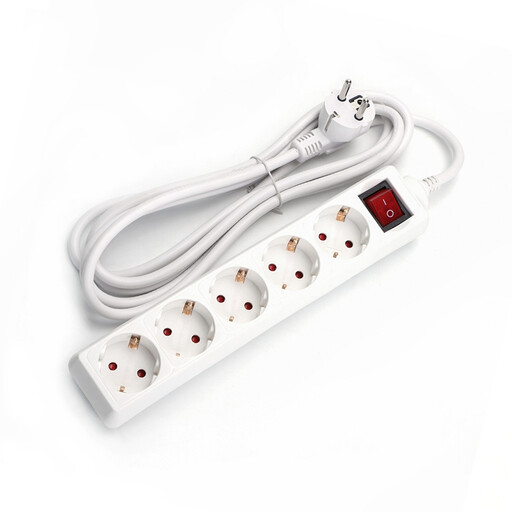
Why This Fits Their Persona: Ideal for basic home applications. It offers five sockets and essential safety features for connecting everyday devices like lamps, chargers, or consumer electronics without breaking the budget.
This model uses a regulation-compliant H05VV-F 3G1.5mm? cable that safely supports the maximum 3680W output. It also includes child safety shutters, a feature often missing in budget products.
Solid value for money; master switch for easy power cut-off and energy savings; integrated child safety shutters.
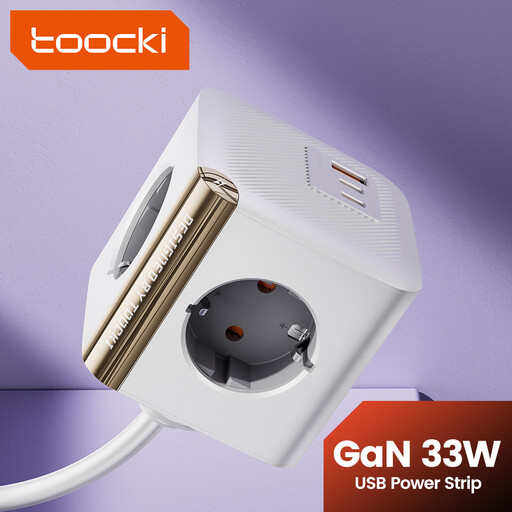
Why This Fits Their Persona: Perfect for a tidy desk. It combines four AC outlets with modern USB ports, including a powerful USB-C PD port. It powers a laptop and monitor while simultaneously fast-charging a smartphone or tablet.
It provides real value by combining surge protection with modern charging technology (PD 33W). This is a functional upgrade, not a superfluous gimmick, and it protects expensive office electronics.
Integrated surge protection; 2 USB-C ports with fast charging (PD 33W); compact design works as a desktop power strip.
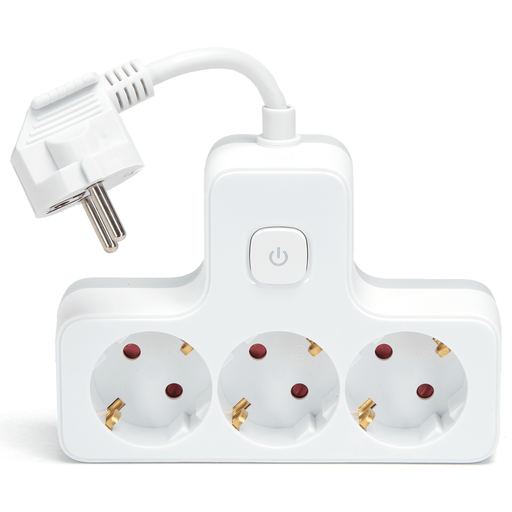
Why This Fits Their Persona: The T-shape and extremely short 5 cm cable are specifically designed to prevent cable clutter right at the wall socket. Ideal for use behind furniture, in the kitchen, or anywhere long cables would be a nuisance.
It solves a specific problem (cable chaos in tight spaces) rather than being a one-size-fits-all solution that isn't perfect for anything. The design is focused on a clear use case and avoids unnecessary cable length.
Very compact T-shape design; eliminates cable clutter directly at the outlet; separate switch to control connected devices.
We have compiled a complete, up-to-date list of products that fully meet these strict selection criteria and German safety regulations.
1. Can you daisy-chain power strips? No, connecting power strips in a series (daisy-chaining) is strictly prohibited and a common cause of house fires. This practice overloads the first power strip in the chain, which can lead to overheating. Always plug a power strip directly into a fixed wall socket.
2. How long does a power strip last? The lifespan depends on its quality and usage. High-quality models can last 5 to 10 years. Look for signs of wear such as cracks in the housing, loose sockets, or a faulty switch. Models with surge protection have a limited lifespan, as the protective components (varistors) lose their effectiveness after absorbing a few voltage spikes. Many manufacturers recommend replacement after 2-3 years if the device is used in an area with frequent power fluctuations.
3. What does the cable cross-section specification (e.g., 3G1.5mm?) mean? This label describes the cable's construction: