
Lieferung heute & morgen

Qualitätsgarantie

Willkommens-Angebote freischalten: KOSTENLOSE Lieferung | Bis zu 80 % RABATT | Kostenlose 30-Tage-JoyPlus-Testphase
App herunterladen
Acquiring new workshop equipment is an investment in your efficiency and safety. Yet, the market is saturated with products whose marketing claims often fail to match their actual performance. As a Joybuy Product Recommendation Officer, I witness daily the common pitfalls that lead to costly purchasing mistakes. Before you upgrade your garage or workshop, it's crucial to understand the most frequent shortcomings, which often only surface after you've bought the item.
An informed purchasing decision isn't based on marketing slogans, but on an understanding of key technical specifications.
To separate the wheat from the chaff, you should focus on three core aspects. These will define the longevity and functionality of your future garage equipment.
The foundation of any solid workshop equipment is the material used. For a tool chest, the thickness of the steel is crucial. Models made from cold-rolled steel offer greater strength and resistance to dents. A high-quality powder coating not only protects against scratches but also effectively prevents corrosion—a critical factor in damp garages or workshops. For tools like a tap and die set, the hardness of the alloy is decisive. Tool steel (e.g., HSS - High-Speed Steel) ensures that the cutting edges remain sharp even when working with harder metals.
For lifting tools like a trolley jack or an air bag jack, the stated load capacity is a key figure. Ensure this capacity is calculated with a sufficient safety margin for your heaviest vehicle. A hydraulic trolley jack is a proven classic for precise control, while a pneumatic air bag jack impresses with its extremely fast lifting speed, making it ideal for professional workshop needs where time is a factor. The construction of the lifting arm, the quality of the seals, and the stability of the frame are just as important as the raw lifting power.
A good car tool set or a specialized tap and die set is characterized by a logically structured and complete range of components. Check whether all metric sizes relevant to your applications (e.g., from M2 to M18) are included. For wrenches and sockets, compliance with DIN or ISO standards is an indicator of fit and quality. A well-thought-out arrangement in a sturdy case not only makes work easier but also protects the tools from loss and damage.
Based on these objective criteria, we have identified products that are suitable for specific user groups.
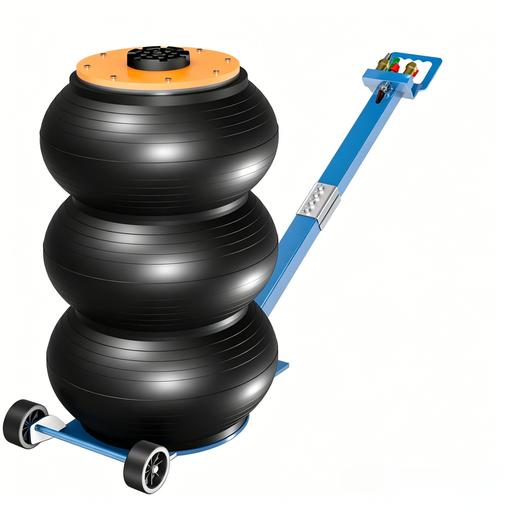
Why This Fits Their Persona: For professional workshops where vehicles need to be lifted quickly and frequently. The pneumatic operation significantly reduces manual effort and speeds up the entire process.
The high 5-ton load capacity provides a huge safety margin, avoiding the risk of overload common with under-specced jacks. The 3-5 second lift time is a clear, measurable performance metric.
Fast pneumatic lift for maximum time efficiency; integrated telescopic stabiliser for a secure footing.
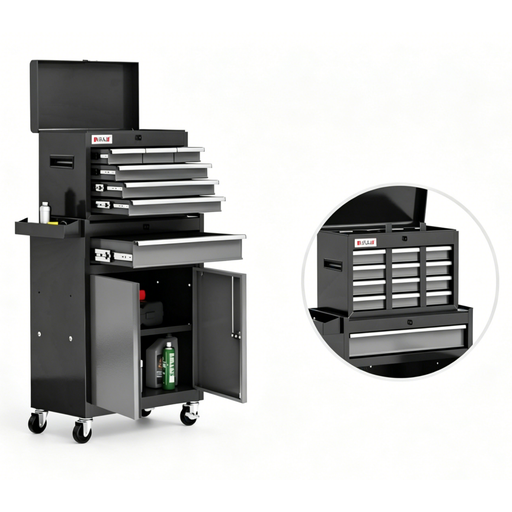
Why This Fits Their Persona: Ideal for ambitious hobbyist mechanics who want to store a growing collection of automotive tools securely and neatly. Its mobility allows for flexible work around the garage.
The cold-rolled steel construction with a powder-coated finish resists dents and rust, unlike cheap models made from thin, untreated sheet metal. This is an investment in the longevity of your garage setup.
Robust steel construction for high stability; multi-layer drawers for systematic tool organisation.
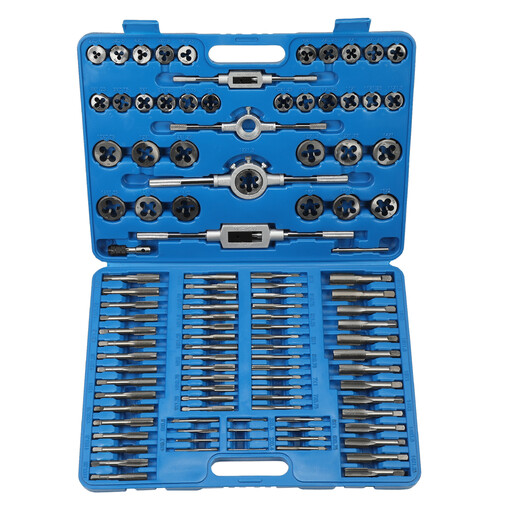
Why This Fits Their Persona: Indispensable for restorers and mechanics who regularly need to repair damaged threads or cut new, precise ones. It covers a wide range of vehicles and machinery.
This 110-piece set provides comprehensive coverage of metric sizes from M2 to M18, including both fine and coarse threads. This eliminates the problem of incomplete sets that are often missing the one size you need.
Extremely wide application range with 35 different sizes; includes taper, plug, and bottoming taps for precise results.
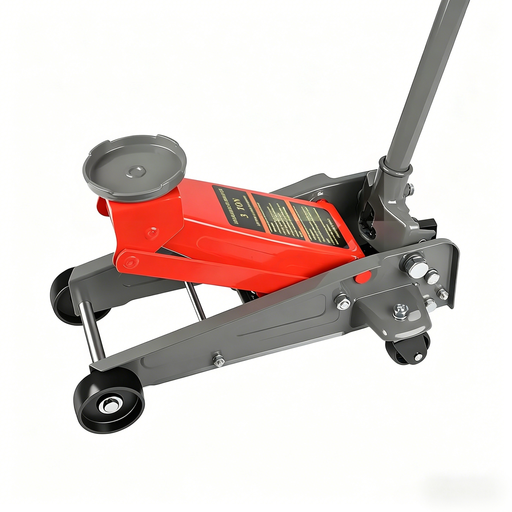
Why This Fits Their Persona: A reliable all-rounder for the home mechanic's toolkit. Perfect for standard jobs like seasonal tyre changes or minor repairs on most common passenger cars.
With a 3-ton capacity, this floor jack is sufficiently rated for most saloons, estates, and compact SUVs. It avoids the risk of using an underpowered jack that is pushed to its load limit.
Solid carbon steel construction; flexible lifting range from 135 mm to 460 mm, suitable for a wide variety of vehicles.
We have compiled a complete, up-to-date list of products that fully meet these strict selection criteria and safety requirements.
A good benchmark is a material thickness of at least 0.8 mm for the body and 1.0 mm for high-stress parts like the drawer fronts. Cold-rolled steel is preferable to standard sheet steel as it has a higher density and strength, making it more resistant to deformation.
The lifespan heavily depends on the intensity of use and maintenance. For private use (e.g., for seasonal tyre changes) and with regular checks of the hydraulic fluid level, a high-quality model can function reliably for many years. In a professional workshop with daily use, annual maintenance and inspection of the seals and valves are recommended to ensure consistently safe operation.
Yes, provided they are operated correctly. Modern air bag jacks have safety features such as an automatic air supply cut-off when the maximum height is reached and throttled release valves for a slow, controlled descent. A suitable compressor is required for operation. For purely private use, a classic hydraulic trolley jack is often the more practical and cost-effective solution.