
Lieferung heute & morgen

Qualitätsgarantie

Willkommens-Angebote freischalten: KOSTENLOSE Lieferung | Bis zu 80 % RABATT | Kostenlose 30-Tage-JoyPlus-Testphase
App herunterladen
Whether you are restoring furniture, renovating, working with wood or tackling creative craft projects, power tools for DIY can make many tasks easier. However, a high speed rating or an extensive accessory kit alone is not a reliable buying criterion. What matters is whether the design, power supply and features suit the job you have in mind.
A high speed rating may sound impressive at first. On a rotary tool offering up to 25,000 rpm, it can be useful for engraving, polishing or fine sanding. For other tasks, however, a controlled, lower speed is more suitable. On an electric sander, the oscillation rate is also often given in OPM. These figures cannot be compared directly with rpm.
It is therefore important to look for variable speed settings, easily accessible controls and suitability for the material in question. Wood, plastic, metal and painted surfaces all require different speeds and attachments.
For cordless tools, check whether the battery and charger are included. Several of the tools featured here are supplied without a battery or charger. This can affect the initial price, but is practical for users who already have a compatible battery system.
Pay attention to:
An integrated battery, as found on a compact cordless detail sander, reduces the need to match components. For frequent renovation work, however, a replaceable battery system can offer greater flexibility.
A multi-function tool with accessories is only versatile if the attachments are suitable for the work you have planned. Check the fitting type, diameter and material compatibility. For example, the collet on the Fanttik F2 Master mini sander accepts accessories with a 3/32-inch or 2.3 mm diameter. Attachments with a different diameter will not necessarily fit.
The fit also matters when it comes to sanding paper: hook-and-loop systems must match the base plate and the hole pattern used for dust extraction.
The wattage of corded tools describes their electrical power consumption, not their working speed directly. A HYCHIKA detail sander with 140 W and 13,000 OPM is designed for detail work, removing paint and rust, and sanding in tight spaces. Another HYCHIKA model operates at 200 W and 14,000 rpm.
For a rotary tool, the collet size, speed settings and accessories are also important. Five speed settings allow you to adjust the tool to engraving, drilling, sanding or polishing tasks.
A triangular sander reaches corners and narrow edges more effectively than a tool with a large round sanding plate. Its compact shape is therefore important when working on furniture edges, window trim or awkward surfaces. An electric sander with an ergonomic hand rest can be more comfortable to guide during longer jobs.
For straight cuts in wood, on the other hand, you need a cordless circular saw with a suitable cutting depth, a stable base and a properly functioning blade guard. The Greenworks model is specified with a cutting depth of up to 57 mm at 90°, a bevel adjustment from 0 to 45° and a 165-mm saw blade.
Sanding creates fine particles. An integrated dust box, dust bag or connection for a workshop vacuum can help reduce mess. Check that the connection fits your existing vacuum hose. On the Greenworks multi-function tool and Greenworks circular saw, an LED work light helps illuminate the cutting or working area. However, the light is not a substitute for adequate room lighting or safety goggles.
Also follow the instructions in the operating manual, wear suitable respiratory and hearing protection, and remove the battery from cordless tools before changing accessories.
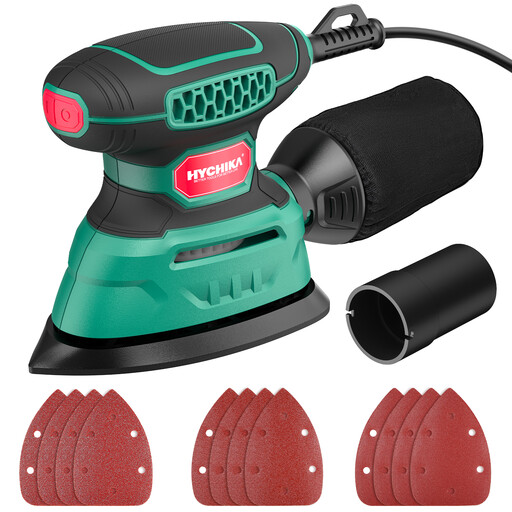
Why this product suits this profile: This compact detail sander is aimed at users who want to work on furniture, wooden surfaces or small metal areas and need a straightforward set of features.
The 140 W and 13,000 OPM specifications make the performance clear. A dust bag and vacuum adapter are listed, rather than dust control being promoted only in general terms.
140-W motor, six-hole base plate, two dust collection options and 12 sanding sheets in three grits.
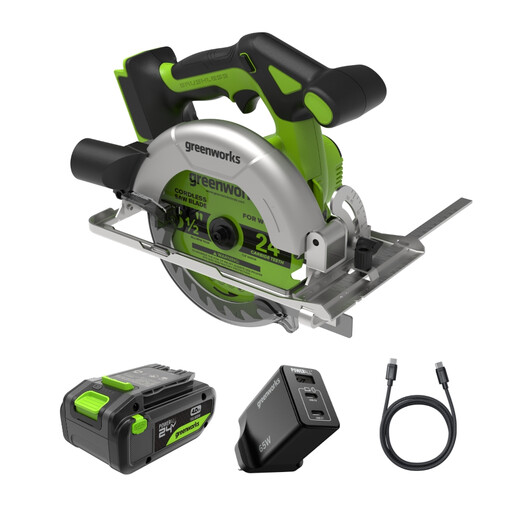
Why this product suits this profile: For woodworkers and renovators who want to make repeatable straight or angled cuts, this model offers clearly stated adjustment specifications.
The cutting depth, blade diameter, speed and bevel range are specified in detail. This makes it easier to check before buying whether the saw suits the material and your battery setup.
165-mm carbide blade, cutting depth of up to 57 mm at 90°, 0–45° bevel adjustment, LED work light and dust port.
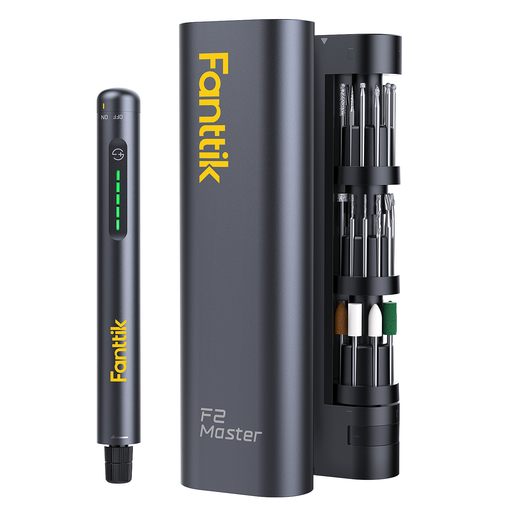
Why this product suits this profile: This lightweight rotary tool is suitable for engraving, polishing, drilling and fine sanding on 3D-printed parts, craft projects or small workpieces.
The 2.3 mm accessory fitting and five speed settings are clearly specified. This makes it easier to check whether your existing attachments are compatible.
Up to 25,000 rpm, 35 accessories, a weight of 0.22 lb according to the product specifications, and USB-C charging with a stated charging time of 60 minutes.
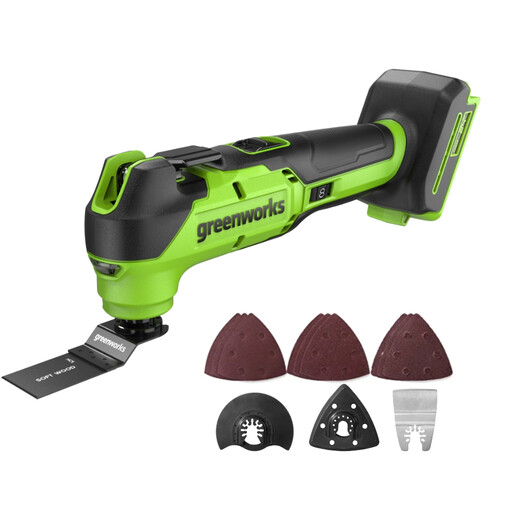
Why this product suits this profile: This cordless multi-function tool covers typical renovation tasks such as sawing, scraping, sanding and flush cutting with a single device.
Eight variable speed settings and tool-free accessory changes reduce reliance on a single setting or a complicated change mechanism.
Up to 18,000 OPM, LED lighting, five attachments and compatibility with Greenworks 24 V batteries. Battery and charger are not included.
We have put together a complete, regularly updated list of products that fully meet these strict selection criteria and the safety regulations applicable in the EU.
A cordless multi-function tool is practical for a variety of tasks such as sawing, scraping, sanding and flush cutting. For large, straight cuts in wood, a cordless circular saw is more suitable. For engraving, polishing or fine drilling, a rotary tool with a small collet is a better choice.
Runtime depends on battery capacity, material, pressure and working technique. A higher Ah rating can extend runtime, but usually also increases the weight. For tools supplied without a battery, check which batteries are compatible with the relevant system.
For occasional detail work, a dust bag may be sufficient. For longer sanding jobs indoors, a suitable workshop vacuum with the right adapter is the better option. You should also wear safety goggles and a dust mask suitable for the material.