
Lieferung heute & morgen

Qualitätsgarantie

Willkommens-Angebote freischalten: KOSTENLOSE Lieferung | Bis zu 80 % RABATT | Kostenlose 30-Tage-JoyPlus-Testphase
App herunterladen
Whether you are drilling, driving screws, testing a vehicle cable or supplying power on the go, power tools and electrical test equipment must be suited to the application, electrical environment and expected load. A low price alone says little about how practical a product will be in everyday use. Clear technical specifications, suitable connections and safe handling are what really matter.
Inverters often advertise a high peak power rating. However, this is usually only available briefly, for starting motors or compressors, for example. For continuous operation, the rated or continuous power is the key figure. If you want to run a 2,500-watt device continuously, you will also need a sufficiently powerful battery and suitable cables.
An automotive electrical tester can indicate voltage, polarity or continuity. A cable-break detector, wire tracer or short-circuit finder, on the other hand, uses transmitter and receiver signals, depending on the model. Range, cable length, shielding and the condition of the vehicle wiring all affect the result. An audible signal should therefore be treated as a diagnostic aid, not as sole proof of the fault location.
A cordless screwdriver with high torque is not automatically suitable for every screw. With delicate materials, an excessive setting can damage screw heads or workpieces. For furniture assembly and electronics, finely adjustable torque settings are important. A brushless drill driver with two speed ranges, on the other hand, is more suitable for alternating drilling and screwdriving tasks in wood, metal or masonry.
First check whether the device is designed for the intended circuit:
Work on permanently installed 230-volt systems should be carried out by suitably qualified people. Before every measurement, check the test leads, housing and connections for damage.
Several values matter when choosing a drill driver. Torque is specified in newton metres (Nm). A high figure is useful for larger screws and tough materials, but it does not replace a torque clutch. Two speed ranges allow either controlled work with higher torque or faster drilling and screwdriving.
For an electric precision screwdriver, a lower torque, suitable bits and low weight are more important. With a 21V cordless screwdriver, you should also check the battery capacity, charging time, availability of replacement batteries and the charger connection.
A 12V 220V inverter converts direct current from a battery into alternating current. For sensitive electronics, audio and measuring equipment, as well as motor-driven devices, a pure sine wave inverter can provide a more suitable output waveform than a model with a modified sine wave.
Pay attention to:
For camping power supplies, add together the actual power consumption of all devices that will be operated at the same time. An inverter must not be used in damp areas or without adequate ventilation.
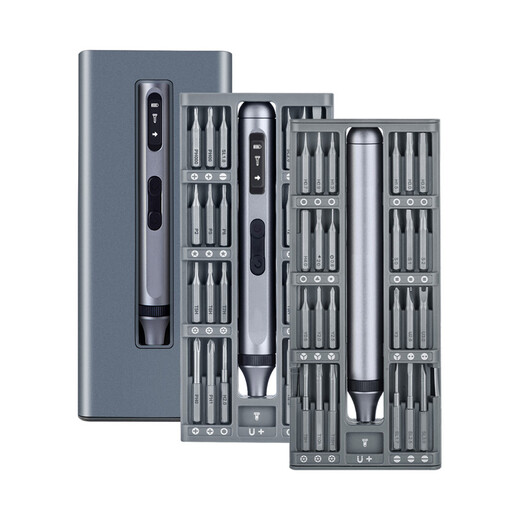
Why this product suits this profile: This set is aimed at households, DIY beginners and users who want to carry out small repairs or electronics work. It includes 48 bits, tweezers and a pry tool.
The stated electrical torque of 0.3 Nm and manual torque of 3.5 Nm make it clear that this tool is intended for finer tasks rather than heavy drilling work.
350-mAh lithium battery, up to 120 minutes of no-load operation, 90-minute charging time and 48 bits.
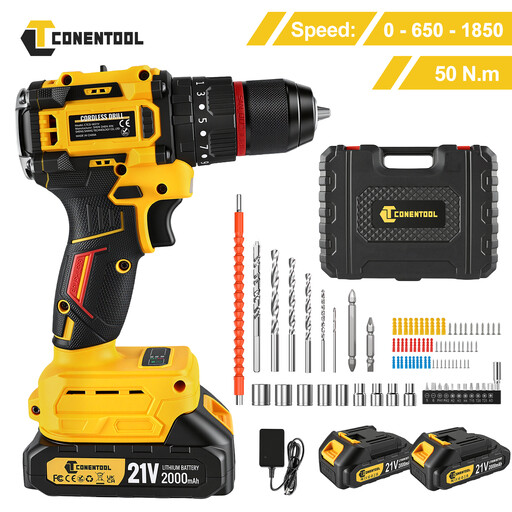
Why this product suits this profile: For renovations, furniture building and regular use, this model offers three functions: hammer drilling, drilling and screwdriving.
The 25+3 torque settings, variable-speed trigger and two speed ranges reduce the risk of overloading screws or materials with unsuitable force.
Brushless motor with a stated maximum torque of 50 Nm, 0–650 and 0–1850 rpm, two 21-V batteries and 90 accessories.
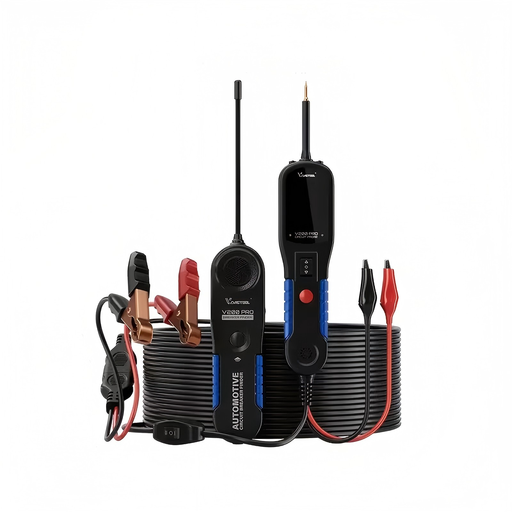
Why this product suits this profile: This device is designed for the electrical systems of cars, trailers, motorhomes, tractors, lorries and boats, combining several testing methods in one tool.
The documented measuring range of the test probe is 0 to 65 V DC; the separate breaker finder is specified for 6–24 V. This allows you to check the intended application in detail before buying.
AC/DC voltage, resistance, diode, polarity and continuity testing, plus a 40-foot cable according to the product specifications.
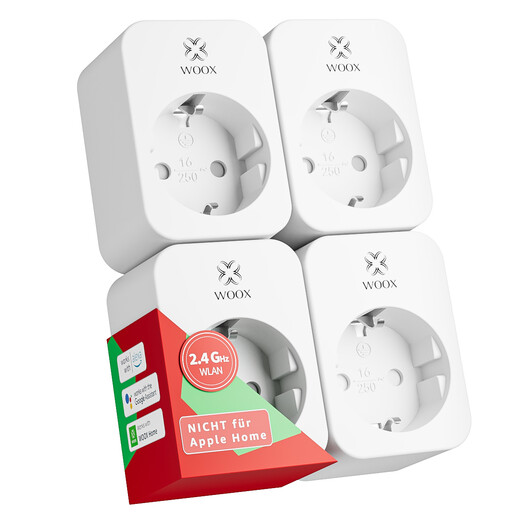
Why this product suits this profile: For homes, home offices, motorhomes with a suitable mains supply and users who want to operate devices on a schedule or monitor consumption data.
The maximum load of 16 A or 3680 W and exclusive use with 2.4-GHz Wi-Fi must be observed carefully. This allows you to check compatibility before setting up the device.
Real-time and historical energy monitoring, app control without a hub, schedules and support for Alexa and Google Assistant, according to the product specifications.
We have put together a complete, regularly updated list of products that fully meet these strict selection criteria and the safety regulations applicable in the EU.
For targeted fault-finding on vehicles, the VDIAGTOOL V210 may be worth considering. According to the product description, the transmitter and receiver work with an audible signal and a flexible 6.7-inch probe. The stated range is 6–42 V. Two 9-V batteries are required for operation, but are not included according to the specifications. This should be taken into account when comparing costs.
For mobile camping power, the EAFC inverter’s stated combination of 2,500 W continuous power and 5,000 W peak power is important. The product description also mentions a pure sine wave, an LCD display and several protection functions. Before connecting it, select the battery, cable cross-section, fuse and earthing to suit the installation conditions.
A wire tracer or cable-break detector with a transmitter and receiver can help narrow down interrupted cables. For 12- and 24-volt systems, the stated voltage range should be suitable. For complex faults, a step-by-step check of the fuse, plug connections, earth point and cable is recommended.
Service life depends on the battery chemistry, charging habits, load, storage conditions and availability of replacement parts. A brushless drill driver has fewer wearing brushes than a model with a brushed motor. Nevertheless, the battery, gearbox, chuck and charger remain critical components. Store lithium-ion batteries in a dry place and avoid extreme temperatures.
The plug itself uses a small amount of standby power. Running costs depend on the individual consumption of the connected device. For a rough calculation, use: Power in kilowatts × operating hours × electricity price per kilowatt-hour. The monitoring function can help you track actual consumption over time.