
Lieferung heute & morgen

Qualitätsgarantie

Willkommens-Angebote freischalten: KOSTENLOSE Lieferung | Bis zu 80 % RABATT | Kostenlose 30-Tage-JoyPlus-Testphase
App herunterladen
When buying power tools for DIYers, people often compare wattage, speed or the number of accessories first. These figures are relevant, but on their own they reveal little about how practical a tool will be in everyday use. A device may appear powerful on paper, yet later lead to additional costs because of an impractical dust box, incompatible attachments or an unsuitable battery system.
This guide explains which technical specifications matter before you buy, which common marketing pitfalls to watch out for and which tools suit different types of DIYer.
A high speed is not automatically suitable for every material. When sanding wood, rough work may require a different setting from fine surface finishing. For metal, plastic or 3D-printed parts, the right sanding and polishing attachments are also crucial.
A mini rotary tool with several speed settings can be more flexible for precision work than a device with just one fixed speed. For sanding larger areas of wood, however, a delta sander or another wood sander is usually more practical.
“35 accessories” sounds like a lot. Before buying, however, you should check which shank size or fitting is used. The Fanttik F2 Master, for example, accepts accessories with a 3/32 inch or 2.3 mm shank. Accessories in other sizes are not automatically compatible.
It is also worth checking the shape of the sanding plate and how it is attached. A hook-and-loop system makes changing sheets easier, provided the sanding sheets fit the base plate exactly.
An integrated dust box or vacuum adapter can help keep your work area cleaner, but it does not replace personal protective equipment or adequate ventilation. When sanding, you should wear safety goggles and, depending on the material, suitable respiratory protection. Actual dust collection performance depends on factors including the sandpaper, material, filter condition and connected vacuum cleaner.
For corded sanders, power consumption is stated in watts. The HYCHIKA models in this selection offer 140 or 200 watts and are designed for detailed work on wood, metal and plastic. A rating of 13,000 or 14,000 revolutions or sanding movements per minute describes the no-load speed. Under load, the actual working speed may differ.
For a cordless drill driver, torque, gear settings and speed ranges are particularly important. According to the product specifications, the Bosch EasyDrill 18V-38 Set has 20 torque settings, a 2-speed gearbox and maximum torque of 38 Nm. This allows you to switch between controlled screwdriving and faster drilling.
An 18V cordless tool can be practical if the battery and charger are compatible with other devices. A shared battery system reduces the number of chargers you need when buying suitable additional tools. At the same time, you should check whether the battery and charger are actually included and what capacity the battery has.
Corded power tools do not require batteries to be changed. However, their range depends on the location of the power socket and, where necessary, an extension lead. This may not be an issue for stationary work in a workshop, while a cordless tool offers greater freedom of movement when working in several locations.
A low weight and non-slip grip can make it easier to maintain control during longer jobs. For drilling and screwdriving, a 10 mm keyless chuck, such as the one on the Bosch EasyDrill 18V-38, is important because bits and drill bits can be changed without a separate key.
The ventilation slots on all devices should be kept clear. After use, clean the dust containers, sanding plates and accessories. Batteries should be stored in a dry, frost-free place. Before carrying out maintenance, changing an attachment or cleaning the tool, disconnect it from the mains or remove the battery.
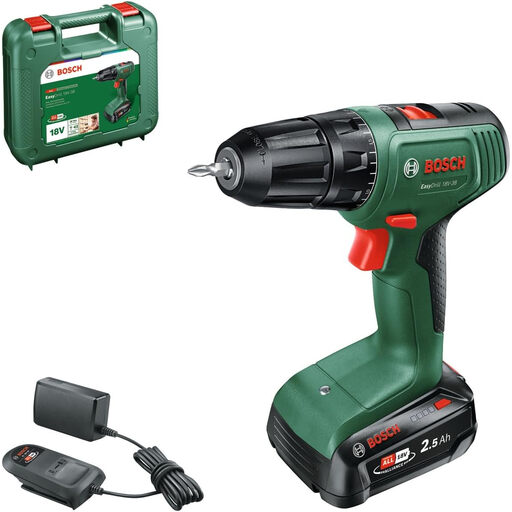
Why this product suits this profile: For furniture assembly, putting up wall plugs and general household tasks, this set combines cordless operation, two gears and several torque settings.
The 20 torque settings help you drive screws in more controllably, rather than choosing a tool based solely on a high maximum power rating.
18-volt system, 2-speed gearbox, 10 mm keyless chuck and integrated LED work light.
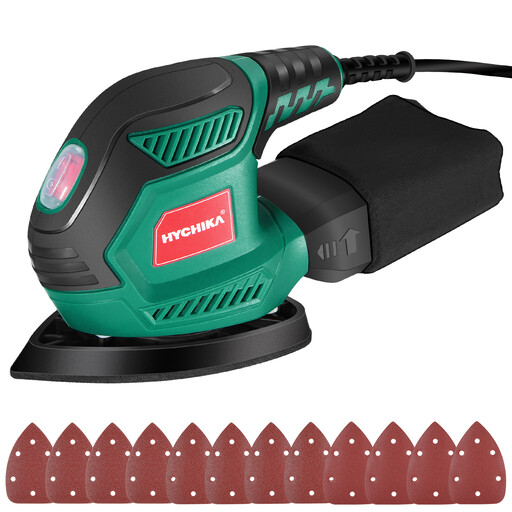
Why this product suits this profile: Suitable for users who regularly want to sand furniture surfaces, edges and tight spaces with a corded delta sander.
The dust box and intended six-hole dust extraction make dust management a clearly specified feature.
200-watt motor, 14,000 rpm, hook-and-loop fastening and 12 sanding sheets in P80, P120 and P240 grits.
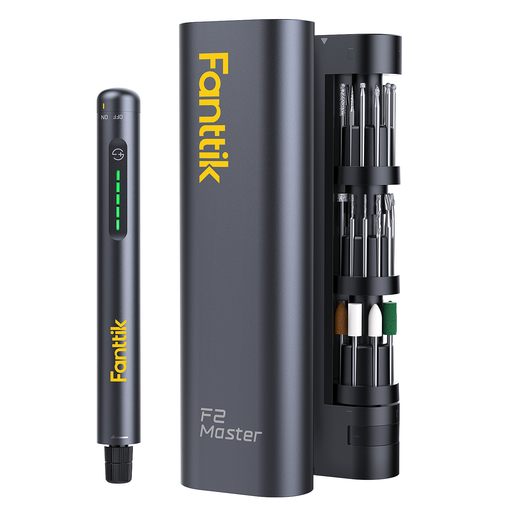
Why this product suits this profile: Model makers, 3D printing enthusiasts and DIYers working on small pieces can benefit from its compact design and range of attachments.
Five speed settings allow you to adapt the tool for engraving, polishing, drilling and finishing 3D-printed parts.
Up to 25,000 rpm, USB-C charging, 35 accessories with a 2.3 mm fitting and an LED speed indicator.
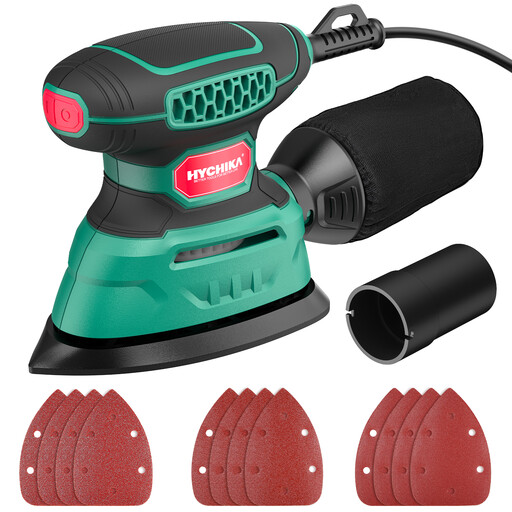
Why this product suits this profile: Its compact design is intended for detailed work during smaller renovation jobs on edges, corners and hard-to-reach surfaces.
A dust bag and vacuum adapter are provided, allowing buyers to choose between two dust extraction options.
140-watt copper motor, 13,000 OPM, ergonomic hand rest and 12 sanding sheets in three grits.
We have put together a complete, regularly updated list of products that fully meet these strict selection criteria and the safety regulations applicable in the EU.
Before buying and using a tool, check the manufacturer’s specifications, the operating instructions and the stated material limitations. Workpieces must be securely clamped. Safety goggles are always advisable when drilling, sanding and cutting; hearing protection may also be required at higher noise levels.
A tool for DIY projects should not be used outside its intended area of application. Dust and particles can be produced particularly when working with metal, paint, rust or plastic. The work area should be free from flammable liquids and gases. For cordless tools, use only compatible batteries and chargers.
A cordless drill driver covers typical jobs such as screwdriving, drilling into wood and smaller assembly tasks. An electric sander or delta sander is also needed for surfaces, corners and removing paint residue. If you want to engrave, polish or finish small 3D-printed parts, add a mini rotary tool to your equipment.
After every use, remove dust and shavings, keep the ventilation slots clear and replace sanding media in good time. Batteries should not be stored permanently in damp or very cold rooms. With corded devices, regularly check the cables, plugs and casing for visible damage. Maintenance work should only be carried out when the tool is disconnected from the power supply.
Corded devices incur ongoing electricity costs based on their power, operating time and electricity price. Cordless tools also require charging cycles; however, with a compatible battery system, the battery and charger can be used for several devices. Consumables such as sanding sheets, drill bits and attachments should also be included in the overall cost calculation.