
Lieferung heute & morgen

Qualitätsgarantie

Willkommens-Angebote freischalten: KOSTENLOSE Lieferung | Bis zu 80 % RABATT | Kostenlose 30-Tage-JoyPlus-Testphase
App herunterladen
Cutting wood, smoothing edges or removing old paint: power tools for woodworking can make many tasks easier. However, your choice should not be based solely on wattage, speed or battery voltage. What matters is whether the tool is suitable for the material, the cutting or sanding task and the equipment you already have.
A 24 V cordless circular saw is not automatically ready to use straight out of the box. With many tools, the battery and charger are not included. Before buying, check carefully whether the product is described as a “cordless circular saw without battery and charger”. It is also important to check whether batteries you already own from the same brand and product platform are compatible.
According to the product specifications, a 200 W sander has a higher rated power output than a 140 W sander. However, this alone says little about ease of handling, dust collection, noise levels or suitability for confined spaces. A compact 140 W sander may be perfectly adequate for occasional detail work, while additional power can be useful for longer sanding jobs.
A wood sander with a dust collection box can collect sanding dust directly at the tool. However, how clean the work area stays also depends on how well the sanding sheets fit, the number and position of the extraction holes and regular cleaning. For larger areas or longer periods of use, connecting a vacuum cleaner may be more practical. Depending on the material and working environment, a dust mask and safety goggles are still advisable.
When choosing a circular saw, you should compare at least the following specifications:
According to the product description, the Greenworks circular saw uses a 165-mm carbide-tipped saw blade, reaches a no-load speed of 5,000 U/min and offers a maximum cutting depth of 57 mm at 90 degrees. The bevel adjustment ranges from 0 to 45 degrees. Before ordering, check whether you can use an existing 24-V-Greenworks battery. The battery and charger are not included with this model.
When choosing a detail sander for wood, wattage and oscillation speed are not the only relevant factors. Look out for:
An electric detail sander is particularly suitable for sanding corners and confined spaces. For large boards or table tops, however, a delta sander is generally less efficient than a larger finishing or random orbital sander.
Grit is specified using the FEPA system with “P”. The lower the number, the coarser the abrasive.
Where possible, work through the grits gradually and remove sanding dust between stages. Sandpaper that is too coarse can leave visible scratches, while a very fine grit can take unnecessarily long to work on heavily damaged surfaces.
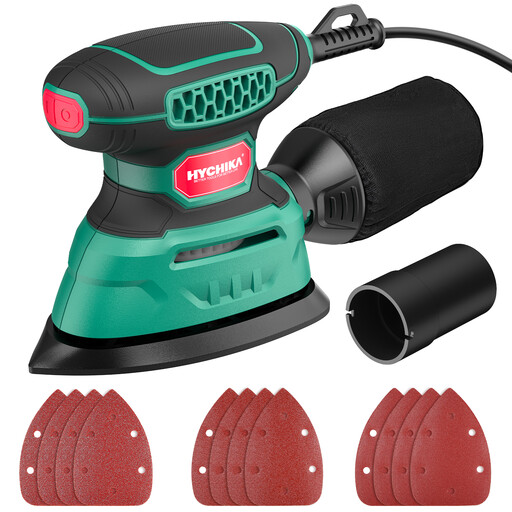
Why this product suits this profile: Its compact design is ideal for occasional work on furniture, frames and small wooden surfaces. Three grit grades are included.
The 140 W power rating is backed up by specific equipment details: dust bag, vacuum adapter, hook-and-loop sanding plate and 4 sanding sheets in P80, P120 and P240.
13,000 OPM, ergonomic hand rest, two dust collection options and 12 sanding sheets in the set.
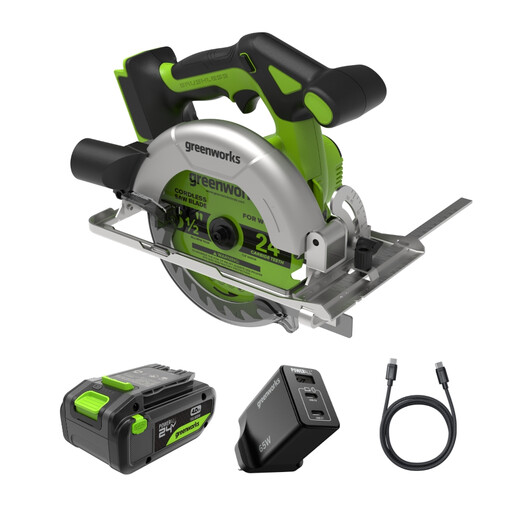
Why this product suits this profile: For furniture making, decking work and renovation projects, this saw offers adjustable cutting depth, bevel cuts and integrated cutting-line illumination.
The missing battery components are clearly stated. This allows you to check before buying whether you already have a compatible 24-V battery.
Brushless motor, 165-mm carbide-tipped blade, 57 mm cutting depth at 90 degrees, 0–45-degree bevel and connection for 35-mm extraction hoses.
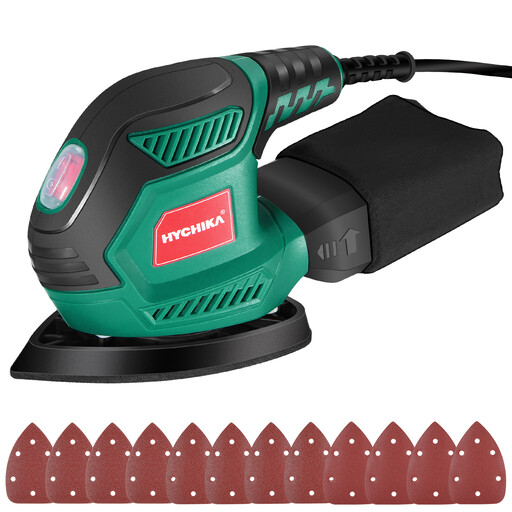
Why this product suits this profile: Its higher rated power and high no-load speed are designed for regular detail work on wood, metal and plastic.
In addition to motor power, the dust collection system and accessories are described in detail. The package includes a 6-hole system, a removable dust container and 12 sanding sheets.
200 W, 14,000 U/min, soft-grip handle, hook-and-loop fastening and four sanding sheets each in P80, P120 and P240.
Before sawing, make sure the workpiece is securely fixed in place. When using a circular saw, safety goggles, hearing protection and suitable respiratory protection must be worn. Remove the battery and charger before changing the saw blade or carrying out maintenance. Also check the blade guard, cable or battery connection, extraction opening and sanding plate for damage.
When sanding, the sanding paper should sit fully on the base plate. A clogged sheet reduces material removal and can cause the surface to heat up more. Suitable abrasives are required for metal and rust; the manufacturer's specifications regarding material suitability are decisive.
We have put together a complete, regularly updated list of products that fully meet these strict selection criteria and the safety regulations applicable in the EU.
A delta sander with a triangular sanding plate is suitable for corners, window frames, furniture edges and small surfaces. For large, flat workpieces, a different type of sander will usually save time.
Runtime depends on battery capacity, type of wood, cutting depth, blade condition and working method. Without standardised testing conditions, it is not possible to provide a reliable specific runtime. Buyers should therefore check which battery capacities are available for the relevant 24-V platform.
P80 is suitable for heavy material removal or old paint. P120 is often used for intermediate sanding, while P240 is used for finer surfaces. The grit should always be matched to the condition and type of wood and the finish you want to apply.