Concert fans with a TV in a fixed spot
If you want to watch the livestream in another room on a device with an Ethernet port, you won’t necessarily need additional Wi-Fi there.


For a TV or streaming player connected by cable, a Powerline kit with an Ethernet connection at the receiving end is a sensible place to start. The F.A.Z. Kaufkompass describes a kit without Wi-Fi as a possible choice if you don’t need additional Wi-Fi there. For a smartphone, tablet or laptop, you’ll need Wi-Fi from the remote adapter. However, the connection depends on your home’s electrical wiring, so test it at the sockets you plan to use rather than treating advertised maximum speeds as a guarantee of uninterrupted streaming.
If you want to watch the livestream in another room on a device with an Ethernet port, you won’t necessarily need additional Wi-Fi there.
If you’re watching on a mobile device on the other side of a thick wall, make sure the remote Powerline adapter provides Wi-Fi.
If you want to connect a TV and other network devices in the concert room, consider the number of available Ethernet ports and whether you need a combination of Ethernet and Wi-Fi.
First decide whether you’ll be streaming on a fixed Ethernet-connected device or a mobile Wi-Fi device in the concert room. Then check the ports, any Powerline adapters you already have and the sockets you plan to use.
Suitable when: Your TV or streaming player has an Ethernet port and you don’t need additional Wi-Fi in the concert room.
Consider: This won’t automatically provide a Wi-Fi access point for mobile devices, and the electrical wiring between the adapters could still cause problems.
Suitable when: You want to access the stream wirelessly on a smartphone, tablet or laptop on the other side of the wall.
Consider: Wi-Fi from the adapter won’t fix problems with the electrical wiring between adapters. Mesh features may require a compatible router.
Suitable when: You can run a cable to your streaming device, or Powerline keeps dropping out at the sockets you plan to use.
Consider: Installing a cable may take more work, but it avoids Powerline as a potential source of problems between rooms.
| What you need | What to look for | Who is this important for? |
|---|---|---|
| Fixed screen with Ethernet | Check that your streaming device has an Ethernet port, that the remote adapter has a compatible port and that the kit includes everything you need to get started. | If I want to watch a stream on a fixed TV or player with an Ethernet port, a wired connection at the receiving end matters most to me; around 36% of consumers prioritise a fixed screen connected by Ethernet. |
| Wi-Fi for mobile devices | Check that the adapter at the receiving end actually provides Wi-Fi and find out what’s required for any mesh features you want to use. | To stream on my smartphone or tablet, I need Wi-Fi in the concert room, especially if the thick wall weakens the router’s Wi-Fi signal; around 29% of consumers prioritise Wi-Fi for mobile devices. |
| Several devices | Count how many Ethernet ports you’ll need on the remote adapter and check whether you also need Wi-Fi there. | If I want to connect a TV and other network devices in the concert room, the number of ports is key; around 21% of consumers prioritise several ports or a mix of Ethernet and Wi-Fi. |
| Existing Powerline network | Compare full model names and check the stated compatibility. If you’re starting a new network, check what’s included in the box. | If I want to keep using my existing Powerline adapters, the new device needs to be compatible with that range; around 14% of consumers prioritise expanding an existing network. |
D-Link describes the DHP-W611AV’s maximum speed as a theoretical PHY data rate. Actual throughput can depend on factors including the condition of your wiring and sources of electrical interference.
Before relying on it for a livestream, test the complete kit at the sockets you plan to use for your router and streaming device.
A Powerline kit without Wi-Fi won’t initially provide a wireless connection for mobile devices at the remote adapter.
Before you buy, check whether your streaming device has Ethernet or whether you need Wi-Fi at the receiving end.
You may need an additional Wi-Fi access point for mobile devices.
devolo says that Magic adapters can be used with the Magic range, but not with dLAN.
Before choosing an expansion adapter, compare the full model names and check the manufacturer’s compatibility information.
If your existing devices aren’t compatible, you may need a new, compatible starter kit rather than a single expansion adapter.
D-Link lists surge-protected extension leads and electrically noisy devices as potential causes of reduced performance with its DHP-W611AV.
For this model, D-Link recommends plugging it into a wall socket. Also check whether dropouts coincide with other devices being used.
The Magic 2 models offer wired use, as well as Wi-Fi and Ethernet connections at the remote location.
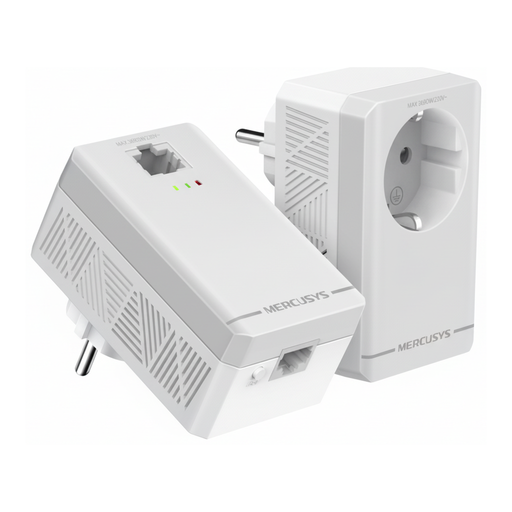
The TL-WPA8631P KIT combines Powerline with Wi-Fi, Ethernet ports and a pass-through socket.
The FRITZ!Powerline 1260 WLAN Set is described as providing a Wi-Fi access point at the remote location, with an additional Ethernet port.
The PLP2000 is a wired Powerline kit without built-in Wi-Fi.
The products below include Powerline kits for wired streaming devices, as well as a kit whose product name specifies Wi-Fi.
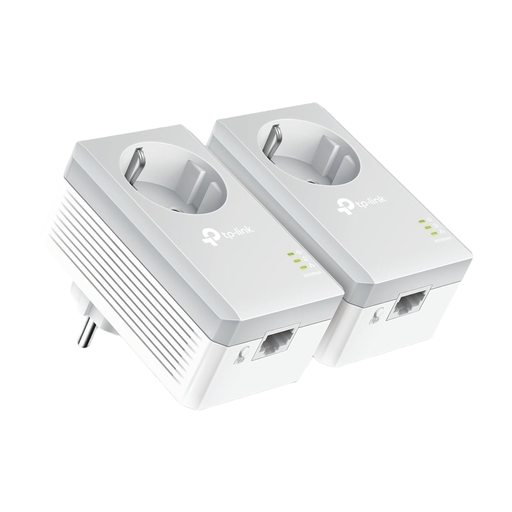 No product image available
For a TV or streaming player connected by cable, with an Ethernet port. The Ethernet port is listed as 10/100 Mbps, so take this into account when planning your set-up.
The product name specifies AV600 and a pass-through socket. The AV600 figure doesn’t guarantee the throughput you’ll get from your sockets.
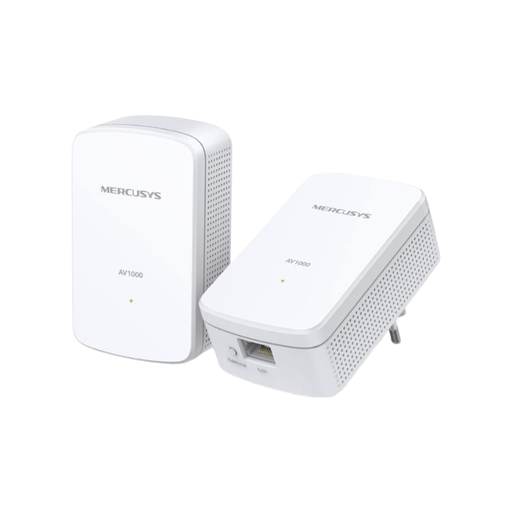 No product image available
For a TV or player connected by cable, if you don’t need Wi-Fi at the receiving end.
The product name specifies HomePlug AV2 and a Gigabit Ethernet port, but also explicitly states ‘No Wi-Fi’. The 1000-Mbps figure isn’t a guaranteed data rate in your home.
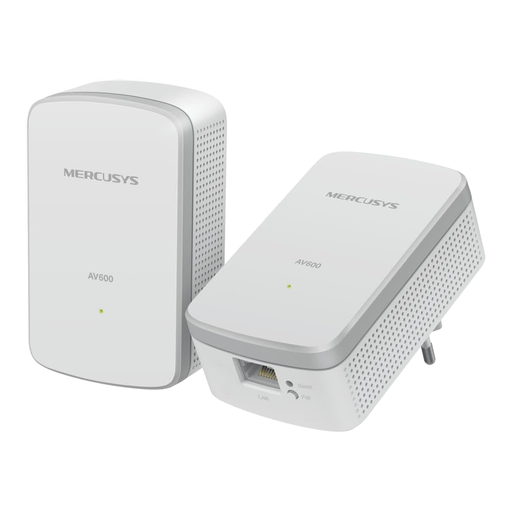 No product image available
For streaming a concert on a mobile device when you need Wi-Fi from the remote adapter.
The product name specifies WiFi 600 Mbps, a Gigabit port and HomePlug AV/AV2. The stated speed is no substitute for testing the connection at the receiving end you plan to use.
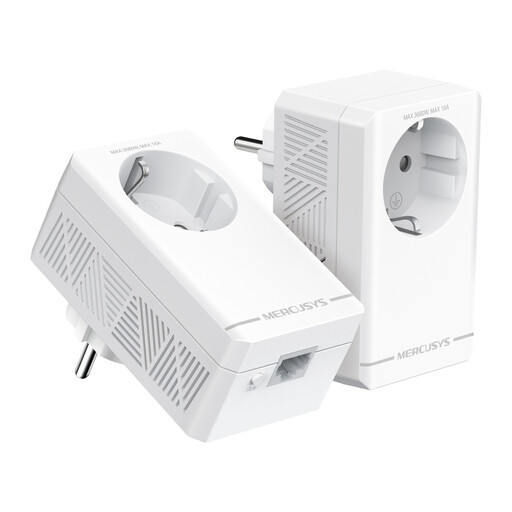 No product image available
For a TV or player connected by cable, if you also want to use the socket at the installation point.
The product name specifies Gigabit Ethernet and a pass-through socket. AV1000 doesn’t guarantee streaming speeds over your existing electrical wiring.
 No product image available
For a wired streaming device if you want a pass-through socket at the installation point.
The product name specifies AV600 and a pass-through socket. The actual connection depends on your home’s electrical wiring.
Not necessarily. If you can connect your TV or streaming player by Ethernet and don’t need additional Wi-Fi in the room, a kit with Ethernet at the remote adapter may be enough. For a smartphone or tablet, the adapter should provide Wi-Fi there.
Plug one adapter into a socket near your router and connect it to the router by Ethernet. Then plug the second adapter in where you’ll be watching and connect it to your streaming device. Test the connection at the sockets you plan to use before the concert. For its DHP-W611AV, D-Link recommends plugging it into a wall socket rather than a surge-protected extension lead.
No. An advertised maximum speed doesn’t guarantee the throughput you’ll get in your home. D-Link describes the maximum speed of its DHP-W611AV as a theoretical PHY data rate; the condition of your wiring, network traffic and sources of electrical interference can all play a part. The key is to test it where you plan to use it.
No. According to devolo, Magic adapters can’t be used in the same Powerline network as dLAN adapters. The manufacturer says you can expand a Magic network with other products in the Magic range. Check the full model names before you buy.
Products covered by the relevant EU harmonisation rules must meet the applicable requirements when placed on the market. The German Federal Network Agency states that CE marking is required where applicable. CE marking alone doesn’t prove that the connection will work without interruptions in your home.