Backing up to a device with LAN
For anyone who wants to regularly transfer work files over Ethernet to a backup device in another room. Test the connection at the sockets you intend to use.


If your backup drive is in another room, a pair of Powerline adapters with the right LAN ports could be a good option, provided the connection at the sockets you plan to use can handle your backup reliably. As well as the ports, the electrical wiring matters, so test the connection where you intend to use it. Only choose a model with Wi-Fi if you also need wireless access there. Powerline gives you a network connection, but it does not replace a separate backup copy or a restore test.
For anyone who wants to regularly transfer work files over Ethernet to a backup device in another room. Test the connection at the sockets you intend to use.
For anyone who wants to keep using their existing adapters. The key question is whether the new kit’s Powerline family works with the devices you already have.
For anyone who needs Wi-Fi in the destination room as well as a LAN connection for their backup device. Check both the ports and the Wi-Fi features of the destination adapter.
A good fit if: You can connect your router and backup device via Ethernet, and you don’t need additional Wi-Fi in the destination room.
Keep in mind: Stated speeds don’t predict real-world file transfer speeds. Test the electrical connection where you plan to use it.
A good fit if: You need Wi-Fi in the destination room for a laptop or other devices, as well as a wired connection for your backup device.
Keep in mind: Wi-Fi features won’t make up for a weak Powerline connection. Check the LAN ports on the destination adapter separately.
A good fit if: You can run a cable, or testing the sockets you need shows that the connection is too slow or unreliable for your backup.
Keep in mind: Installing a cable may be more complicated or impractical. Any meaningful comparison of transfer speeds depends on the conditions in your home.
| What matters | What to check before buying | Who is it important to? |
|---|---|---|
| Connection at the sockets | Test a pair of adapters at the wall sockets you intend to use, and run a representative backup. | If I need a reliable connection where I’ll actually use it, I want to test it there before relying on it regularly. Around 28% of people say a connection at the sockets is their main concern. |
| Protection and recovery | Check the pairing and encryption features of the specific kit. Plan your backup destination, file protection and restore test separately. | If I’m backing up work documents, I want to know how the copy is protected and whether I can restore it. Around 22% of people prioritise protection and the ability to restore files. |
| Transfer time | Consider the LAN port, the amount of data and the actual run time at the destination. Don’t add together Powerline and Wi-Fi stated speeds. | If I regularly back up large files, what matters is how long the backup actually takes. Around 22% of people say backup time is their main concern. |
| Compatibility with existing adapters | Check the model and Powerline standard of every adapter you already have. Router compatibility is not the same as Powerline compatibility. | If I want to extend my existing network, I want to know whether the adapters will work together before I buy. Around 17% of people put compatibility with existing devices first. |
| Additional Wi-Fi | Check whether you need Wi-Fi in the destination room and whether there are enough LAN ports for your backup device as well as wireless connectivity. | If I want to work wirelessly in the room beyond the thick walls, I need Wi-Fi there as well as a backup connection. For around 11% of people, additional wireless access in the destination room is their main concern. |
Advertised maximum speeds aren’t the same as measured file transfer speeds. Socket placement and sources of electrical interference can affect the connection where you use it.
Run a representative backup using the sockets you plan to use, rather than treating stated Powerline or Wi-Fi speeds as actual transfer speeds.
A slow backup may mean you need to allow more time for each run. Even a high stated speed can’t rule out the possibility that the kit isn’t suitable for your needs.
Powerline standards and product families aren’t all compatible. TP-Link says G.hn and HomePlug AV/AV2 are incompatible; devolo says dLAN adapters can’t be used to extend a network with Magic adapters.
Before buying, check the full model name and Powerline standard of every adapter you already use.
If your devices are incompatible, you may need a matching pair of adapters rather than a single extension adapter.
A network connection alone doesn’t create a separate copy or prove that you’ll be able to restore your files later. Germany’s Federal Office for Information Security treats backup and restore as parts of a data backup plan.
Choose your network connection, backup destination and file protection separately, and test that you can restore your files.
Choosing a backup destination, putting protection measures in place and testing restores all require extra planning and ongoing effort.
Placement and sources of electrical interference can affect a Powerline connection. devolo recommends plugging adapters directly into a wall socket wherever possible.
First, identify suitable wall sockets. If you still need to use the socket, look for a model with a pass-through socket.
Troubleshooting or finding another socket solution may take extra time and effort.
The Magic range includes wired kits and versions with additional Wi-Fi. It may be worth considering when setting up or extending a Magic network.
The range includes both HomePlug AV2 and G.hn kits. If you’re extending an existing network, the specific product family matters.
The FRITZ!Powerline 1220 Set is designed for wired connections. The FRITZ!Powerline 1240 AX WLAN Set is an option if you also need Wi-Fi at the destination.
According to Strong, the Powerline 1000 V2 Duo EU is a pair of HomePlug AV2 adapters for a wired connection, without additional Wi-Fi.
This Joybuy selection includes Powerline kits for wired Ethernet backups. Some versions also offer Wi-Fi or a pass-through socket.
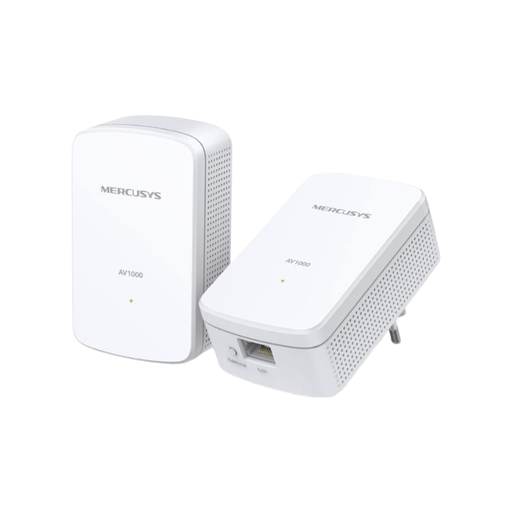 No image available
For a wired backup device when you don’t need Wi-Fi at the destination.
HomePlug AV2, a Gigabit port and plug-and-play are listed. The stated speed of 1000 Mbps isn’t a measured backup transfer speed. The product name indicates that this kit doesn’t include Wi-Fi.
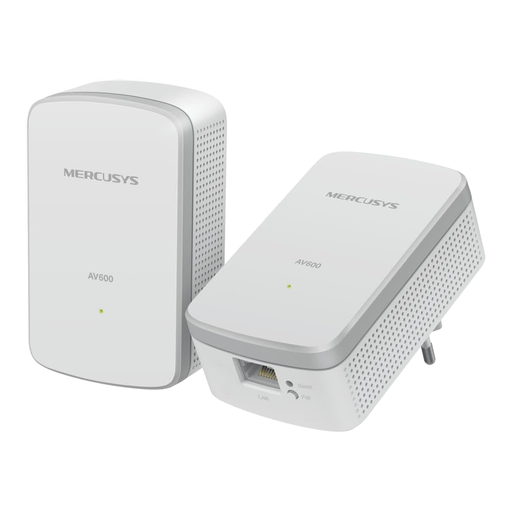 No image available
For a wired backup device when you also need Wi-Fi in the destination room.
The product name lists HomePlug AV2, a Gigabit port and Wi-Fi with a stated speed of 600 Mbps. These stated speeds don’t show measured file transfer performance.
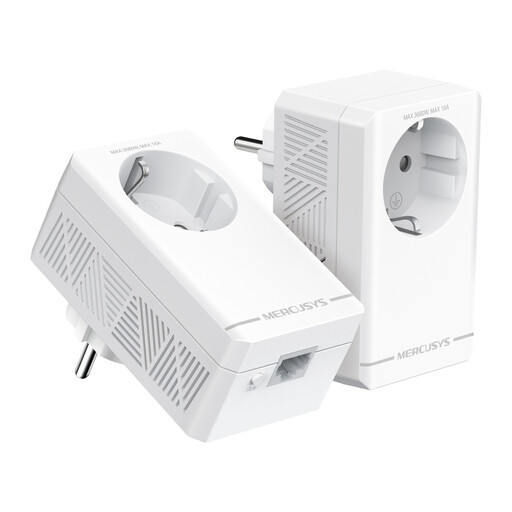 No image available
For a wired backup device when you want to keep using the wall socket occupied by the adapter.
The product lists HomePlug AV2, a Gigabit port, a pass-through socket and plug-and-play. The stated speed of 1000 Mbps isn’t a measured file transfer speed.
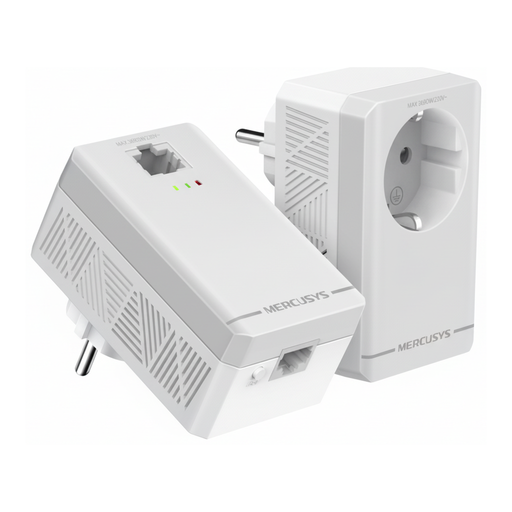 No image available
For a wired backup device when you want to keep using the socket occupied by the adapter.
The product name lists a pass-through socket, plug-and-play and a pair of adapters. The stated speed is 600 Mbps; this isn’t a measured backup transfer speed.
 No image available
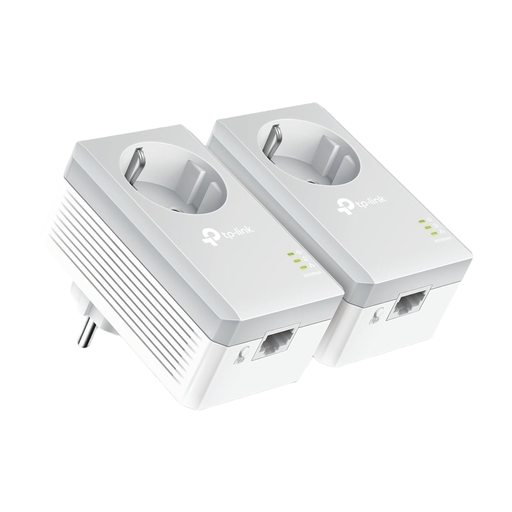
For a wired backup device if you’re looking for a starter kit with an integrated socket.
The product name lists HomePlug AV/AV2 compatibility and an integrated socket. According to the product description, the Ethernet port supports 10/100 Mbps and could become a bottleneck when transferring larger files.
For a basic connection, you need one adapter by your router or network connection and another at the destination. A single extension adapter won’t set up the connection between them, so check what’s included in the specific kit.
Pair the adapters and test them at the wall sockets you plan to use. devolo recommends wall sockets rather than multi-socket extensions or extension leads, and lists power supplies and dimmers as possible sources of interference. According to devolo, if you’re also experiencing problems with a VDSL connection, interactions between Powerline and VDSL may be a factor in certain circumstances.
No. Pairing and encryption relate to the network connection, not to creating and restoring a backup. Germany’s Federal Office for Information Security treats backup and restore as parts of a data backup plan. Plan your backup destination, protection measures and restore test separately.
Not necessarily: the Powerline family of both your existing and new devices matters. TP-Link says its G.hn adapters aren’t compatible with HomePlug AV/AV2; devolo says dLAN adapters can’t be used to extend a network with Magic adapters. Check the model names and standards before buying.
Germany’s Federal Network Agency explains that products covered by relevant EU harmonisation legislation must carry a CE marking. It lists the marking, manufacturer details, instructions and declaration of conformity among the points to check. Check these details for the specific product version on offer.