Readers on multiple floors
You want to download magazines in different places around your home. Plan which sockets and how many receiving adapters you’ll need for each location.


For reading magazines on a tablet or smartphone, you’ll need a kit with Wi-Fi at the reading spot on the other floor. For a desktop computer with an Ethernet connection, a LAN kit may be enough. Check how many receiving adapters you need for the floors you want to cover, and test the connection at the sockets you plan to use. Advertised maximum speeds don’t tell you what download speed your home will actually achieve.
You want to download magazines in different places around your home. Plan which sockets and how many receiving adapters you’ll need for each location.
You read wirelessly on another floor and need an adapter there that provides Wi-Fi, rather than one with only a LAN connection.
You download magazines on a computer with an Ethernet connection, so you can do without extra Wi-Fi at the receiving location.
| Consideration | What to check before buying | Who is most affected? |
|---|---|---|
| Connection between floors | Try the adapters in the wall sockets you plan to use, then check the actual download speed where you’ll be reading. | If I download magazines on multiple floors, the connection needs to work at the sockets I’ve chosen. Around 36% of consumers prioritise the connection between floors. |
| Wi-Fi for mobile devices | Check which adapter provides Wi-Fi and whether you’ll have a Wi-Fi receiving adapter at every reading spot you want to use. | I need Wi-Fi at the reading spot to use a tablet or smartphone on another floor. Around 29% of consumers put Wi-Fi access first. |
| LAN for a desktop computer | Check the computer’s Ethernet connection and how many LAN ports you need at the receiving location. | If my desktop computer will connect via Ethernet and I don’t need Wi-Fi there, I need a suitable LAN connection. Around 21% of consumers prioritise LAN for a desktop computer. |
| Compatibility with existing adapters | Compare the full model names and the new kit’s compatibility information. | If I want to keep using my existing adapters or extend my network, I need to choose a compatible product range. Around 14% of consumers prioritise expandability. |
The connection at individual sockets can be affected by your home’s electrical wiring and the adapters’ placement. So a high Powerline speed rating doesn’t tell you what download speed you’ll actually get when downloading magazines at home.
Test the connection and download speed at the sockets where you plan to use the adapters.
A LAN connection at the receiving location won’t provide Wi-Fi for mobile devices on its own.
For each reading spot, check whether your device uses Wi-Fi or Ethernet.
With a two-adapter kit, one adapter is needed by the router. That leaves one adapter for a remote location.
Count the router location and every receiving location you’ll need at the same time separately.
You may need extra compatible receiving adapters for additional reading spots on other floors.
According to devolo, Magic adapters can be added to within the Magic range; dLAN adapters aren’t supported in the same Magic Powerline network.
Before expanding your network, compare the full model names and compatibility information.
Switching product ranges may mean you have to replace your existing adapters.
The Magic-2-WiFi-next range combines Powerline with Wi-Fi at the remote location. devolo also offers a multiroom kit for multiple floors.
The range includes Wi-Fi kits for mobile devices, as well as the LAN-focused 1220 Set for wired devices.
The TL-WPA8631P KIT combines Wi-Fi with multiple LAN ports, while the TL-PA7017 KIT is designed for wired devices.
This selection is for consumers who want to use their existing mains wiring to connect a wired device at a remote reading spot.
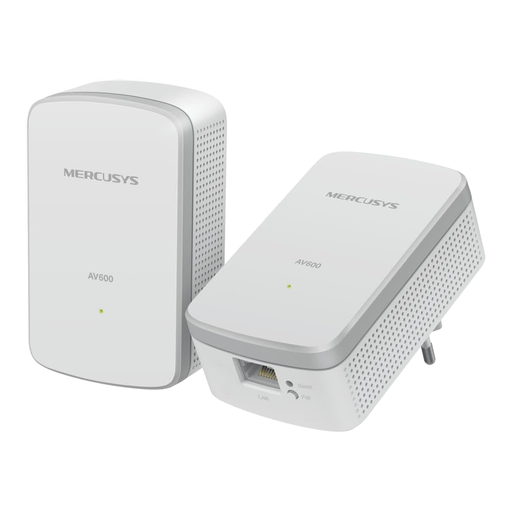 No image available
An option for a wired reading device at a remote location.
The product name specifies AV600 and an Ethernet port. According to the description, the adapter should be plugged into a wall socket rather than an extension lead, and shouldn’t be used across electricity meters.
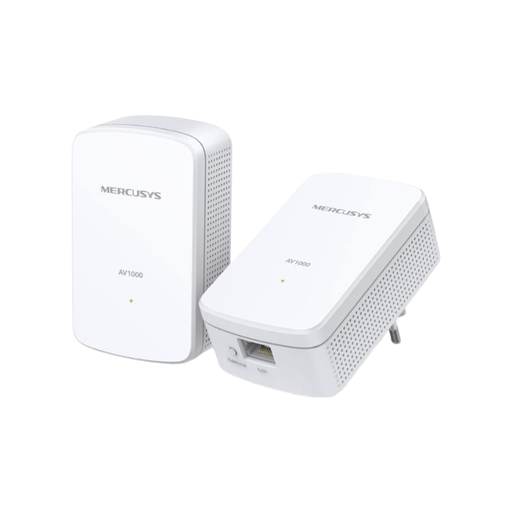 No image available
For a desktop computer with an Ethernet connection, when you don’t need Wi-Fi at the receiving location.
The product name specifies HomePlug AV2, 1000 Mbps and a Gigabit port. The kit is explicitly described as not having Wi-Fi.
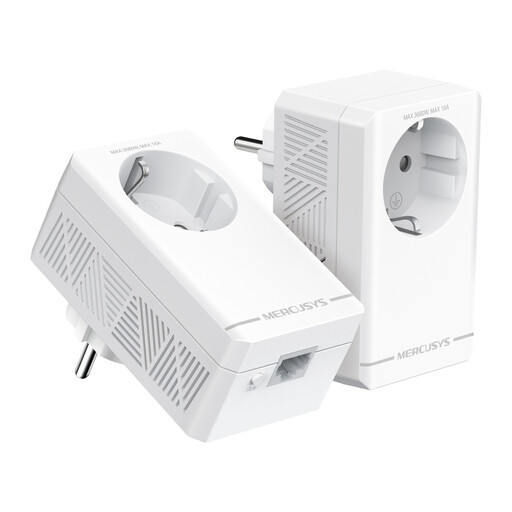 No image available
For a wired device at a remote location when you want to connect via your existing mains wiring.
The product name specifies AV1000, a Gigabit Ethernet connection and an additional socket. According to the description, the connection requires both adapters to be on the same electrical circuit.
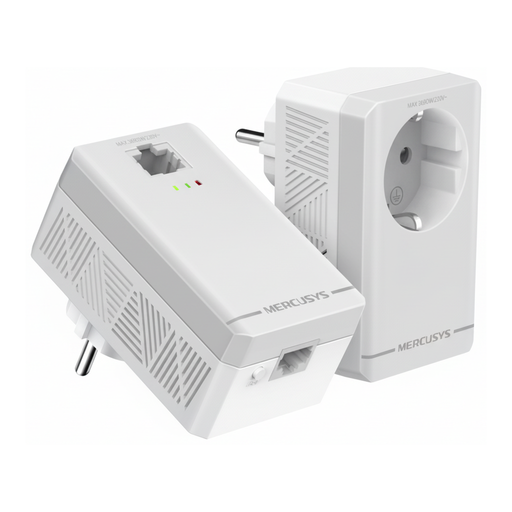 No image available
For a router location and a remote reading spot with a wired device.
The product name specifies AV600, a pass-through socket and a twin pack. For installation, the description recommends plugging the adapter directly into a wall socket rather than an extension lead.
Connect one adapter to your router with a LAN cable, then plug another in at the reading spot you want to use. devolo recommends plugging them directly into wall sockets rather than extension leads wherever possible. Then check the connection at those exact locations.
Not necessarily. The devolo Magic 2 WiFi next Starter Kit contains two adapters, so once one is connected to the router, one remains for a remote location. According to devolo, the Multiroom Kit contains three adapters. Check how many floors need their own receiving location at the same time.
It can become unstable in certain circumstances. devolo describes possible interference between the telephone and mains wiring with VDSL profiles 17a and 35b. If you have problems, check which profile is in use and look for settings or updates available for your specific adapter model.
The Bundesnetzagentur lists points to check including CE marking, manufacturer details, product identification, German-language instructions and a declaration of conformity. The European Commission notes that the CE mark is not a safety approval issued by a government authority.
First, check for possible faults with the affected devices. The Bundesnetzagentur offers advice and a way to report radio interference, but a suspected issue alone doesn’t establish the cause.