People using a tablet in a Wi-Fi dead zone
If you download digital magazines on a tablet or another mobile device in a room behind thick internal walls, you’ll need Wi-Fi there, not just a LAN connection.


Powerline can carry your connection to the reading room over your home’s electrical wiring if thick internal walls are weakening your Wi-Fi signal. The key question is whether it works between the sockets you plan to use. For a tablet or smartphone, you’ll need Wi-Fi at the receiving adapter; for a desktop computer with Ethernet, a LAN kit may be enough. Test the connection where you’ll actually use it, and check the kit contents and compatibility with your existing Powerline adapters before you buy.
If you download digital magazines on a tablet or another mobile device in a room behind thick internal walls, you’ll need Wi-Fi there, not just a LAN connection.
A LAN connection may be enough in your reading room or workspace if you connect your computer via Ethernet. The only way to find out whether Powerline works there is to test it using the sockets you plan to use.
If you want to connect another room, check the technology family and full model numbers of your existing adapters against those of the new device before you buy.
A good fit if: You use a tablet, smartphone or laptop without a LAN port in the reading room, and the connection works between the sockets you plan to use.
What to consider: As well as the Powerline connection, you’ll need to consider Wi-Fi coverage at the receiving end and possible sources of interference.
A good fit if: Your fixed reading device has an Ethernet port and you don’t need Wi-Fi in the room.
What to consider: Your device will need a network cable. Having a LAN port doesn’t guarantee that your home wiring will deliver the speed you need.
A good fit if: You can run a cable to your reading room or workspace, or testing the sockets doesn’t give you a usable Powerline connection.
What to consider: The cable route needs to work for your room. Mobile devices may also need a Wi-Fi access point at the other end.
| What matters | What to check before buying | Who it matters most to |
|---|---|---|
| Connection between the sockets | Test both adapters in the wall sockets you plan to use, then download a typical issue on the device you’ll actually read it on. | If I want to know whether downloads work at all in my reading room, I test the connection there. Around 36% of consumers put checking the connection between sockets first. |
| Wi-Fi for your reading device | Check whether the adapter provides Wi-Fi in the room or whether you’ll need to connect your device using a LAN cable. | If you use a tablet or smartphone in your reading room, you’ll need Wi-Fi there, not just a LAN socket. Around 29% of consumers prioritise Wi-Fi for their mobile reading device. |
| Compatibility with existing adapters | Check the model number and Powerline technology of your existing devices against the new adapter’s stated compatibility. | If I want to extend my existing Powerline network, I don’t want to accidentally combine incompatible adapters. Around 21% of consumers put compatibility with their existing network first. |
| Kit contents and sockets | Check what’s included, how many rooms you need to connect, whether the adapters have pass-through sockets, and the power consumption of the specific model. | If you’re setting up a new network or connecting more rooms, plan for the number of adapters you’ll need and the available sockets. Around 14% of consumers prioritise kit contents and additional devices. |
Manufacturers’ maximum speed figures don’t tell you what connection you’ll get between the sockets in your home. Local conditions and sources of interference can affect the link.
Test the adapters where you plan to use them and download a typical magazine on the device you’ll actually use. Don’t choose based on the highest Mbit/s figure alone.
A LAN connection in the reading room won’t automatically provide Wi-Fi for a tablet or smartphone.
Check specifically for Wi-Fi and LAN on the adapter you plan to put in the room. With a LAN-only kit, you’ll need to connect your reading device using a network cable.
Devices that look alike, or come from the same manufacturer, aren’t necessarily compatible if they use different technology families. devolo notes that Magic cannot be combined with dLAN or HomePlug AV adapters to create a shared Powerline network.
Before you buy, check the full model names and technology family of your existing devices against the details for the new adapter.
A new Powerline network needs a device by the router and another at the receiving end. A single additional adapter will only work if you already have a compatible network.
Before you buy, count the adapters included and check that you have a free wall socket at both ends. If you need to plug in other devices there, a pass-through socket may be useful.
According to the manufacturer, the Magic range includes Wi-Fi and LAN-only options, as well as starter, expansion and multi-room kits.
According to the manufacturer, the FRITZ!Powerline 1240 AX WLAN Set is designed to provide Wi-Fi and LAN at the other end. It may be worth considering if you use features of an existing FRITZ! home network.
According to the manufacturer, the TL-WPA8631P KIT combines Wi-Fi at the receiving end with LAN ports and an integrated pass-through socket.
According to the German product page, the PLP2000 is a two-adapter kit for a remote location where a wired connection is enough and an additional socket would be useful.
The Joybuy products below include Powerline kits for LAN, as well as one kit whose product name mentions Wi-Fi. What matters is the functionality at the receiving end and the connection between the sockets you plan to use.
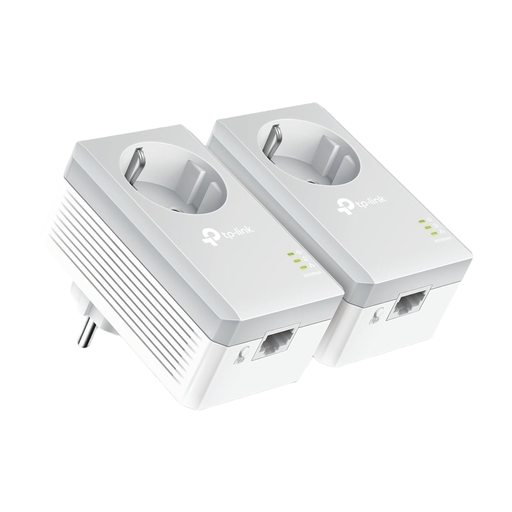 No product image available
A LAN option for a desktop computer, if the Powerline connection works between the sockets you plan to use.
600 Mbps; Ethernet connection; HomePlug AV/AV2 according to the product name.
The device at the receiving end needs an Ethernet connection.
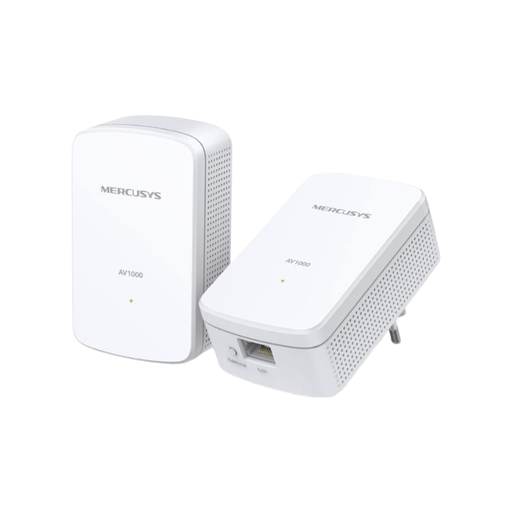 No product image available
For a desktop computer with Ethernet, if you don’t need Wi-Fi at the receiving end and the adapters are compatible with your existing network.
1000 Mbps; Gigabit Ethernet; HomePlug AV2 according to the product name.
The product name explicitly states that Wi-Fi isn’t included.
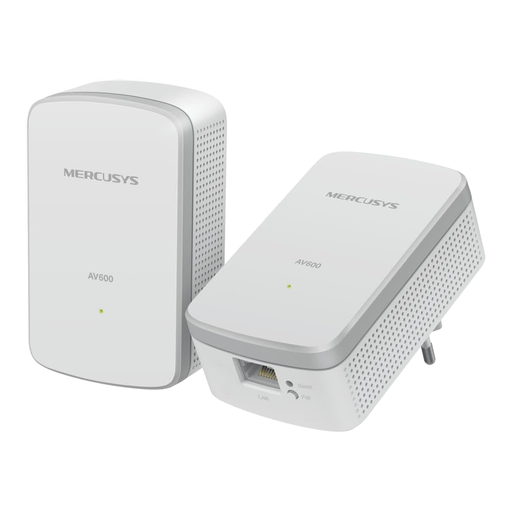 No product image available
An option for a mobile reading device if you need Wi-Fi at the receiving end and the Powerline connection works between the sockets you plan to use.
AV600; WiFi 600 Mbps; Gigabit port according to the product name.
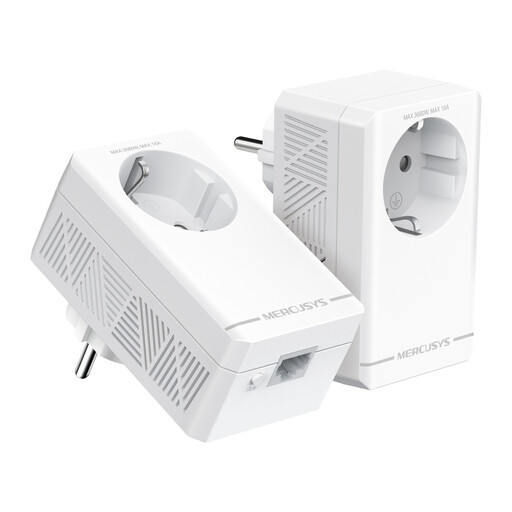 No product image available
For a desktop computer connected via Ethernet, if an additional socket would be useful where you plan to use it.
AV1000; Gigabit Ethernet; pass-through socket according to the product name.
The device at the receiving end needs a network cable.
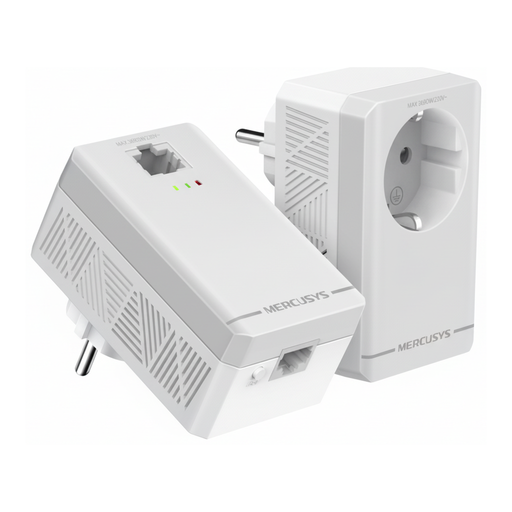 No product image available
For a wired reading device if you need an additional socket at the receiving end and don’t need Wi-Fi there.
AV600; pass-through socket; two-piece kit according to the product name.
You’ll need a network cable to connect your device.
No. To set up a new network, you need one adapter by the router and another at the receiving end. A single additional adapter is only suitable if you already have a compatible Powerline network.
Test the adapters in the sockets where you plan to use them, then download a typical issue there on the device you’ll actually read it on. devolo recommends plugging adapters directly into wall sockets wherever possible, rather than using extension leads or multi-socket adaptors. Nearby power supplies or dimmer switches can also make a difference.
Check that the number of adapters included matches the number of rooms you need to connect, and check the power consumption of the specific model. Warranty terms may have additional conditions depending on the product: according to the product page, NETGEAR’s limited warranty for the PLP2000 requires you to buy from an authorised retailer and register the product.
The German Federal Network Agency lists several things it checks, including correct CE marking, identifiable manufacturer details, a German-language instruction manual with the required warnings, and a declaration of conformity. CE marking indicates that, in the manufacturer’s view, the product meets the relevant EU requirements; it isn’t an independent assessment of connection quality in your home.
First, check for possible sources of interference and the devices involved, as a single connection problem doesn’t prove that radio interference is occurring. The German Federal Network Agency offers advice on investigating the cause and a way to report radio interference.