
Lieferung heute & morgen

Qualitätsgarantie

Willkommens-Angebote freischalten: KOSTENLOSE Lieferung | Bis zu 80 % RABATT | Kostenlose 30-Tage-JoyPlus-Testphase
App herunterladen
Pram accessories are designed to make everyday life with a baby or toddler easier. In practice, however, not every seemingly universal product fits every pram. A rain cover for a buggy that is too short may leave the sides exposed, a tightly fitting sun canopy can restrict air circulation, and a footmuff with incorrectly positioned harness openings can make secure fastening more difficult.
As a Joybuy Product Recommendation Officer, I therefore look for clear information such as dimensions, materials, fastening methods, care instructions and safety guidance. These details help you assess marketing claims and avoid unsuitable purchases when choosing pram accessories.
The term universal pram accessory usually refers to a flexible fastening method, such as elastic, hook-and-loop fasteners or straps. It does not replace checking the shape of your pram. A cover designed for a standard buggy will not necessarily be suitable for a twin pram or a three-wheeled pram.
Before buying, you should check:
A pram rain cover protects against rain and wind, but should not remain closed permanently. Ventilation openings and a clear viewing window are important design features. Remove the rain cover indoors, in warm weather and in direct sunlight. Never leave a child unattended with the cover fitted.
With a UV50 pram sunshade, the stated UPF value indicates the textile protection factor of the material. It does not mean that the pram is fully protected from heating up. Even when using a sunshade, you should not cover the pram with additional blankets, check the temperature at the back of your child’s neck regularly and choose shaded routes where possible.
Compare the product dimensions with those of your pram. A sibling or twin pram requires a considerably wider cover. A twin pram rain cover should cover both seats without blocking the ventilation openings.
For a standard pram, measurements such as 67 × 48 × 65 cm or 45 × 80 × 90 cm are more useful than a simple description such as “fits all models”. Also check whether the accessory is designed for seats positioned side by side or one behind the other.
Hook-and-loop fasteners, elasticated bands, cords and zips all have different advantages and disadvantages:
Before each use, check the fasteners, seams, harness slots and material for tears or loose parts.
PEVA film is specified for several rain covers as a transparent, wipe-clean material. Some models are described as BPA-free, PVC-free or phthalate-free. These details relate to the information provided by the respective manufacturers and should not automatically be applied to every pram accessory.
A pram mosquito net is often made from polyester mesh. Key features include an elasticated edge that closes as fully as possible, adequate air circulation and easy cleaning. Do not use the net if it is damaged.
Allow rain covers to dry completely after cleaning before folding them away. This reduces the risk of damp and mould forming. Foldable accessories supplied with a storage bag are practical for keeping in a changing bag or pram organiser.
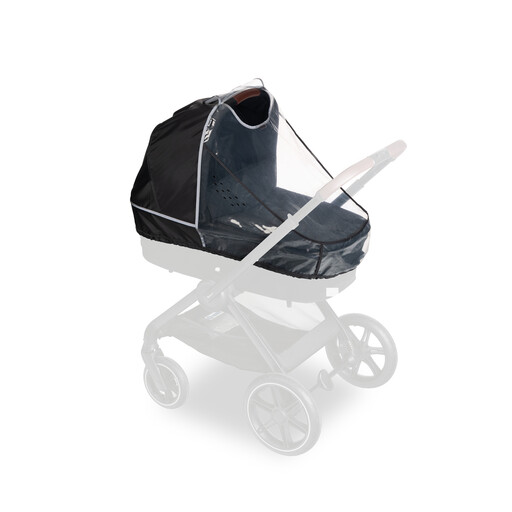
Why this product suits this profile: The transparent cover is designed for many prams and buggies and can be carried compactly in changeable weather.
Ventilation zones, a viewing window and side hook-and-loop fasteners are clearly specified. The dimensions of 67 × 48 × 65 cm make it easier to compare the fit.
PEVA film, reflective edging, wipe-clean surface and foldable storage.
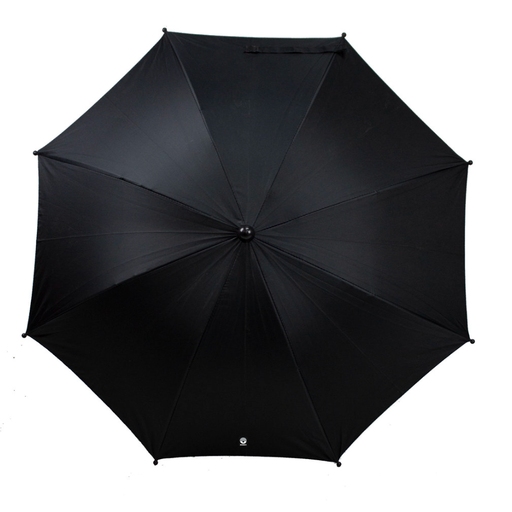
Why this product suits this profile: The parasol offers a stated UPF rating of 50+, a diameter of 76 cm and flexible adjustment options on the handlebar.
The flexible fastening does not cover the pram completely. This means that, by design, air exchange remains more open than with an enclosed cover.
180-degree rotating arm, adjustable Flex technology and water-repellent polyester.
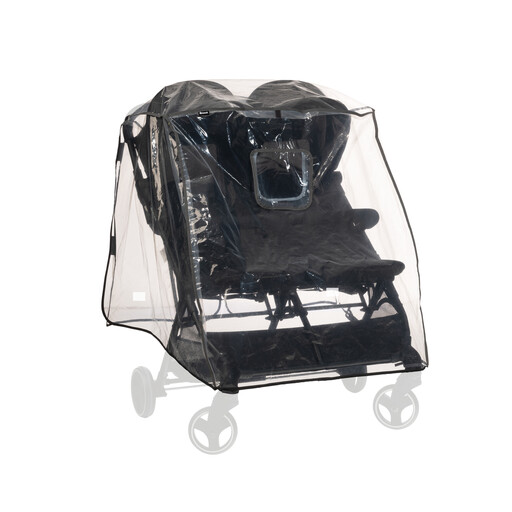
Why this product suits this profile: The extra-large design is intended for many twin and sibling prams with side-by-side seats.
Designed for two seats, it reduces the risk of using a cover intended for a single pram where it is not suitable. Ventilation openings and a transparent panel are specified.
PEVA material, reflective edging, hook-and-loop fastening and a weight of 0.60 kg according to the product information.
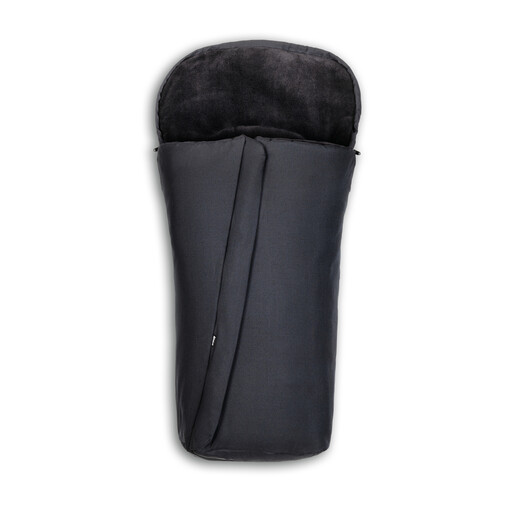
Why this product suits this profile: This footmuff is suitable for cold-weather walks and can be adapted to different five-point harnesses using seven harness slots.
The harness slots and anti-slip points address two common problems: incorrect harness routing and the footmuff slipping on the seat unit.
Two-way zip, machine washable at 40 °C and an integrated storage bag.
For sunny days, textile parasols from Hauck with a stated UPF 50+ rating are also available alongside the Dooky model. For protection against insects, a stretchy pram insect protection net made from polyester mesh is suitable and can be washed at 30 °C. It should only be used to keep insects away; adequate ventilation and supervision are still essential.
For three-wheeled prams, choose a dedicated cover with an additional elastic band around the foot section. For standard buggy seats, a model with 360-degree reflective edging and a viewing window may be useful. With a buggy rain cover, you should also check that the front opening remains compatible with the safety harness and reclining position.
We have put together a complete, regularly updated list of products that fully meet these strict selection criteria and the safety regulations applicable in the EU.
A suitable rain cover is useful on wet and windy days. In warm weather, remove it to prevent excessive heat building up inside the pram. For sunny walks, consider a parasol or sun canopy, while a footmuff provides additional coverage in low temperatures.
Pull the elasticated edge over the seat unit and check that all access points are covered. The net must not form loose loops within the child’s reach. Before each use, check that the fabric is securely in place and that ventilation remains adequate.
Their lifespan depends on the material, exposure to the weather, cleaning and folding. Rain covers should be dried after every use and replaced if they develop tears. With footmuffs, check the zips, harness slots and seams regularly. Store sunshades somewhere dry and protected from light when they are not needed.