
Lieferung heute & morgen

Qualitätsgarantie

Willkommens-Angebote freischalten: KOSTENLOSE Lieferung | Bis zu 80 % RABATT | Kostenlose 30-Tage-JoyPlus-Testphase
App herunterladen
Anyone looking to buy pram accessories will find a wide range of products for rain, wind, cold weather, sunshine and insects. At first glance, many covers and attachments look similar. In everyday use, however, fit, ventilation and fastening determine whether an accessory is genuinely practical.
A universal rain cover may be suitable for many prams or buggies, but it will not necessarily fit every design. Differences include:
Before buying, you should therefore check the dimensions, seat shape and position of the fastening points. A three-wheeled model may require an additional fastening at the footrest. A buggy rain cover that is too tight can slip, while an oversized cover may catch on the wheels or moving parts.
A pram rain cover only provides effective protection from precipitation if sufficient air can circulate at the same time. Enclosed plastic surfaces can quickly become hot in mild or sunny weather. Viewing windows, side mesh panels or ventilation openings are therefore important design features.
The rain cover should not be left on the pram indoors or in warm weather. Children must not be left unattended under a cover. Before every use, it is also advisable to check for tears, damaged fasteners and blocked ventilation openings.
A pram sunshade with UV protection UPF 50+ describes the material’s protection rating. It does not replace choosing a shady route or regularly checking the child’s temperature. A pram parasol still allows air to circulate at the sides, but it must be securely attached and adjusted according to the position of the sun.
Compare the product dimensions with those of your pram. The following are particularly important:
When choosing a pram footmuff, the harness slots should match the height and width of the harness. For example, the Hauck model has seven harness slots for 5-point harness systems positioned at different heights. The product details state dimensions of approximately 50 × 30 × 8 cm and indicate that it is typically suitable for children from six months to three years.
PEVA film is listed as the material for several rain covers. It is transparent and can usually be cleaned with a damp cloth. After cleaning, the cover must dry completely before being folded and stored. Otherwise, moisture may remain trapped in the folded material.
For a pram mosquito net, fine-mesh polyester fabric with an elasticated edge is practical. It should fit snugly but must not have loose loops within the child’s reach. Washability is a valuable advantage if the net is used frequently during summer.
Ease of care is also important for a footmuff. A wipe-clean foot area and machine washing at 40 °C make regular cleaning easier. A two-way zip can simplify access and adjustment as temperatures change.
A viewing window with an opening makes it easier to maintain eye contact and reach the child without removing the rain cover completely. Reflective edging or strips can improve visibility at dusk, but they do not replace lights or reflective clothing.
A compact packed size, storage bag and fastening system that requires no complicated installation are also useful. In sudden changes of weather, the accessory needs to be easy to reach quickly.
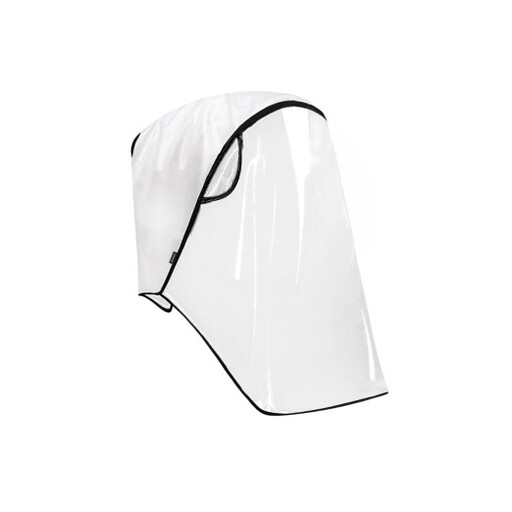
Why this product suits this profile: The cover is designed for use from birth, weighs approximately 0.35 kg according to the product details and can be used with standard prams and buggies.
Side mesh windows help maintain airflow. The transparent design lets you see your child without having to remove the cover for every check.
Low weight, universal design according to the manufacturer, mesh windows and compact handling.
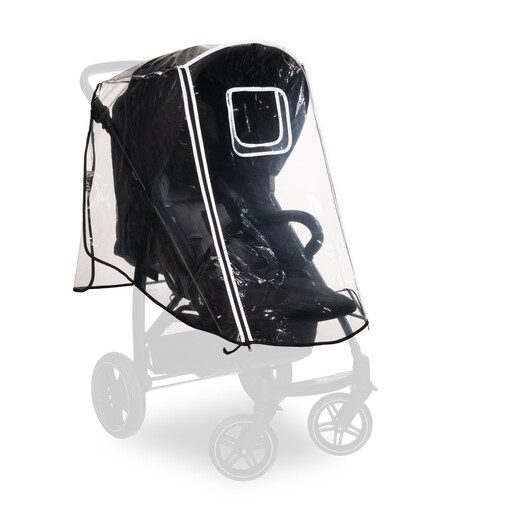
Why this product suits this profile: Designed for many four-wheeled buggies, this model combines a viewing window, front zip, hook-and-loop fastening and reflective details.
The large front opening makes it easier to reach your child. The viewing window can support ventilation; however, compatibility with your own model should still be checked.
PEVA film, front zip, reflective strips and a stated weight of approximately 0.44 kg.
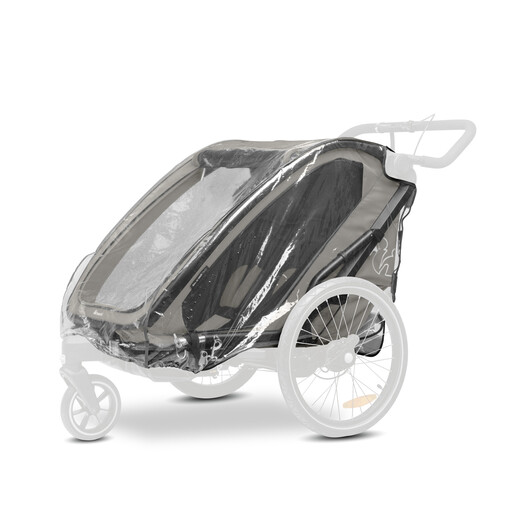
Why this product suits this profile: The bicycle trailer rain cover is designed for the Hauck Bike N Walk Duo and is suitable for children from six to 48 months.
The stated compatibility relates to one specific trailer model. This avoids the uncertainty of choosing a general pram rain cover for a bicycle trailer.
Ventilation openings, transparent material, reflective edging and a foldable design.
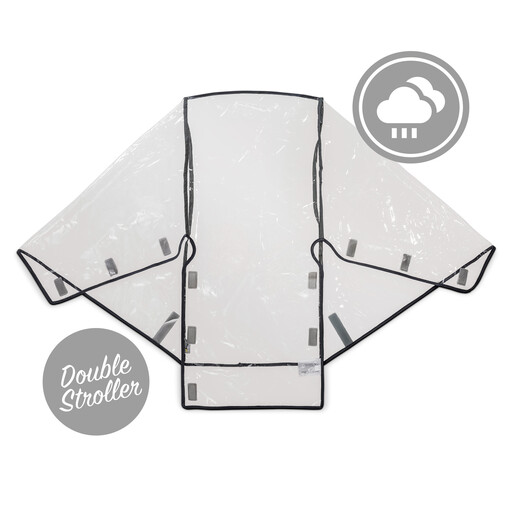
Why this product suits this profile: This twin-pram rain cover is designed for many double prams, including the Hauck Turbo Duo and Roadster Duo.
The selection is designed for double and multiple-birth prams. Integrated ventilation openings and hook-and-loop fasteners address the common problems associated with large covers.
Transparent PEVA design, ventilation zones and fastening with elastic and hook-and-loop fasteners.
For cold days, a footmuff is a useful addition. The hauck Winter Footmuff for Stroller and Buggy – Black features a fleece lining, seven harness slots, non-slip dots and a two-way zip. The stated machine-washable design at 40 °C is useful for regular use. Here too, you should consider the harness system, recommended age and your child’s temperature.
For sunny walks, you could choose a pram parasol or a universal cover. The Dooky Stroller Sunshade is listed as offering UPF 50+ and, according to the product description, can be attached to the handle. The Hauck Universal Sunshade is designed for prams and buggies and can be folded for transport. A sunshade must not block ventilation completely.
We have put together a complete, regularly updated list of products that fully meet these strict selection criteria and the safety regulations applicable in the EU.
That depends on the seat width, hood height and design. A buggy rain cover for four-wheeled models is not automatically suitable for a three-wheeled buggy. Before buying, compare the product dimensions and compatibility details with your own model.
The net is fitted over the hood or seat structure using its elasticated edge. It must fit tightly, must not form loose loops and must not affect ventilation. The fabric should be checked for tears before every use.
Their lifespan depends on exposure to UV radiation, moisture, zips and mechanical stress. Rain covers should be stored dry and not left permanently in direct sunlight. Damaged film, loose fasteners or torn nets should no longer be used.