
Lieferung heute & morgen

Qualitätsgarantie

Willkommens-Angebote freischalten: KOSTENLOSE Lieferung | Bis zu 80 % RABATT | Kostenlose 30-Tage-JoyPlus-Testphase
App herunterladen
A pram accompanies many families for several years. But attractive product claims don’t automatically lead to the right buying decision. For example, a particularly compact fold may mean less storage space or a less comfortable seat. You should also check what “from birth” actually means: what matters is whether the pram has a suitable carrycot or a genuinely flat recline position.
A lightweight pushchair is easier to carry and store. However, smaller wheels, less suspension or a more compact seat can make it less suitable for cobbled streets and uneven paths. A weight of around 5.5 to 8.5 kg can be practical for city use and travel. For longer walks in parks or along country paths, wheel size, suspension and frame stability are just as important.
Manufacturers’ folded-size measurements usually refer to the pram once it has been folded, without any additional accessories. Before buying, measure your boot and check whether the carrycot, pushchair seat or infant car seat will need to be transported separately. If you’re buying a travel pushchair, it’s also important to check whether its folded size meets the requirements of your airline. You can only be sure it will be accepted as cabin baggage after checking the airline’s current rules.
A pram rated for up to 22 kg can be used for several years. However, the maximum weight limit doesn’t tell you how comfortable the seat will be for a bigger child, or how much weight the shopping basket can hold. Check both figures separately. You should also only use accessories such as an infant car seat if compatibility and the correct adapters are clearly specified.
A pram suitable from birth should have a suitable carrycot or a sufficiently flat recline position that the manufacturer has explicitly approved for use from birth. A traditional travel system usually consists of a chassis, a carrycot and a pushchair seat for later use. When you switch to the seat, make sure the backrest is adjustable and your child can be secured with a 5-point harness.
A pushchair for use from around six months usually has an upright seating position. According to the product details, models such as the CYBEX LIBELLE and CYBEX BEEZY are designed for children from six months. Other models are available for use from birth to around four years, according to the manufacturer. Before use, always check the stated age range against your child’s stage of development.
For regular journeys by bus and train, a low weight, a carry handle and a folded design that stands on its own are useful features. According to its product description, the Chicco Travel Stroller WE weighs 5.5 kg and measures 59 × 21,5 × 46,5 cm when folded. The CYBEX LIBELLE is listed as weighing 6 kg, with a folded size of 20 × 32 × 48 cm.
When you’re shopping, basket capacity and the maximum load matter more. According to the product details, the CYBEX BEEZY basket can hold up to 5 kg. The Gazelle S has a shopping basket with a capacity of up to 10 kg, as well as an additional under-seat basket that can hold up to 13 kg. Even so, avoid hanging heavy bags from the handlebar, as this can affect the pram’s stability.
Swivelling front wheels make it easier to manoeuvre along pavements and through narrow aisles. Suspension can soften the impact of bumps, but it can’t replace tyres suited to more challenging terrain. Air-filled tyres often provide a comfortable ride on uneven paths, but need to be checked regularly. Puncture-proof rubber tyres require less maintenance.
A pram with UV protection should clearly state the canopy’s level of protection. Several models listed here specify UV protection 50+ or UPF50+. This protection is no substitute for shade, suitable clothing or avoiding direct midday sun. Mesh windows can also help improve airflow.
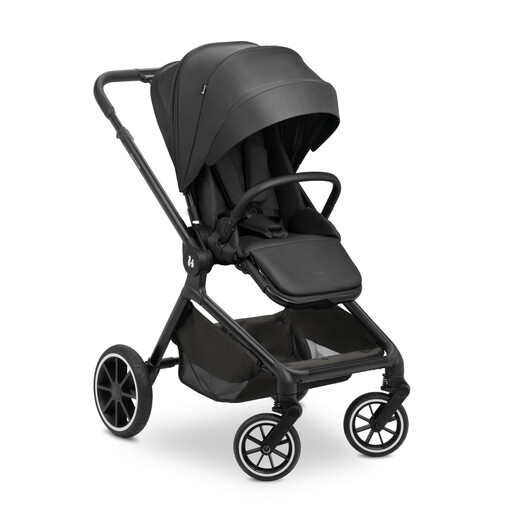
Why this product suits this profile: The set combines a carrycot and a pushchair seat, and is rated for use up to 22 kg according to the product details. It’s a good option for families looking for a travel system that can adapt to several stages of their child’s development.
Age suitability isn’t based on the maximum weight alone: the carrycot and reversible seat unit are designed for different stages of use.
Reversible seat unit, height-adjustable handle, XL basket and puncture-proof tyres with 4-way suspension, according to the manufacturer.

Why this product suits this profile: According to the product description, this pram is designed to suit different family set-ups, with more than 20 configurations for one child, siblings or twins.
Its expandability is set out as a specific configuration system. Before buying, check which additional seats or infant car seats you’ll need to purchase separately.
Supports up to 22 kg in single mode or 2 × 22 kg in double mode; the baskets offer a combined capacity of 23 kg, according to the product details.
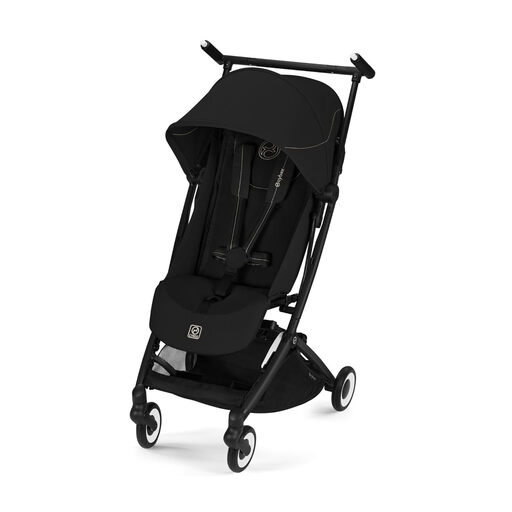
Why this product suits this profile: According to the manufacturer, this compact pushchair is designed for children from six months and is suited to city streets, travel and situations where storage space is limited.
Its folded size of 20 × 32 × 48 cm and weight of 6 kg give you clear information about how easy it is to transport, rather than relying on vague claims about being travel-friendly.
Puncture-proof or suspended front wheels, a reclining backrest, a shopping basket with a capacity of up to 5 kg and UV protection 50+, according to the product details.
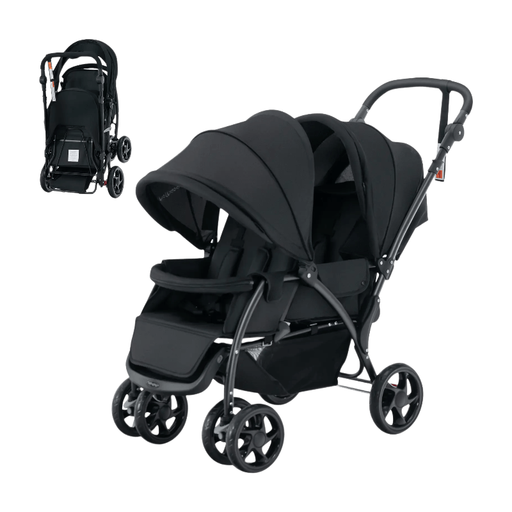
Why this product suits this profile: This double pushchair has two seats and, according to the product details, is suitable for a younger child from birth and another child from six months.
The different age recommendations for the two seats are clearly stated. This avoids presenting the pushchair as automatically suitable for two newborns.
Two 5-point harnesses, adjustable backrests, parking brakes and a stated weight limit of 15 kg per seat.
We’ve put together a complete, regularly updated list of products that meet these strict selection criteria and the safety regulations in force in the EU.
It depends on the design, age recommendation and weight limit. According to manufacturers, many travel systems and pushchairs are suitable for use up to around four years or 22 kg. Always follow the information for the specific model and take your child’s physical development into account.
Newborns need a suitable carrycot or a flat recline position that has been explicitly approved for use from birth. A pushchair with a backrest that only reclines part-way isn’t automatically suitable from birth. If you’re considering a travel system, also check whether the infant car seat is included or needs to be bought separately.
As well as the purchase price, you may need to pay for adapters, an infant car seat, replacement covers, a rain cover or new wheels. Air-filled tyres may also need regular pressure checks. A model with puncture-proof tyres and included accessories can make everyday costs easier to plan for, although the purchase price alone won’t tell you the total cost of ownership.