
Lieferung heute & morgen

Qualitätsgarantie

Willkommens-Angebote freischalten: KOSTENLOSE Lieferung | Bis zu 80 % RABATT | Kostenlose 30-Tage-JoyPlus-Testphase
App herunterladen
Rain, wind and changeable weather are part of everyday family life in the UK. A pram rain cover can make your walk much easier – provided it fits your pushchair, allows enough air to circulate and can be securely fastened while you’re out and about. Many poor purchases happen not because of the price, but because of unclear compatibility and impractical details.
This buying guide from the Joybuy Product Recommendation Officer shows you which features really matter when choosing a rain cover for a pram, buggy, carrycot or twin pushchair.
The label universal pram rain cover is no guarantee it will suit every pushchair shape. A cover designed for a classic four-wheel pram can be too short for a compact buggy, a sport pushchair with an extended footrest, or a three-wheel buggy. Carrycots and infant car seats also often need a specially shaped pram rain hood.
Before you buy, you should check:
A waterproof pram cover protects against rain, but it shouldn’t be treated as a permanently sealed cover. Missing or blocked ventilation openings can lead to heat build-up and misted-up viewing panels. A clear window or side mesh and ventilation zones make it easier to keep an eye on your child and allow air to circulate.
The rain cover should not be used indoors, in warm weather or in direct sunlight. Always supervise your child while the cover is in use. Adding extra blankets over the cover can further restrict ventilation.
An elasticated edge alone can slip in the wind. More practical options combine hook-and-loop fasteners, drawcords, elasticated trims or additional attachment loops. What matters is that the cover fits snugly without interfering with the brakes, wheels, harnesses or folding mechanism of your pushchair.
Many rain covers are made from PEVA, EVA, PVC-free plastic or clear plastic sheeting. PEVA is a plastic film that, according to product information for various models, is offered without phthalates. Always check the specific material declaration on the product page.
Also look out for:
A transparent rain cover lets you see your child and allows them to see out. Viewing windows that open, side ventilation slots or mesh inserts can improve practical use. The openings must not be covered while the cover is in use.
For a standard sport pushchair, dimensions of around 45 × 80 × 90 cm might be relevant; a cover for a twin pushchair will be significantly larger. However, such measurements are only meaningful when considered alongside the intended pushchair type. A twin pushchair rain cover must cover the width and seating arrangement of a double pushchair, while a car seat rain hood should be shaped to fit the specific car seat.
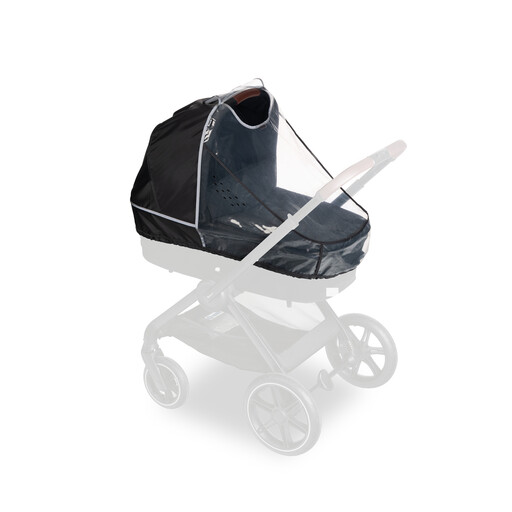
Why this product fits the profile: According to the product information, this model is designed to fit most pushchairs and carrycots and measures 67 × 48 × 65 cm. It’s ideal for families looking for a versatile rain cover.
The product description specifies the intended uses, along with side hook-and-loop fasteners, ventilation zones and an opening viewing window.
Transparent PEVA material, reflective trim, viewing window and foldable storage.
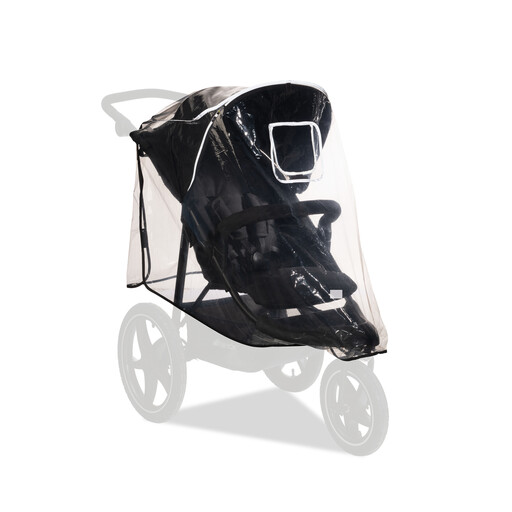
Why this product fits the profile: For three-wheel buggies, the shape and foot area are often crucial. According to the information, this model is designed for many three-wheel buggies and has an additional elasticated band at the foot area.
The design takes into account the extended shape of many three-wheel pushchairs and adds extra fixing points alongside the hook-and-loop fasteners.
PEVA film, viewing window, reflective trim and stated dimensions of approximately 58 × 48 × 90 cm.
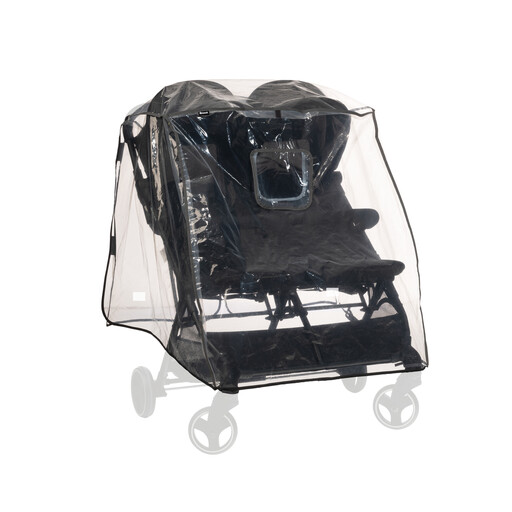
Why this product fits the profile: According to the product description, this extra-large cover is designed for many side-by-side twin and sibling pushchairs.
This selection takes into account the extra width of a double pushchair and mentions ventilation openings, elasticated edges and hook-and-loop fasteners.
Transparent surface, side ventilation, reflective trim and a stated packed size of 30 × 20 × 8 cm.
We’ve put together a full, regularly updated list of products that fully meet these strict selection criteria and the safety regulations in force in the EU.
Pull the cover completely over the seat unit or carrycot and fasten the hook-and-loop straps, hooks or elasticated edges first. Then check that the brakes, wheels, harnesses and folding mechanism remain free. Ventilation openings and viewing windows must not be covered by fabric or blankets.
The lifespan depends on the material, UV exposure, folding and care. After every wet use, the pram rain cover should be allowed to dry completely. Check the film, seams and fastenings before each use. If there are tears, holes, brittle material or loose parts, the cover should not be used again.
Not necessarily. A car seat rain hood is usually tailored to the shape and attachment points of a specific infant car seat range. For a carrycot, sport seat, buggy, twin pushchair or bike trailer, you will need a model designed for that purpose. The manufacturer’s compatibility information is therefore more important than the word “universal” alone.