
Lieferung heute & morgen

Qualitätsgarantie

Willkommens-Angebote freischalten: KOSTENLOSE Lieferung | Bis zu 80 % RABATT | Kostenlose 30-Tage-JoyPlus-Testphase
App herunterladen
A well-fitting pram rain cover protects your child from rain, wind and wet snow without unnecessarily restricting their view or airflow. In practice, choosing one often comes unstuck not because of the price, but because of missing information about fit, ventilation or fastening.
So a pram rain cover shouldn’t be chosen on the basis of the word ‘universal’ alone. What matters is whether it fits your carrycot, buggy, pushchair or double pram, and whether the material is easy to clean and store dry after everyday use.
A universal pram rain cover may fit many standard models, but it won’t necessarily cover every seat width, hood shape or footrest. Tension or gaps can be an issue, particularly with deep carrycots, large pushchair seats, three-wheel buggies and double prams.
Before buying, compare the product details with your own model. Compatibility is usually clearer for a brand-specific rain cover, such as one designed for the CYBEX Cot S or CYBEX Gazelle S.
A transparent rain cover keeps the rain out, but can heat up quickly in mild or warm weather. That’s why side vents, mesh panels or a pop-open viewing window are important design features.
Don’t use the cover indoors or in warm weather. Always supervise your child while it’s in use. Keep ventilation areas clear and don’t cover them with extra blankets or bags.
A buggy rain cover is often folded up while wet and then put in the shopping basket. This can lead to odours, changes to the material or mould. After every use, let the pram rain cover dry completely before folding it away.
It’s also worth looking for a lightweight design that folds down compactly and has fastenings you can use easily, even with cold hands.
First, identify which type of pram you have:
If possible, measure the width and height of your pram when it’s set up. Also check whether the cover will fit over the sun canopy.
Common materials include PEVA, EVA, PVC-free plastics and other transparent plastic films. However, the material name alone doesn’t tell you much about how practical the cover will be day to day. Look for:
A transparent rain cover makes it easier to see your child. However, it’s no substitute for supervision, and you shouldn’t continue using it if it has tears, holes or damaged fastenings.
A good pram rain cover needs to stay securely in place without blocking the ventilation openings. Drawstrings, hook-and-loop fastenings, elasticated edges and extra loops each have their own advantages.
Hook-and-loop fastenings are quick to attach, while an elasticated edge can adapt to different pram shapes. For walks in windy weather, it’s useful to have a combination of fastening points. Before setting off, check that the cover is fully secured.
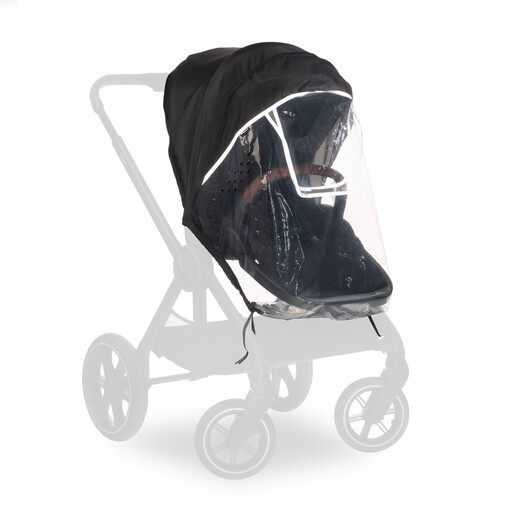
Why this product suits this profile: This model is designed for many standard buggy and pram seats, and folds down compactly.
The viewing window and ventilation areas help address the problem of a fully enclosed plastic cover.
PEVA film, reflective trim, drawstring and side hook-and-loop fastenings.
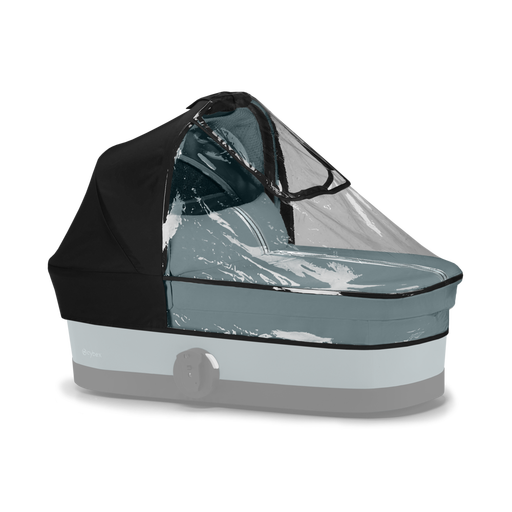
Why this product suits this profile: This rain cover is specifically listed for the CYBEX Cot S carrycot in the Balios and Talos ranges.
Clearly stated compatibility reduces the risk of choosing a universal size that doesn’t fit.
Side ventilation openings, front window and transparent material.
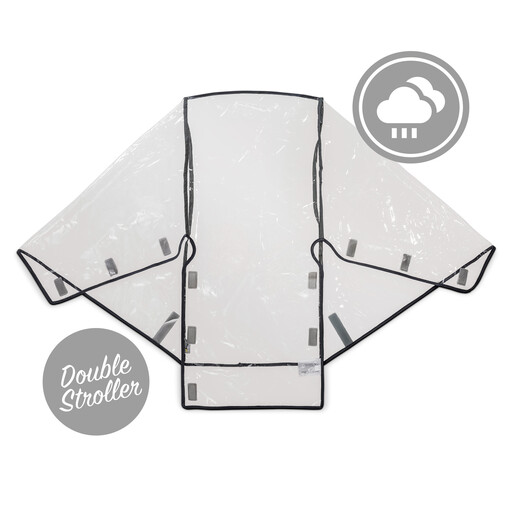
Why this product suits this profile: This model is designed for families with double or multiple-birth prams, and is listed for the Hauck Turbo Duo and Roadster Duo, among others.
The larger cover helps ensure that both seats are protected on a double pram.
Hook-and-loop fastening, transparent design and integrated ventilation openings.
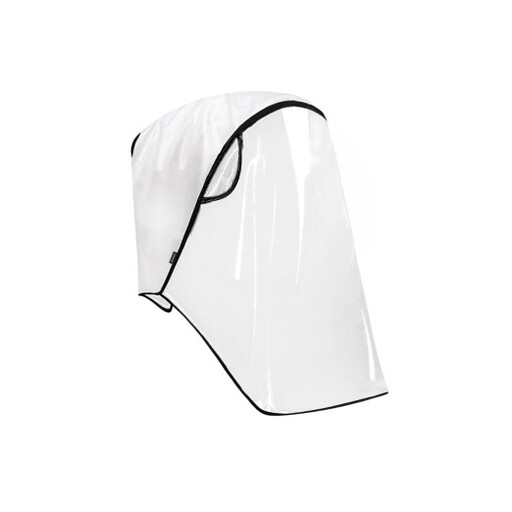
Why this product suits this profile: Its stated universal fit is suitable for many standard prams and buggies, provided the measurements match your model.
Side mesh windows and its light weight take ventilation and everyday portability into account.
Transparent material, two mesh windows, foldable design and a stated weight of 0,35 kg.
We’ve put together a complete, regularly updated list of products that meet these strict selection criteria and the safety regulations in force in the EU.
No. ‘Universal’ usually means that the cover is designed for use with many standard models, but it doesn’t guarantee compatibility with every buggy. Compare the measurements, hood shape, seat width and footrest before buying.
Pull the rain cover fully over the intended area and secure all the drawstrings, hook-and-loop fastenings or elasticated sections. Then check that the viewing and ventilation openings are clear and that the cover isn’t touching your child’s face.
Its lifespan depends on the material, UV exposure, how often it’s folded and how well it’s cared for. There’s no single lifespan that applies to every cover. Storing it dry, cleaning it gently and replacing damaged film straight away can help keep it in good condition for everyday use.