
Lieferung heute & morgen

Qualitätsgarantie

Willkommens-Angebote freischalten: KOSTENLOSE Lieferung | Bis zu 80 % RABATT | Kostenlose 30-Tage-JoyPlus-Testphase
App herunterladen
A pram rain cover is part of the basic equipment for many families. However, not every rain cover fits every pram. Common poor purchases happen because product descriptions advertise “universal” compatibility without taking the actual shape of the pram into account. A transparent cover can also be unsuitable for everyday use if it lacks ventilation, secure fastening or access to the child.
This buying guide explains which features are essential when choosing a rain cover for a pram, buggy, carrycot or twin pushchair.
A universal pram rain cover will not necessarily fit every seat width, hood shape or frame. A cover for a 4-wheel buggy may fit too loosely on a 3-wheel buggy. With twin pushchairs, the arrangement of the seats is also important: side-by-side models require a very different cover from tandem pushchairs.
Before buying, parents should therefore compare the product details with their own pram model. Information about dimensions, seat type and fastening method is particularly helpful. For specialist models such as a 3-wheel buggy or carrycot, it is preferable to choose a cover with explicitly stated compatibility.
A fully enclosed plastic cover can keep out rain and wind, but it should not be left on the pram permanently. If there are no ventilation zones or opening viewing window, air circulation is restricted. Particular care is needed in warmer weather or direct sunlight.
A pram rain cover is intended exclusively for protection from the weather outdoors. It should be removed indoors, in warm areas and whenever the child is unsupervised. Openings must remain clear, and the material must not come into contact with the child’s face.
Reflective strips improve the cover’s visibility at dusk. However, they are no substitute for paying attention near traffic. A viewing window makes it easier to maintain eye contact and access the child, but on its own it says nothing about the fit.
A pram sunshade, a UV50+ pram parasol or a pram mosquito net are not alternatives to a suitable rain cover either. Each accessory serves a different purpose.
Look for a fastening system that can be attached securely and intuitively in everyday use. Common options include:
With a rain cover for a 3-wheel buggy, additional fastening at the footrest can be useful, as its construction differs from that of a traditional buggy. For a twin pushchair rain cover, the cover and ventilation openings should be designed to fit the width of both seats.
PEVA film is used for several of the rain covers on offer. According to the respective product details, certain models are phthalate-free, BPA-free or PVC-free. Such claims should always be checked directly in the manufacturer’s and product information; the material name alone does not provide a complete safety assessment.
As a general rule, clean the cover with a damp cloth and allow it to dry fully before folding it. Moisture on the inside can cause unpleasant odours or material problems if the cover is stored for a long time. Before each use, check the film for tears, holes and brittle areas.
Practical features of a rain cover include:
A buggy rain cover with a large front opening makes it easier to place the child in the buggy and take them out again. If you often travel in changeable weather, it is also worth choosing a model that can be stored in a changing bag or pram organiser.
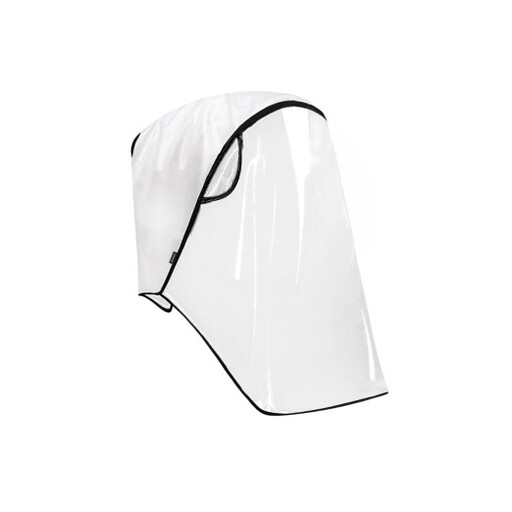
Why this product suits this profile: The universal shape is designed for many standard prams and buggies, making it suitable for families looking for straightforward protection from changeable weather.
Side mesh windows help support airflow. The transparent material allows you to see the child, while the low weight of around 0.35 kg makes it easy to carry.
Universal size according to the product details, side mesh windows and easy fitting.
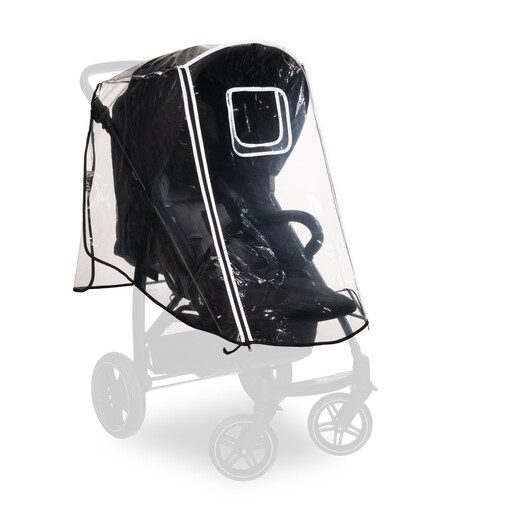
Why this product suits this profile: Suitable for users who value access to the child, reflective details and clearly defined fastening for 4-wheel buggies.
The large zipped front opening makes access easier. Hook-and-loop fasteners, a viewing window and reflective strips address common weaknesses found in simpler covers.
PEVA film according to the product details, front opening, viewing window and reflective details.
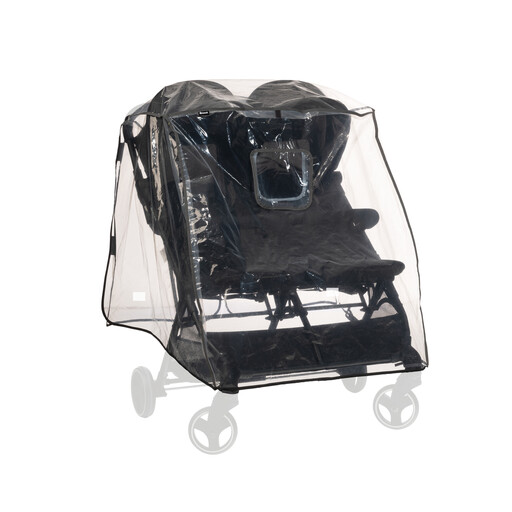
Why this product suits this profile: This cover is designed for families with a twin or sibling pushchair where two side-by-side seats need protection.
The extra-large design is intended for many side-by-side twin pushchairs. Elasticated edges, hook-and-loop fasteners and ventilation slots help provide a closer fit.
Transparent cover, ventilation slots and PEVA material according to the product details.
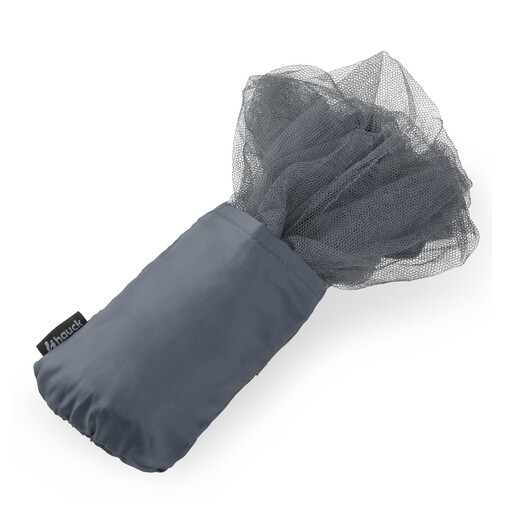
Why this product suits this profile: For summer walks or regions with many insects, this net complements a pram rain cover with separate insect protection.
The fine-mesh polyester fabric is not intended to provide rain protection. Using the two products separately allows ventilation and weather protection to be adjusted according to the situation.
Elasticated edge, foldable design, storage bag and machine washing at 30 °C according to the product details.
For sunny days, consider a UV50+ pram parasol or a fabric sunshade with UPF50+. The Dooky parasols mentioned come with a stated UPF50+ rating; the parasol attaches to the handle and can be angled in different directions. A sunshade must not completely cover the pram’s opening. The child’s temperature should be checked regularly.
A rain cover for a car seat requires a different shape from a cover for a pushchair seat. For carrycots and car seats, the dimensions and fastening points should therefore be explicitly stated as suitable. The same applies to other pram accessories, such as organisers, footmuffs or mosquito nets: loose parts must not create loops or points of tension within the child’s reach.
We have put together a complete, regularly updated list of products that fully meet these strict selection criteria and the safety regulations applicable in the EU.
Place the cover fully over the seat or carrycot section, then first fasten the specified hook-and-loop fasteners, elasticated edges or cords. Next, check that the wheels, brakes and moving parts remain clear. Ventilation openings and viewing windows must not be covered. It is advisable to test-fit the cover at home before your first walk.
Its lifespan depends on the material, use, storage and care. Only fold the cover once it is completely dry and clean. If it has tears, holes, brittle film or damaged fastenings, it should no longer be used. Regular visual checks are therefore more informative than specifying a fixed period of use.
No. A parasol or fabric sunshade is designed for direct sunlight and may also provide UV protection, depending on the product. A rain cover, on the other hand, protects against rain and wind. For changeable weather, it can be useful to carry both accessories separately, with each one suited to your pram.