
Lieferung heute & morgen

Qualitätsgarantie

Willkommens-Angebote freischalten: KOSTENLOSE Lieferung | Bis zu 80 % RABATT | Kostenlose 30-Tage-JoyPlus-Testphase
App herunterladen
A pram rain cover should protect your child from rain, wind and, where necessary, snow, without restricting airflow or your view of them. In practice, though, not every model fits every pushchair. Some covers are too loose, while others are awkward to attach when you’re out and about or mist up after only a short time.
A universal rain cover is designed to fit many standard models, but not every seat width, hood or frame shape. A rain cover for a buggy usually needs different dimensions from one designed for a carrycot. Twin and sibling pushchairs also vary considerably in their seat layout and the length of cover required.
Before buying, check the following:
A transparent, waterproof pram cover lets you see your child, but that doesn’t tell you anything about airflow. If ventilation openings are missing or covered, moisture and heat can build up beneath the cover.
Viewing windows, mesh panels or side ventilation zones are useful features. Make sure they aren’t blocked by blankets, bags or other covers. A pram rain cover with a viewing window is especially handy if you want to reach your child without removing the whole cover.
It’s worth checking the material details when buying plastic products. PEVA is often used as an alternative to PVC. According to their product details, some of the products mentioned here are described as PVC-free, BPA-free or phthalate-free. These statements reflect the manufacturer’s declaration for each product and shouldn’t be taken as a general claim about its health effects.
Care is just as important: a wet rain cover should be left to dry completely before being folded and put away. Otherwise, moisture can linger in the material or folds.
The shape of your pushchair will determine which cover to choose. Compact models designed for 4-wheel pushchairs may suit a traditional pushchair or buggy. A rain cover for a 3-wheel pushchair may need extra attachment points around the foot area or a longer covering.
For twins and siblings, look specifically for a rain cover for a sibling pushchair or a rain cover for a twin pushchair. A single cover generally won’t provide enough coverage for a wider double seat.
For an infant car seat, the dimensions and shape of the carry handle are key. A rain cover for an infant car seat should also have mesh panels or an opening window, so access to your child isn’t completely restricted.
Drawstrings, elasticated hems and side hook-and-loop fasteners help secure the cover to the pushchair. In windy conditions, several fastening points are more practical than a cover that’s simply draped loosely over the top.
Look for specific details such as water-repellent, waterproof or protection from rain and wind. The product description should explain these terms clearly. A large front opening can make it easier to reach your child, but it must be secured properly after opening.
Reflective edges or strips make the cover easier to see at dusk and in poor light. However, they don’t replace lights or the need to take care in traffic.
The following points are also worth considering for everyday use:
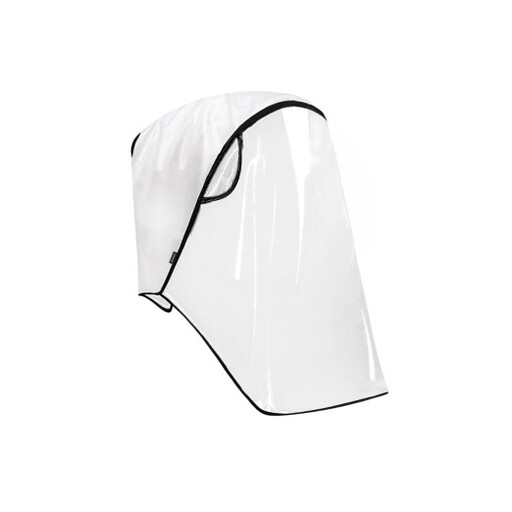
Why it suits this type of buyer: The universal design is intended for many standard pushchairs and buggies, according to the product description. Weighing 0.35 kg, it’s a good option if you’re looking for a lightweight cover for changeable weather.
Side mesh windows help address the common problem of poor airflow. The transparent design also makes it easier to keep an eye on your child.
Universal design, side mesh windows, transparent material and easy to fit.
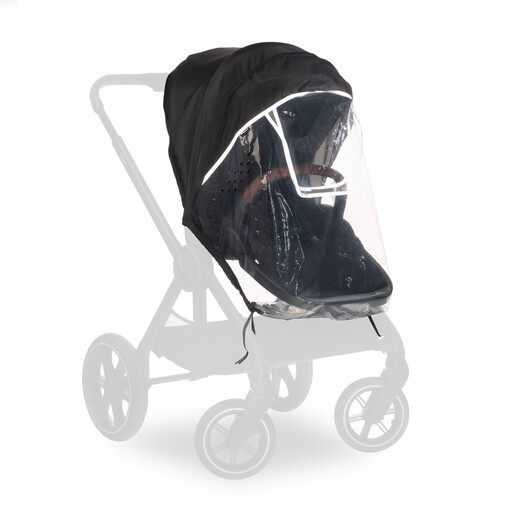
Why it suits this type of buyer: This model combines a viewing window, side hook-and-loop fasteners, drawstring fastening and a reflective edge. According to the product details, the cover is made from PEVA and is declared BPA-, phthalate- and PVC-free.
Several fastening points reduce the chance of the cover slipping in windy weather. The opening viewing window allows airflow and gives you direct access to your child.
PEVA film, reflective edge, viewing window, folds down compactly, and drawstring and hook-and-loop fastenings.
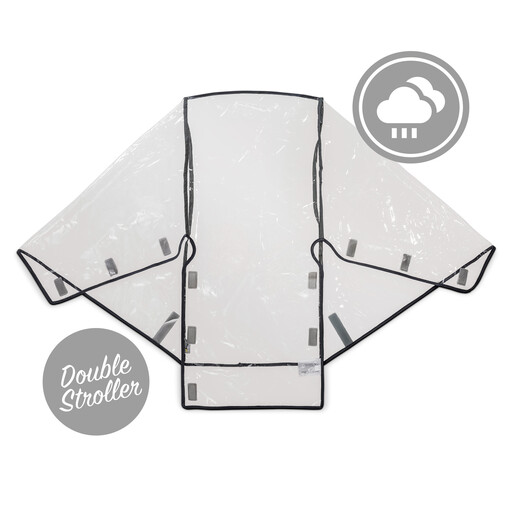
Why it suits this type of buyer: This cover is designed for double and multiple-birth pushchairs and is listed as compatible with models including the Hauck Turbo Duo and Roadster Duo. Integrated ventilation openings are useful on longer outings with two children.
Its larger design is made specifically for double pushchairs, so you won’t have to make do with a single cover over two seats. Keep the ventilation zones clear when fitting it.
Designed for double pushchairs, transparent surface, hook-and-loop fastening and integrated anti-fog ventilation.
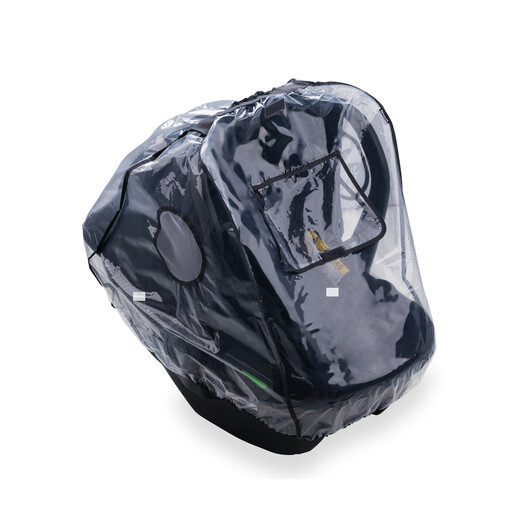
Why it suits this type of buyer: This model is designed for many infant car seats and, according to the product description, can be used from birth. A carry handle, side mesh panels and an opening front window make it practical on the go.
Its design for infant car seats means a larger pram cover won’t awkwardly cover the carry handle or the shape of the seat. The mesh windows and front opening keep access clear.
PEVA film, side mesh panels, front window, carry handle and compact folding.
We’ve put together a complete, regularly updated list of products that meet these strict selection criteria and fully comply with the safety regulations in force in the EU.
A pram rain cover isn’t a sleep accessory and must never be used without supervision. Each time you use it:
Place the cover over the pushchair and position the viewing window over the seat. Then adjust the drawstring, elasticated edge or hook-and-loop fasteners so the cover stays clear of the wheels. Finally, check that the brake, handlebar and ventilation openings are unobstructed.
Its lifespan depends on the material, exposure to UV light, how it’s folded and how well it’s cared for. Regularly checking the cover is more useful than relying on a general estimate. If the PEVA or plastic film develops tears, discolouration, sticky patches or brittle areas, stop using the product.
Take care in warm weather and direct sunlight, as the air beneath a closed plastic cover can heat up. Remove the cover as soon as it stops raining, and keep the ventilation openings clear while it’s in use.