
Lieferung heute & morgen

Qualitätsgarantie

Willkommens-Angebote freischalten: KOSTENLOSE Lieferung | Bis zu 80 % RABATT | Kostenlose 30-Tage-JoyPlus-Testphase
App herunterladen
Prawn snacks come in many forms: classic prawn crackers, shrimp crackers, seasoned prawn crisps, breaded prawns and frozen Ebi Fry. Instant noodles with prawn flavour, prawn sauce and prawn croquettes are also staples in many households’ Asian snack cupboards and stores.
The choice may seem straightforward at first. However, differences in prawn content, allergens, preparation and storage can mean that a product is not suitable for the occasion you have in mind. Checking the label and product type before buying can help you avoid unsuitable purchases and choose prawns online more effectively.
The description “Shrimp Flavour” or “prawn flavour” alone says little about how much prawn a product contains. For packaged foods, you should therefore check the ingredients list. Examples from the selection include:
A higher prawn content does not automatically mean that you will prefer the snack’s taste. However, it is an objective point of comparison when you are looking for a pronounced seafood flavour.
Prawn crackers and shrimp crackers are generally ready to eat. Breaded prawns, Ebi Fry and frozen prawn croquettes, on the other hand, must be heated thoroughly. Checking the preparation method helps ensure that you do not buy a product that is unsuitable for the occasion.
For example, Iglo ASC Crispy Prawns Classic are prepared from frozen. They take around 12 to 14 minutes in the oven, or around 4 to 5 minutes in a frying pan. According to the product details, Fisherman's Choice Torpedo Shrimps are deep-fried from frozen at 180 °C for approximately 3 to 4 minutes.
A 40 or 60 g pack is suitable for a single snack occasion or for trying several varieties. For families, parties or regular use, larger packs are often more suitable. You should consider not only the total price, but also the price per 100 g and the recommended storage conditions.
Look for the quantitative ingredient declaration for prawns or shrimps. Products may also contain wheat flour, tapioca starch, palm oil, spices, fish sauce or soy sauce. Prawn crackers with garlic, chilli or nori contain additional ingredients that influence the flavour.
The following details are also useful when comparing snacks:
Nutritional values vary considerably. Nongshim Shrimp Cracker Original is listed as containing 25 g of fat and 1.4 g of salt per 100 g. Oishi Prawn Crackers list 13 g of fat and 2.55 g of salt per 100 g. These figures are relevant when planning portions.
Prawns are crustaceans and must be labelled as an allergen. Many products also contain gluten, soya, fish, milk, egg or peanuts, or may contain traces of them.
Allergy sufferers should take particular care when checking the labelling on the relevant packaging. Recipes, trace-allergen information and nutritional values may change. The product information in the online shop does not replace checking the current label.
Ready-to-eat prawn snacks should be stored in a cool, dry place and sealed carefully after opening. Some product information recommends consuming the contents immediately after opening. Frozen prawns and breaded products should be stored in the freezer at –18 °C or below. Once thawed, they must not be refrozen in accordance with the packaging instructions.
Raw or breaded prawns must be heated thoroughly. Several products specify a core temperature of at least 70 °C. Always follow the exact preparation instructions provided by the relevant manufacturer.
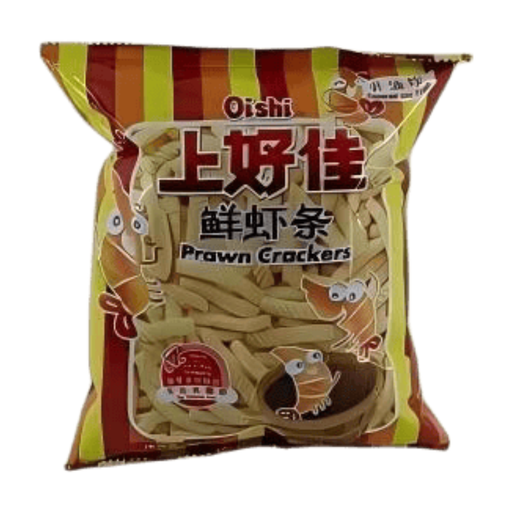
Why this product suits the profile: The small 40-g pack is practical if you are trying prawn crackers for the first time or want to combine several Asian snacks. The product is ready to eat.
The prawn content of 5.6% is clearly stated in the product details, rather than being conveyed only through a flavour description.
40 g contents, ready to eat, with wheat and prawn allergens clearly stated.
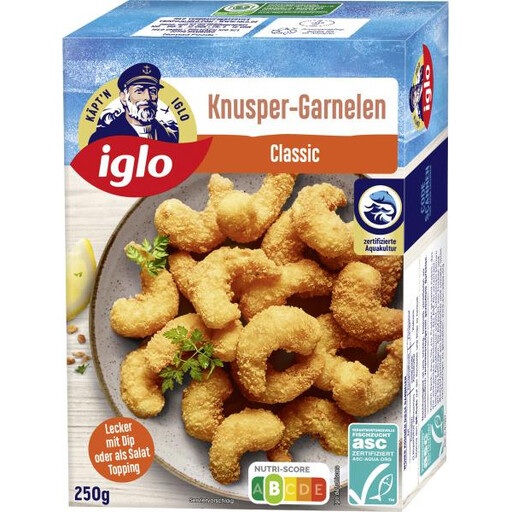
Why this product suits the profile: The combination of 53% prawns, a 250 g pack size and several preparation options makes this product suitable for a hot starter or a snack from the freezer.
The prawn content is clearly stated. Oven and frying-pan preparation are also described with times and temperatures.
53% prawns, frozen, 245 kcal and 0.9 g of salt per 100 g according to the product details.
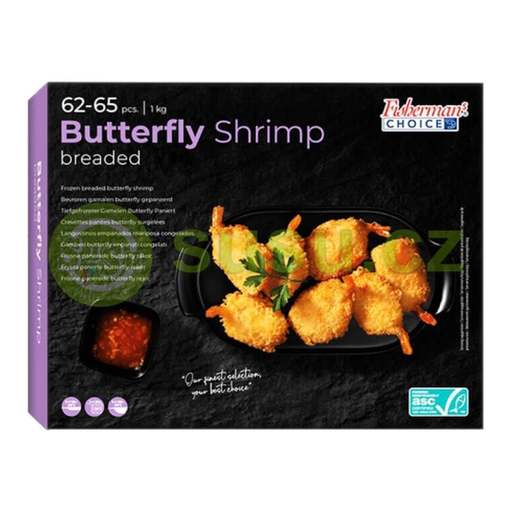
Why this product suits the profile: The 1-kg pack is aimed at hosts, families and shoppers who regularly plan to serve breaded prawns as part of sharing platters, at parties or across several meals.
The pack size and prawn content of 50% are clearly stated. This makes it easier to plan the amount needed for larger groups.
1 kg contents, 50% prawns, frozen storage at –18 °C or below.
We have put together a complete, regularly updated list of products that fully meet these strict selection criteria and the safety regulations applicable in the EU.
For a quick meal, Thai snacks such as Hanami Shrimp Cracker or MAMA Instant Fried Rice Curried Shrimp may be worth considering. Korean snacks such as Nongshim Shrimp Cracker Hot combine a prawn flavour with a spicier seasoning.
If you want to do more than snack, you can use prawn sauce with stir-fried vegetables, meat or noodles. Lee Kum Kee Shrimp Sauce Tomato Garlic Dry Fried Sauce 70 g is added directly towards the end of frying. When choosing instant noodles with prawn flavour, you should take the salt content into account; Master Kong Shrimp Fish Cake Flavour Instant Noodles are listed as containing 4.3 g of salt per 100 g.
Popular varieties include prawn crackers, shrimp crackers, prawn crisps, seasoned peanuts with shrimp flavour and breaded prawns. Depending on the product, they may be ready to eat straight away or need to be prepared in the oven, frying pan or deep-fat fryer.
The best-before date is shown on the relevant packaging. Dry snacks should be sealed and stored in a dry place after opening. Frozen products should remain at –18 °C or below until preparation. Once thawed, follow the manufacturer’s instructions; several products explicitly state that they must not be refrozen.
The ongoing cost depends mainly on the preparation method, quantity and the appliance’s energy consumption. Ovens and frying pans use different amounts of energy and oil. With a deep-fat fryer, you also need to factor in the amount of oil required and its disposal. For an accurate price comparison, consider the pack size, number of portions and preparation effort together.