
Lieferung heute & morgen

Qualitätsgarantie

Willkommens-Angebote freischalten: KOSTENLOSE Lieferung | Bis zu 80 % RABATT | Kostenlose 30-Tage-JoyPlus-Testphase
App herunterladen
Choosing the right infant formula is a major decision for expecting and new parents. The wide range of PRE formulas available can quickly seem overwhelming. This article serves as a guide, introducing different types of PRE infant formula and explaining their key features based on manufacturer information to help you make an informed choice.
Before you make a decision, it's helpful to understand the basics of bottle-feeding for newborns.
The "PRE" designation indicates that the formula's only carbohydrate is lactose (milk sugar), which is modelled after the composition of breast milk. Therefore, just like breast milk, PRE formula can be fed according to your baby's needs—as often and as much as they want to drink. It is suitable from birth as a sole source of nutrition or for supplementary feeding from birth.
The market offers various types of infant formula tailored to different needs.
The composition of infant formula is strictly regulated by law in the EU to ensure an adequate supply of nutrients. For example, all products must contain DHA (Docosahexaenoic acid). DHA is a polyunsaturated omega-3 fatty acid. Pay close attention to the ingredients list and nutritional table to compare the exact composition of a product.
Here, we present a selection of PRE formulas available on the German market. The descriptions are based on the information provided by the manufacturers.
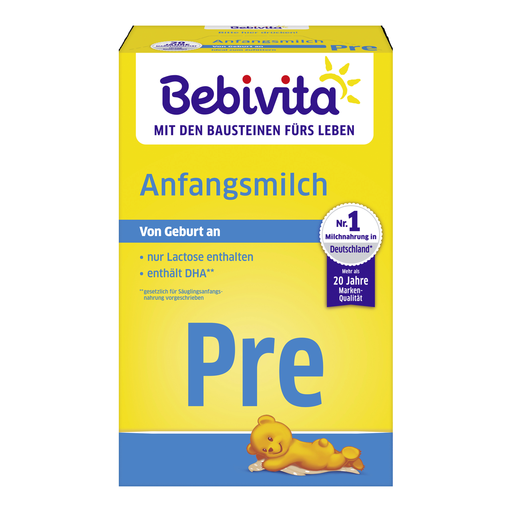
What makes this product stand out Bebivita PRE is designed for exclusive bottle-feeding or as a supplement from birth. It contains only lactose as a carbohydrate and, according to the manufacturer, provides all the essential nutrients needed for optimal growth.
Benefits
Who is it for? For parents looking for a standard infant formula that can be used as the sole source of nutrition from birth or as a supplement to breastfeeding.
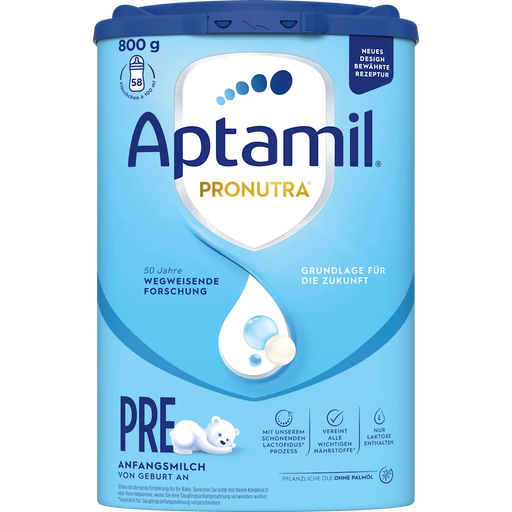
What makes this product stand out According to the manufacturer, Aptamil PRE is based on over 40 years of research. The recipe contains a combination of nutrients and vitamins and is suitable as a sole source of nutrition from birth. It also contains only lactose.
Benefits
Who is it for? For parents seeking an infant formula whose recipe is based on the manufacturer's extensive research and is designed as the sole source of nutrition for newborns.
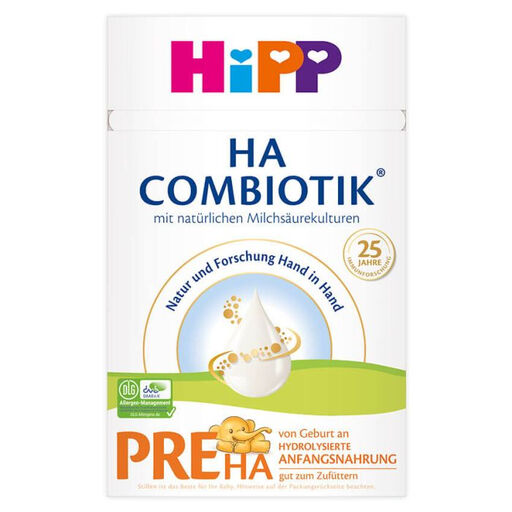
What makes this product stand out This HA formula contains hydrolysed (extensively broken down) protein. According to the manufacturer, it is suitable for babies with an increased risk of allergies. The recipe combines this with natural lactic acid cultures and galactooligosaccharides (GOS).
Benefits
Who is it for? For parents who, after consulting a doctor, need a hypoallergenic infant formula for their baby who is at risk of allergies. Do not use if there is an existing cow's milk protein allergy.
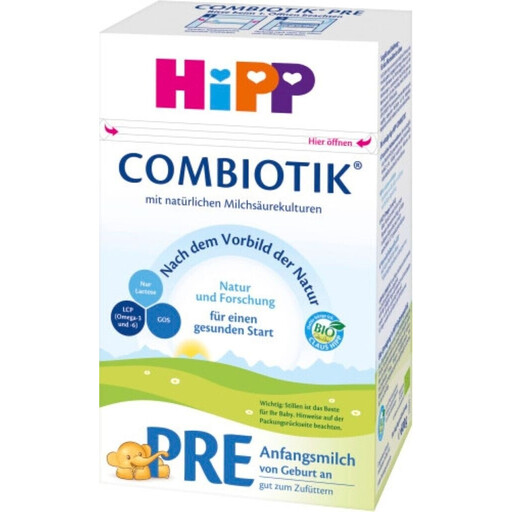
What makes this product stand out This organic infant milk from HiPP PRE combines ingredients from organic farming with a recipe that includes natural lactic acid cultures and galactooligosaccharides (GOS) from organic lactose. It is also starch-free and contains only lactose.
Benefits
Who is it for? For parents who value ingredients from organic sources and are looking for an infant formula tailored to the special nutritional needs of the first few months of life.
The selection presented here already covers a range of needs. However, if you haven't found the right product for you and your baby, you can find an even wider range of baby milk from birth in our category.
Discover our entire range of milk powder
Below, we answer some of the most common questions parents have about PRE formula.
Stage PRE infant formula can be given throughout the entire first year of life. Its composition is designed to fully meet the nutritional needs of an infant. A switch to a follow-on milk (e.g., Stage 2) is possible after the 6th month when starting complementary foods, but it is not essential as long as the child is full and content with the PRE formula.
The primary difference lies in the carbohydrates they contain. While PRE formula contains only lactose, Stage 1 formula may also contain a small amount of starch. The starch is intended to make the formula creamier and may help some babies feel full for longer. PRE formula can be fed on demand, whereas with Stage 1 formula, it is better to adhere to the feeding recommendations.
Mixing different brands or types of baby milk in one bottle is not recommended. Each recipe is precisely balanced to meet nutritional needs, and mixing could disrupt this balance. If a change of brand is necessary, it should be done gradually by replacing the bottles one by one over several days. It is advisable to discuss such a change with your paediatrician or midwife beforehand.