
Lieferung heute & morgen

Qualitätsgarantie

Willkommens-Angebote freischalten: KOSTENLOSE Lieferung | Bis zu 80 % RABATT | Kostenlose 30-Tage-JoyPlus-Testphase
App herunterladen
A pre-lit artificial Christmas tree promises a hassle-free and festive holiday season—year after year. However, not all models live up to that promise. Before you make a decision, it's helpful to understand the common weaknesses that often only become apparent after purchase and can dampen your holiday spirit.
To find a durable and safe tree that meets your expectations, you should check a few technical features. These objective criteria will help you evaluate a model's quality, independent of marketing promises.
Safety should be your top priority, especially with a product that has integrated electronics. Ensure the tree is made from PVC (Polyvinyl Chloride) or PE (Polyethylene) and is explicitly labelled as "flame-retardant." This feature significantly reduces the risk of fire and is a crucial factor for safe operation, particularly in households with children or pets.
A solid metal stand is almost always preferable to a plastic one. It offers significantly greater stability and durability. There are two main types of assembly systems:
An LED Christmas tree is standard today and offers clear advantages over old incandescent bulbs:
For smaller models like a tabletop Christmas tree, battery-operated string lights are a practical solution, as they can be placed flexibly without visible cables. For larger trees, a mains connection is common. Some models also offer various lighting modes (e.g., blinking, dimming) for a customisable atmosphere.
To make your decision easier, we have compiled a selection of products based on different needs and use cases.
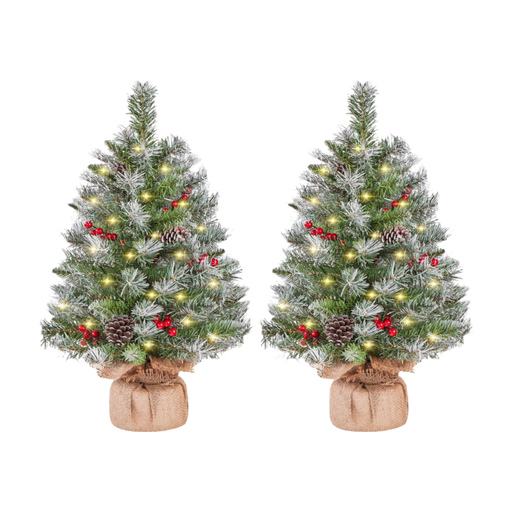
Why This Fits Their Persona: Ideal for small apartments, office desks, or as additional Christmas decor on windowsills. The set allows for symmetrical decoration without taking up much space. The battery-powered lighting avoids cable clutter.
The concrete base wrapped in burlap provides a firm stand and prevents wobbling. The material is certified as flame-retardant, increasing safety.
Complete package in a set of 2, already decorated with 35 warm white LEDs, pinecones, and berries per tree. Ready to use right out of the box.

Why This Fits Their Persona: Perfect for families and style-conscious users looking for a large, impressive tree with an authentic winter look. The flocked artificial Christmas tree creates a stunning atmosphere in a living room or entryway.
The sturdy metal stand ensures a secure footing. With 1000 branch tips and a hinged system, it creates a dense, full appearance without any bare spots. The PVC material is flame-retardant.
Pre-installed lighting with 350 warm white LEDs and 8 lighting modes. The hinged system allows for quick and easy assembly.
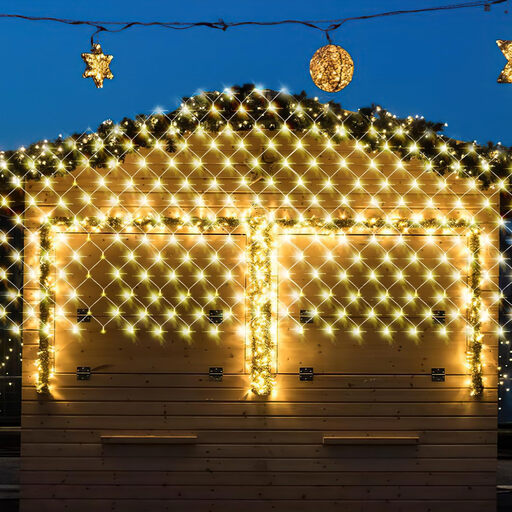
Why This Fits Their Persona: A practical solution for homeowners and business owners who want to install large-scale, uniform outdoor Christmas lighting. Ideal for hedges, facades, balconies, or shop windows.
The IP44 certification ensures the net lights are weatherproof. Operation with 30V low voltage prevents overheating and enhances safety for outdoor use.
300 LEDs provide bright illumination. Eight different lighting modes and a memory function offer flexibility and convenience in designing your lighting display.
We've compiled a full list of products that meet these strict selection criteria and safety standards.
1. How long does a pre-lit artificial Christmas tree last? A high-quality artificial Christmas tree can last 10 to 15 years or more with proper care. The lifespan of the integrated LED lighting is often over 20,000 operating hours, which also translates to many years of seasonal use. Store the tree in its original box in a dry place after use to maximise its lifespan.
2. Are artificial Christmas trees with LED lighting safe? Yes, models from reputable manufacturers are very safe. Look for the "flame-retardant" label for the tree material and for certification marks (like CE) for the electrical lighting. Unlike traditional incandescent bulbs, LEDs generate very little heat, which significantly reduces the risk of fire.
3. How do I properly set up an artificial tree to make it look full? After assembling the tree sections, take enough time to "fluff" the branches. Start at the trunk and work your way outwards. Bend each individual small branch in a different direction—up, down, and to the side. This process can take 30 to 60 minutes depending on the size of the tree, but it is crucial for achieving a full and realistic appearance.