
Lieferung heute & morgen

Qualitätsgarantie

Willkommens-Angebote freischalten: KOSTENLOSE Lieferung | Bis zu 80 % RABATT | Kostenlose 30-Tage-JoyPlus-Testphase
App herunterladen
A pre-lit, flocked artificial Christmas tree promises a hassle-free and festive holiday season. However, the selection process has several pitfalls that often only become apparent after your purchase. Misleading material specifications or an unstable construction can quickly dampen your holiday spirit. This guide will help you identify the essential features and make an informed decision.
Many offers sound tempting, but certain flaws only reveal themselves during assembly. Watch out for these three common problems:
To avoid the issues mentioned above, you should check three key parameters before buying. These largely determine the quality, durability, and appearance of your tree.
The foundation of any good artificial Christmas tree is its stability. A tree with a metal stand is typically the more reliable choice. Look for a stand that is foldable for easier storage and has rubber caps to protect your floor from scratches. The primary branch material is usually PVC (Polyvinyl Chloride), a robust and durable material that allows for a dense needle structure. Some models combine PVC with injection-moulded PE (Polyethylene) for an even more realistic look on the outer branches.
A tree with LED lighting is more energy-efficient and safer, as the lights generate very little heat. Key features include:
A tree's density is determined by the number of branch tips combined with the structure of its branches. A tree with well-designed, hinged branches is easier to shape and appears fuller. Common sizes like a 180 cm (6 ft) artificial Christmas tree or a 210 cm (7 ft) artificial Christmas tree should be chosen to fit your room's ceiling height. Plan for about 30 cm (1 ft) of clearance to the ceiling to leave room for a tree topper. A well-designed hinged or hook-on system significantly simplifies assembly and disassembly.
Here is a selection of models tailored to specific needs and room situations.

Why This Fits Their Persona: Ideal for smaller apartments, office desks, or as an additional decoration on a sideboard. This small Christmas tree has a minimal footprint yet still brings festive cheer to any room.
The heavy cement base provides excellent stability, preventing the typical wobbling and tipping that is often a problem with small trees that have lightweight plastic stands.
Compact size for versatile placement; very stable thanks to the integrated cement base.
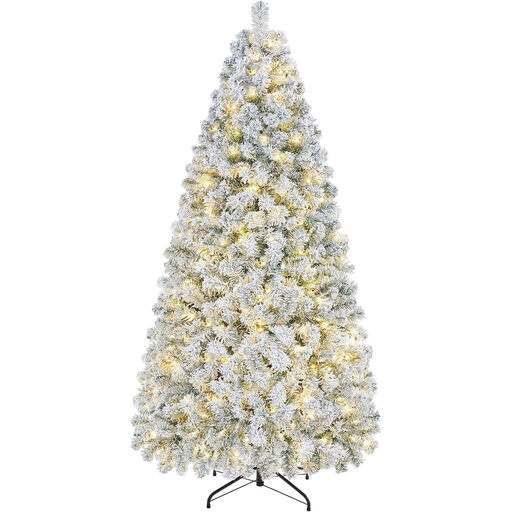
Why This Fits Their Persona: At 183 cm (6 ft) tall, this tree is the ideal size for most living rooms. The pre-installed lighting saves families valuable decorating time and ensures an instantly cohesive look.
The 250 integrated warm white LEDs with 8 lighting modes bypass the problem of low-quality, external light strings. The sturdy, foldable metal stand ensures the necessary stability.
Time-saving assembly thanks to integrated lighting and a hinged system; versatile lighting moods with 8 modes.
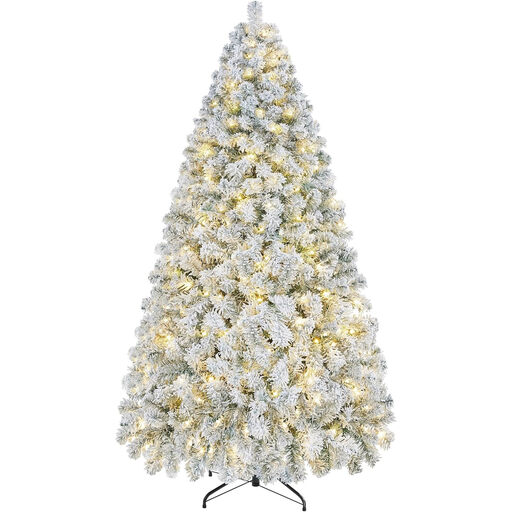
Why This Fits Their Persona: Perfect for rooms with high ceilings, corporate entryways, or for anyone wanting to make an opulent, festive statement. The 213 cm (7 ft) height creates an impressive presence.
With approximately 1,000 branch tips and a dense branch structure, this tree looks exceptionally full and avoids the typical sparse patches. The 350 LEDs ensure seamless and atmospheric illumination across its entire height.
Very dense and full appearance due to a high tip count; generous 213 cm (7 ft) height for an imposing look.
We have compiled a complete, up-to-date list of products that fully meet these strict selection criteria and safety requirements.
The lifespan of an artificial Christmas tree depends heavily on material quality and storage. A high-quality PVC model with a sturdy metal stand can easily last 5 to 10 years or more with proper care. Store the tree in a dust-free, dry place after the holidays—ideally in its original box or a dedicated storage bag—to protect the flocking and branches.
It's normal for some snow particles to shed during the initial setup of a flocked tree. To minimise the mess in your home, it's best to unpack the tree sections on a large drop cloth (like an old sheet) and fluff the branches there. On high-quality models, particle loss is minimal after the first assembly. Wearing gloves can also help protect your hands.
A common rule of thumb is that you need about 100 lights for every 30 cm (1 ft) of tree height for good illumination. Therefore, a 180 cm (6 ft) tree should have at least 600 lights if you are adding them yourself. The major advantage of buying a pre-lit Christmas tree is that the number, distribution, and colour of the lights are optimally matched to the tree's size and density by the manufacturer. This not only saves you work but also ensures a professional and harmonious overall look.