
Lieferung heute & morgen

Qualitätsgarantie

Willkommens-Angebote freischalten: KOSTENLOSE Lieferung | Bis zu 80 % RABATT | Kostenlose 30-Tage-JoyPlus-Testphase
App herunterladen
A pre-workout booster is designed to make getting ready for your workout easier. Yet many adults buy a product without realising how much caffeine it contains, choosing one with unclear serving sizes or assuming its ingredient list delivers more than the amounts actually provide. As a Joybuy Product Recommendation Officer, I focus above all on products with clear, easy-to-understand labelling.
Ingredients such as beta-alanine, L-citrulline, creatine and various plant extracts are often given prominence on the packaging. But it’s not just a question of whether an ingredient is included: how much is there per serving matters too. If the amount isn’t clearly stated, or the product lists only a proprietary blend, it’s difficult to compare it with other pre-workout powders.
A caffeine-containing pre-workout may include caffeine from coffee or green tea extracts, as well as added caffeine. Both count towards your total daily intake. So if you drink coffee in the morning and take a booster in the afternoon, add up the amounts from all sources. People who are sensitive to caffeine, pregnant women and under-18s should avoid caffeine-containing products unless they have first sought medical advice.
A pre-workout powder often provides more servings per container, but you’ll need water, a scoop and a shaker. A pre-workout shot is ready to drink and convenient when you’re out and about, but usually offers fewer servings per pack. For a fair price comparison, look at the price per serving, not just the price of the pack.
First, check the amount of caffeine in milligrams per serving. The products considered here contain between 100 mg and 300 mg per serving. A product with 175 mg per serving won’t necessarily suit everyone. It depends on your individual tolerance, what other caffeine-containing foods and drinks you consume, and when you plan to train.
For the products listed here, manufacturers generally recommend taking them 20 to 30 minutes before training. A shot doesn’t need to be prepared, while with powder you should follow the instructions for the amount of water and the measuring scoop. Don’t exceed the recommended daily serving.
A 330 g container, for example, may contain 30 servings, while a 420 g product may provide 20 servings because each serving is larger. So compare the serving size, number of servings and amount of each ingredient per serving.
Warnings such as ‘May contain traces of milk, gluten, egg, soya or nuts’ should also inform your decision. If you’re considering a sugar-free pre-workout, it’s worth checking the sweeteners and the actual calorie content too. ‘Sugar-free’ doesn’t automatically mean the product is free from sweeteners or other additives.
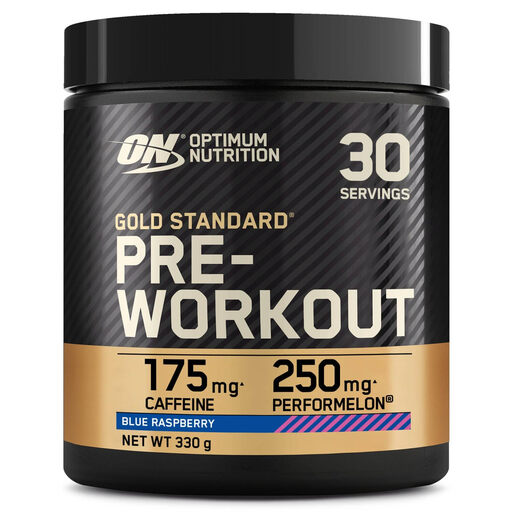
Why it suits this profile: With 30 servings and 175 mg of caffeine per serving, it offers a clearly defined option for anyone looking for a powder with several familiar ingredients.
The caffeine content, serving size and number of servings are all stated. The recommended serving is 11 g, mixed with 350 ml of water.
3 g of creatine, 1.5 g of beta-alanine and 750 mg of L-citrulline per serving; vegetarian formula according to the product information.
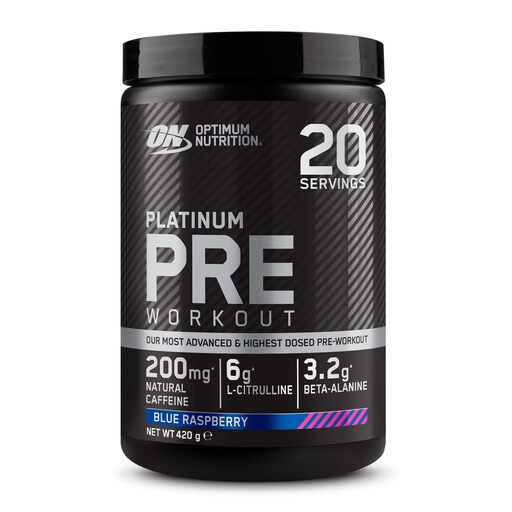
Why it suits this profile: The larger serving has a comprehensive ingredient profile, making it a good option for people who compare quantities and detailed formulations before buying.
The serving is listed as 21 g, so don’t estimate your intake based on the smaller standard serving. This makes comparisons more straightforward.
200 mg of caffeine per serving, with stated amounts of L-citrulline, beta-alanine, L-leucine and L-theanine.
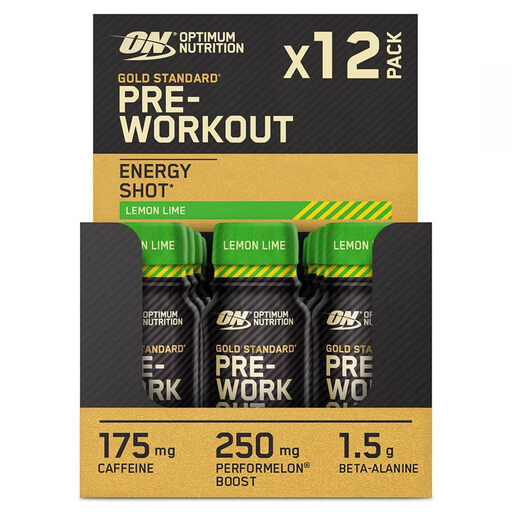
Why it suits this profile: This ready-to-drink shot is handy for commuters, competition days or workouts when you don’t have access to a shaker.
Each serving is a clearly defined 60 ml, so there’s no need to estimate measurements or mix it with water.
175 mg of caffeine, 1.5 g of beta-alanine and 2 g of L-citrulline per shot; 12 ready-to-drink servings per pack.
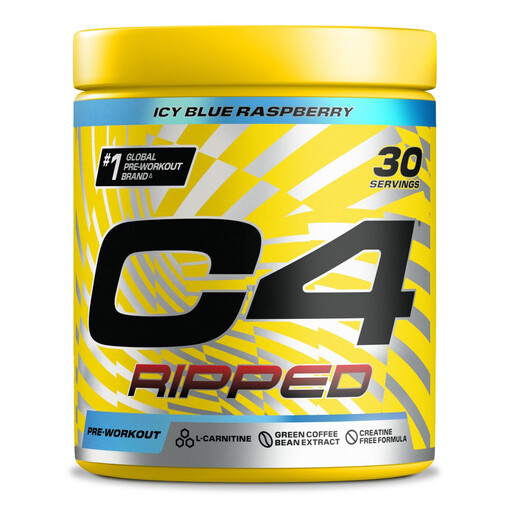
Why it suits this profile: For adults looking for a sugar-free powder with 30 servings and a moderate 150 mg of caffeine per serving for comparison.
The ‘sugar-free’ claim is accompanied by a clearly stated serving size of 5.5 g and 150 mg of caffeine.
1.6 g of CarnoSyn beta-alanine, L-citrulline and green coffee extract according to the product information; 30 servings per container.
We’ve put together a complete, regularly updated list of products that meet these strict selection criteria and comply fully with the safety regulations in force in the EU.
That depends on your personal tolerance and how much caffeine you’ve already consumed that day. The products considered here contain between 100 mg and 300 mg per serving. Remember to include coffee, tea, energy drinks and other food supplements in your total. Always follow the recommended serving and the warnings on the label.
Check the best-before date on the packaging. Once opened, store the powder in a cool, dry place, tightly sealed and away from direct sunlight. Moisture can affect how freely it pours. Follow the product instructions for a prepared drink: consume it promptly and don’t leave it standing for long periods.
A shot is ready to drink, doesn’t need a shaker and is easy to carry. Powder may offer more servings per container if you use it regularly, and lets you choose how much water to mix it with. When deciding what to buy, consider your day-to-day routine, the price per serving, caffeine content and ingredients list.