
Lieferung heute & morgen

Qualitätsgarantie

Willkommens-Angebote freischalten: KOSTENLOSE Lieferung | Bis zu 80 % RABATT | Kostenlose 30-Tage-JoyPlus-Testphase
App herunterladen
Choosing the right cutting dies can make or break a creative project. As your Joybuy Product Recommendation Officer, I'm here to help you navigate the common pitfalls and find products that deliver precise results and meaningfully expand your collection. Often, the greatest value isn't found in the flashiest designs, but in those with thoughtful, functional features.
Many crafters invest in dies that later prove to be unusable. The most common problems include:
A careful look at a few technical details can prevent these problems from the outset.
Before you purchase your next Scrapbooking Supplies, pay attention to three fundamental parameters. These determine the durability and the quality of your craft results.
Most high-quality Metal Cutting Dies are made of carbon steel. This material offers an excellent balance of hardness and flexibility, ensuring a long lifespan and precise cuts. Pay attention to the die's thickness. Extremely thin and flexible dies are often an indicator of lower quality. The cutting edge should feel sharp and be cleanly finished, with no burrs or uneven spots.
This is a purely technical, yet crucial, point. Measure the maximum pass-through width of your die-cutting machine's platform. The dimensions of the cutting die must be smaller than this measurement. Product descriptions should specify the exact dimensions of the die in centimetres or inches. This is especially important for large background or border dies, which may be designed as Die-Cutting Machine Accessories for larger machines.
Intricate designs, such as a detailed Floral Cutting Die or fine lettering, place higher demands on the die's design. Good dies of this type feature strategically placed ejection holes. These are small holes on the back of the die that allow you to gently push the paper out with a piercing tool without tearing it. Simpler Embossing Folders or those with large, solid shapes rarely need them.
Based on these objective criteria, we have selected a few products for different creative needs.
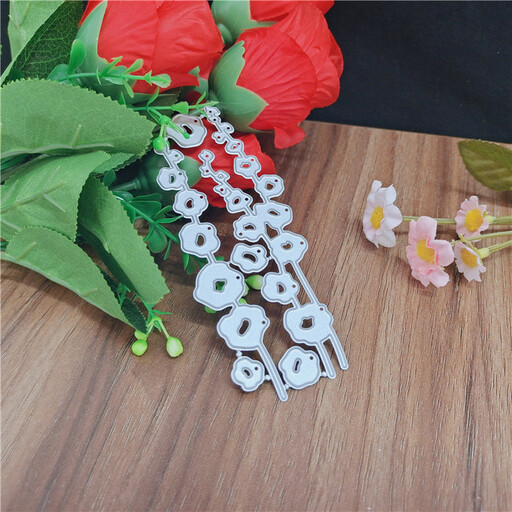
Why This Fits Their Persona: This set is ideal for those just starting out with card making. The simple yet versatile floral designs can be used for birthdays, thank-you notes, or as simple decorations, providing a great introduction to layering techniques.
The designs aren't overly intricate, which makes for clean cuts and easy paper removal. Their compact size ensures compatibility with almost all standard die-cutting machines.
The set includes multiple separate dies that can be creatively combined and layered to achieve multi-dimensional effects.
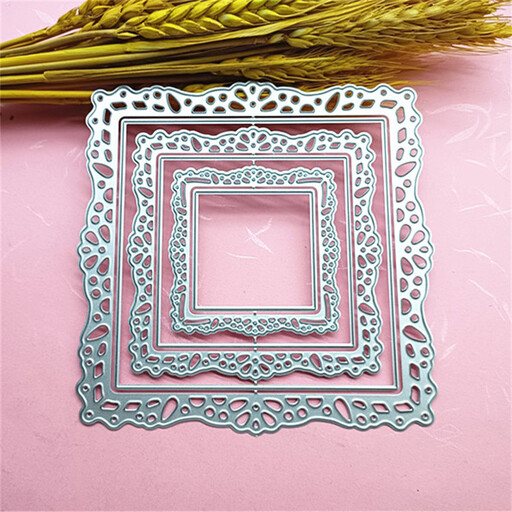
Why This Fits Their Persona: For experienced crafters who design elaborate cards or scrapbook pages. This die creates a large, lace-like background that serves as an elegant base for further embellishments.
Despite the intricate pattern, the design retains enough connecting points to enhance the stability of the die-cut paper. The open areas also make it easier to remove paper scraps.
Creates a complete, decorative background for standard card sizes in a single pass. This saves time and ensures a professional-looking result.
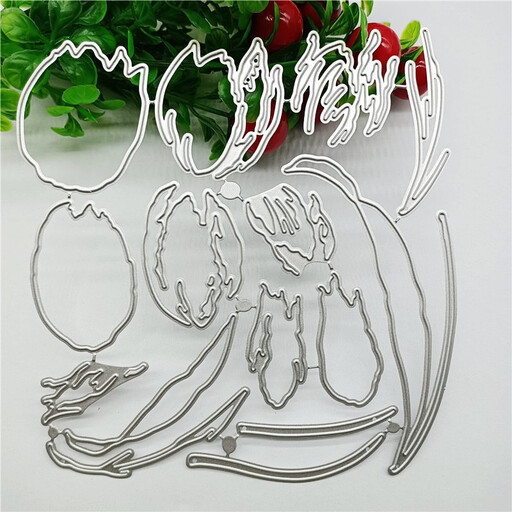
Why This Fits Their Persona: Perfect for creatives who enjoy making complete themed projects, like photo albums or greeting cards with matching text and decorations. This set offers both in one coordinated style.
The sentiments are designed in a clear, legible font that cuts cleanly even at a smaller size. The decorative elements are sturdy enough to resist bending.
The combination of image and text dies in a single set allows for a cohesive design without the need to search for matching elements separately.
We've compiled a complete, up-to-date list of products that meet these strict selection criteria and quality standards.
For most paper scraps, gently tapping the die is sufficient. For stubborn remnants in intricate areas, you can use a piercing tool (like a needle or a specialized die pick) to push the paper out from the back through the ejection holes. Another method is to use a piece of tape (washi tape works well) to lift out small particles.
For detailed designs, smooth, sturdy cardstock yields the best results. A paper weight between 160 g/m? and 220 g/m? is typically a good choice. For extremely fine designs, a helpful trick is to place a sheet of wax paper between the cutting die and your cardstock. This helps the paper release cleanly after cutting.
No, not necessarily. Compatibility mainly depends on two factors: the width of the die and the maximum pass-through width of your machine. While most small dies will fit in standard machines, larger background or border dies may require a machine with a wider platform (e.g., A4-size). Therefore, always check the die's dimensions listed in the product description before purchasing.