
Lieferung heute & morgen

Qualitätsgarantie

Willkommens-Angebote freischalten: KOSTENLOSE Lieferung | Bis zu 80 % RABATT | Kostenlose 30-Tage-JoyPlus-Testphase
App herunterladen
Repairing modern electronics, building a PC, or performing intricate model-making tasks requires tools that operate with precision and finesse. A precision electric screwdriver set is often the first choice for these jobs. However, the market is flooded with options whose marketing promises prove problematic after the first use. Incorrect material claims or unsuitable technical specifications can quickly lead to damaged devices and frustration.
This guide will help you avoid common purchasing pitfalls and identify the crucial features that define a reliable electronics repair kit. This ensures your next tool will be a valuable addition to your workshop.
Many products entice buyers with a long list of features, but these often hide critical weaknesses. Pay close attention to these three points to avoid a bad purchase:
To avoid these pitfalls, you should base your selection on objective technical parameters. The following three features are critical for the functionality and longevity of a precision electric screwdriver.
Torque (measured in Newton-metres, N.m) is the rotational force the screwdriver applies to the screw. For precision work, fine-grained adjustment is necessary.
The bits are the direct connection to the workpiece. Their quality determines the success of the job.
A mini cordless screwdriver shouldn't let you down. Look for a realistic specification for runtime—one hour of continuous operation is a good benchmark. A modern USB-C port also allows for easy charging with standard power adapters. The shape and weight of the device should fit comfortably in your hand to enable fatigue-free work, even during longer repairs.
Based on the quality criteria mentioned, we have compiled a selection of products suitable for different user profiles.
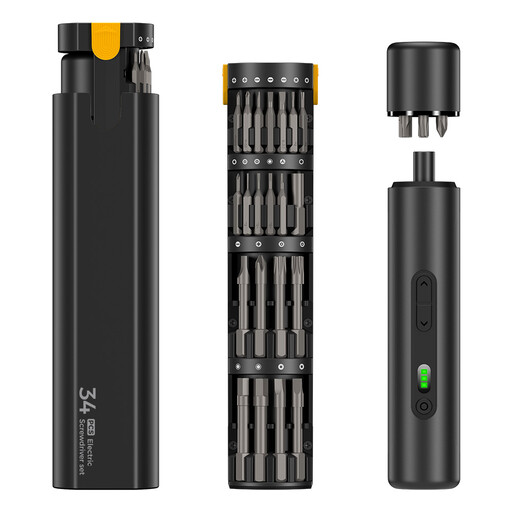
Why this set is a good fit: It offers a solid entry-level electric setup with adjustable torque and a useful bit set for general household repairs and initial electronics projects, without breaking the bank.
Provides a clearly defined, adjustable torque in three stages (1.2, 2, and 3 N.m), which reduces the risk of damage compared to non-adjustable models. The 1500mAh battery is sufficiently sized for typical DIY tasks.
Adjustable torque for versatile applications; complete set with 26 common bits and a magnetic case for easy organisation.
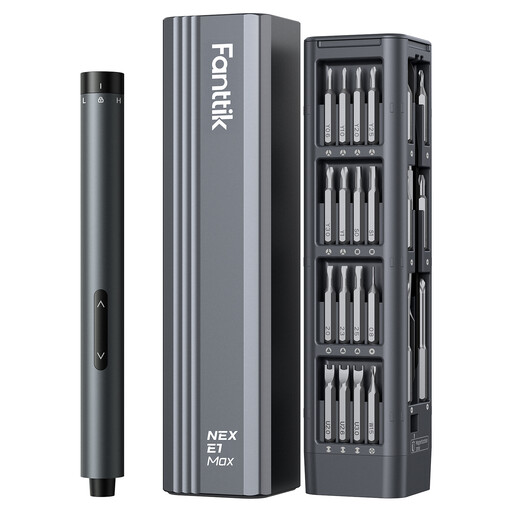
Why this set is a good fit: Specifically designed for delicate tasks that demand the lowest torque and highest precision, such as repairing smartphones, cameras, or drones. A perfect tool for the discerning technician.
Directly addresses the torque problem with two precise electric settings (0.05 N.m and 0.2 N.m), ideal for sensitive components. The 50 included bits are made from durable S2 steel.
Very low torque for sensitive electronics; high-quality magnetic storage system and 50 S2 steel bits.
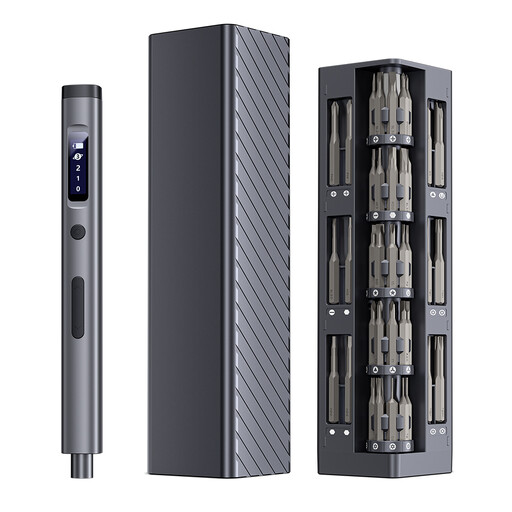
Why this set is a good fit: A balanced combination of precision, a wide selection of bits, and a flexible torque range. It's the ideal **tool for PC building**, model making, and other DIY projects that require a mix of delicate and more robust screws.
The 52 bits cover a wide range of screw types, eliminating the need to buy additional sets. The adjustable electric torque up to 0.35 N.m provides flexibility for various applications.
Comprehensive 52-piece bit set; compact and magnetic storage concept with practical accessories like tweezers and a pry tool.
We have compiled a complete, up-to-date list of products that fully meet these strict selection criteria and relevant safety standards.
S2 steel is an alloy tool steel known for its high hardness, toughness, and wear resistance. It is excellently suited for precision bits because it retains its shape even under high stress. CR-V (Chrome-Vanadium) is a more common and less expensive steel, but it is softer. On very small screw heads, CR-V bits are more prone to rounding off and can damage the screw.
For most screws in modern consumer electronics, a very low electric torque is required. A range of 0.05 N.m to 0.25 N.m is generally sufficient to secure the screws without damaging the delicate threads or circuit boards. To loosen stuck screws, a manual mode with a torque of 2-3 N.m is helpful.
A small cordless screwdriver is specifically designed for delicate tasks. Its torque is not intended for large screws in wood or metal, such as those found in furniture assembly. Attempting to use it for such jobs can overload the motor and damage the device. For that kind of work, a conventional cordless drill/driver with higher torque is the right choice.