
Lieferung heute & morgen

Qualitätsgarantie

Willkommens-Angebote freischalten: KOSTENLOSE Lieferung | Bis zu 80 % RABATT | Kostenlose 30-Tage-JoyPlus-Testphase
App herunterladen
By the Joybuy Product Recommendation Officer, August 30, 2026
Navigating the world of cookware can be overwhelming. Manufacturers constantly tout new technologies and materials, but not every investment proves its worth over time. A high price tag doesn't always guarantee quality, and impressive marketing claims can often mask design flaws that only surface during daily use. This guide will help you recognise the key characteristics of superior cookware and make a well-informed decision.
Before we delve into quality features, it's important to understand the typical problems that lead to frustration in the kitchen.
To avoid these issues, you should check three key aspects before making a purchase.
The material is the heart of any piece of cookware, determining its heat conductivity, durability, and maintenance requirements.
A non-stick pan makes it easier to cook with less fat. However, the quality of the coating is critical for its lifespan.
Practical details make all the difference in daily kitchen life.

Why This Fits Their Persona: Ideal for those who regularly bake bread, especially with demanding sourdoughs. The structural stability and special coating are designed for durability and professional-level results.
The cut-resistant, glass-hard enamel base and the KAIRAMIC ceramic coating are significantly more robust than standard non-stick coatings. They withstand the acidity of sourdough and cutting directly in the pan.
Excellent structural stability due to extra-thick material; heat-resistant up to 250°C and acid-resistant.
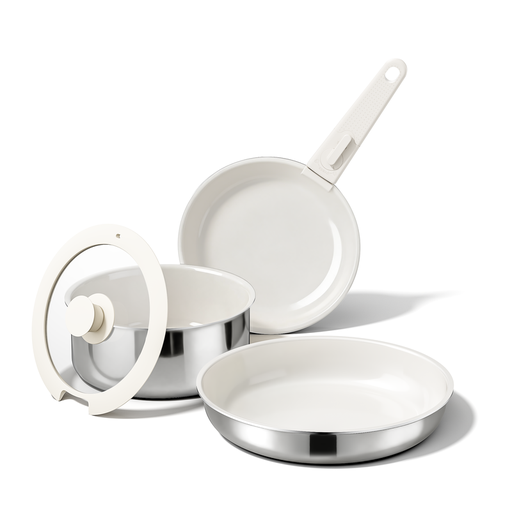
Why This Fits Their Persona: Perfect for small kitchens, RVs, or camping where every inch counts. The set offers full functionality on all hob types without compromising on quality.
The detachable handle is not a gimmick but a sturdy mechanism that makes the cookware oven-safe (up to 250°C) and allows for extremely space-saving stacking. This bypasses the pitfall of unstable handles.
Saves up to 70% storage space; universally compatible with all hobs (including induction); robust diamond-titanium ceramic coating.
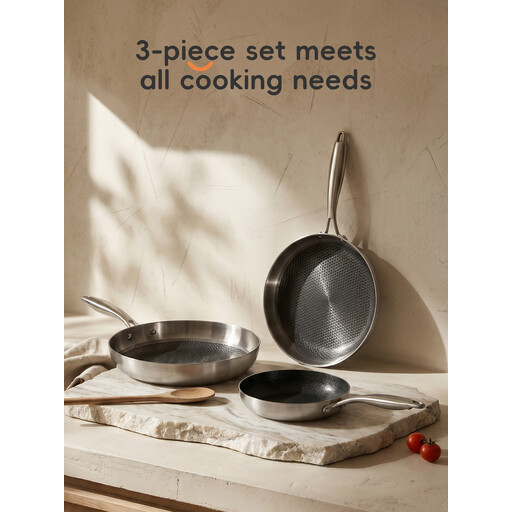
Why This Fits Their Persona: For cooks who value durability and versatility and want to avoid delicate coatings. Ideal for searing meat or vegetables at high temperatures.
This 304 stainless steel set completely bypasses the problem of short-lived coatings. The multi-layer composite base is optimised for induction and prevents the pans from warping, even under intense heat.
Extremely durable and heat-resistant; no coating that can wear off; suitable for all hob types.
We have compiled a complete, up-to-date list of products that fully meet these strict selection criteria and rigorous safety standards.
The easiest way is the magnet test: hold a magnet to the base of the pot or pan. If it sticks, the cookware is magnetic and therefore suitable for induction hobs. Additionally, a coil symbol (a loop) is usually printed on the packaging or the base to indicate induction compatibility. Look for a thick, flat base to ensure optimal energy transfer.
PFOA (Perfluorooctanoic acid) is just one of thousands of chemicals in the PFAS group (per- and polyfluoroalkyl substances). While PFOA is largely regulated, "PFOA-free" coatings can still contain other PFAS substances. A "PFAS-free" label, often found on ceramic coatings, offers more comprehensive safety as it signals the exclusion of the entire group of substances.
Sticking in a stainless steel pan can be avoided with the right technique. First, preheat the pan over medium heat without any oil. Do the water drop test: flick a few drops of water into the pan. If the drops sizzle and evaporate, it's not hot enough yet. When the drops bead up and dance across the surface like tiny pearls (the Leidenfrost effect), the pan has reached the correct temperature. Only then should you add the oil, swirl to coat, and add your food. Reduce the heat as needed.