For individual presentation folders, a USB stick plugged directly into your device takes up little space, provided the computer you’re using has the right port. If you copy files frequently or work with larger folders, a compact SSD is a suitable alternative. A portable HDD is better suited to larger file archives, if you have more desk space and can allow for longer transfer times. Before you buy, check the ports, cables, storage capacity and, where relevant, access protection.
Which option suits you?
Different ports
If you copy presentations between several computers, check whether they have USB-A, USB-C or both. A stick that plugs straight in saves you carrying a separate cable, but it needs to fit the port on the device you’re using. Kingston Technology offers USB-A models and a dual SSD with USB-A and USB-C.
Frequent file transfers
If you regularly update larger presentation folders, compare the write speeds and connection details rather than looking only at the maximum read speed. Kingston Technology lists read and write speeds for its Dual Portable SSD; Crucial describes the X9’s figure as a maximum sequential speed measured under its own test conditions.
Confidential documents
If your presentations contain confidential or personal information, access protection and a separate backup should be part of your buying decision. Germany’s Federal Office for Information Security recommends backing up data regularly. The Federal Commissioner for Data Protection and Freedom of Information describes encryption as an important way to protect the confidentiality of data on portable storage devices while they’re being transported.
What to look for when buying
USB-A stick
A good fit if: You transfer individual presentation folders between devices with USB-A and don’t want to make space for a separate cable on your small desk.
Bear in mind: The stick won’t plug directly into a computer with USB-C ports only. The USB-A interface alone doesn’t tell you how long a transfer will take.
SSD with USB-A and USB-C
A good fit if: You regularly switch between computers with different ports and don’t want to carry a separate data cable.
Bear in mind: Check that the casing has enough clearance next to neighbouring plugs. A manufacturer’s maximum speeds aren’t a guarantee of the speed you’ll get on every computer.
Compact SSD with cable
A good fit if: You often copy large presentations with images or videos and have room for a short cable on your desk.
Bear in mind: The cable and computer port need to be compatible. Maximum speeds depend on the port and how the device is used.
Portable HDD
A good fit if: You want to store larger file archives as well as presentations and have room for a separate drive and cable.
Bear in mind: A comparison published by CHIP describes HDDs as slower and more vulnerable to knocks than SSDs. This can matter if you carry the drive around and copy files frequently.
| What matters |
What to check when buying |
Who this matters to |
| Ports and space |
Check the ports on both the source and destination devices, as well as the cables included. Allow for space next to neighbouring USB ports, too. |
When I switch between computers, I need compatible ports and as few cables as possible on my small desk. Around 36% of consumers put connections and space requirements first. |
| Transfer time |
Compare read and write speeds, and take the connection standard and folder size into account. |
When I regularly update presentation folders, write speed matters more to me than a read speed on its own. Around 29% of consumers prioritise transfer time. |
| Storage capacity |
Check the size of your actual file folder, including different versions, and allow for some extra space. |
If my presentations include large collections of images or videos, I need more storage than I would for individual slide files. Around 21% of consumers prioritise capacity for files and related media. |
| Confidential files |
Check that the encryption is suitable and that you can access the files on the destination device. Keep important originals backed up separately. |
If my presentations contain confidential information, I want to protect them if the drive is lost and still be able to open them on the destination device. Around 14% of consumers put the protection of confidential files first. |
Avoid common buying mistakes
-
Assuming USB-C automatically means fast transfers
The shape of the connector and the transfer speed you can achieve are two different things. A USB connection can only work at the speed supported by both the drive and the computer.
Check the connection standard on the drive and the computer you’ll be using, as well as the specific model’s write speed.
-
Choosing an HDD for every folder just because it offers high capacities
A portable HDD can suit large archives, but it isn’t always the most practical choice for a desk if you copy files frequently. CHIP describes HDDs as slower and more vulnerable to knocks than SSDs.
Start by checking the size of your actual file folder. Choose an HDD if the extra storage for your archive matters more than compact handling and transfer time.
A portable HDD takes up desk space and may mean longer transfer times.
-
Keeping your only copy of a presentation on the portable drive
If the portable drive is lost or files become corrupted, you could lose your only copy. Germany’s Federal Office for Information Security recommends backing up data regularly.
Keep a separate copy, and before an important meeting, check that the transferred files open on the device you’ll be using.
Key brands at a glance
Kingston
The range includes USB-A sticks that plug straight in, as well as a portable SSD with USB-A and USB-C connections.
- Kingston Technology lists maximum speeds of 1.050 MB/s for reading and 950 MB/s for writing for the Dual Portable SSD.
- The DataTraveler Exodia M has USB-A; the USB standard alone doesn’t tell you how long a transfer will take.
Verbatim
The Pocket SSD is a wired USB-C option with a cable holder.
- For the 1-TB version, Verbatim lists dimensions of 96,1 × 45,1 × 10 mm and includes a USB-C-to-USB-C cable.
- The listed connection won’t be enough for a computer without a compatible USB-C port. The speeds quoted are manufacturer maximums.
Crucial
The X9 is a compact USB-C SSD for storing and transferring files, if a wired drive suits the way you work.
- Crucial lists the X9 as measuring 65 × 50 mm, with read speeds of up to 1.050 MB/s.
- Crucial describes this figure as a maximum sequential speed measured under its own test conditions. It doesn’t confirm how long it takes to write presentations; compatibility also depends on the format and host device features.
Samsung
The T7 Shield is a portable SSD option if you want configurable protection and compatible cables as well as file-transfer functionality.
- For the 1-TB version, Samsung lists USB-C-to-C and USB-C-to-A cables, as well as password protection using AES-256-bit hardware encryption.
- These are the manufacturer’s specifications for this model. Speed and casing protection claims are no substitute for testing it with your device or keeping a separate copy of your files.
Seagate
The portable HDD range is an archive option if you want to store larger collections of files as well as presentations.
- Seagate lists versions ranging from 1 TB to 5 TB for the range, with file transfers over USB 3.0.
- Allow space for the drive and cable on a small desk. Range specifications don’t necessarily apply to every individual version.
Joybuy products
This selection includes USB-A and dual USB sticks, as well as compact external SSDs for transferring presentation files.
 No image available
Kingston DataTraveler 64 GB, 220 MB/s, Metal, USB 3.2 Gen 1 SE9 G3
For individual presentation folders on a computer with USB-A, provided 64 GB is enough for your files.
64 GB; USB 3.2 Gen 1; 220 MB/s according to the product name.
View at Joybuy
 No image available
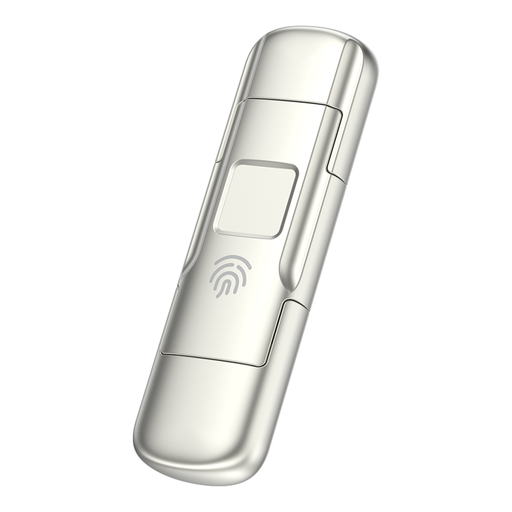
MOVESPEED YSUYC-256GSN, 256 GB, fingerprint encryption
If you switch between USB-A and USB-C devices, this stick offers both connection types without a separate data cable, according to the product details.
256 GB; USB 3.2 Gen 1 and Type-C; fingerprint encryption according to the product name. According to the product details, encrypted data in the secure partition cannot be recovered if both the administrator password and fingerprint access fail.
View at Joybuy
 No image available
Samsung Portable SSD T7, 2 TB, USB-C, Titanium Grey
For larger or frequently transferred presentation folders, if your computer has a USB-C port.
2 TB; USB-C; USB 3.2 Gen 2 according to the product name. If you want to use password protection, the product details say you’ll need to set it up using Samsung software.
View at Joybuy
 No image available
Samsung MU-PG2T0B, 2 TB, USB-C 3.2 Gen 2 (3.1 Gen 2), Black
A 2-TB SSD for larger presentation collections, if your computer supports the listed USB-C connection.
2 TB; USB-C 3.2 Gen 2 (3.1 Gen 2) according to the product name.
View at Joybuy
 No image available
Lexar D40E, 128 GB, Dual USB 3.2 Gen 1 Type-C (LJDD40E128G-BNSNG)
If you transfer presentations between USB-A and USB-C devices, the stick offers both connection types according to the product name.
128 GB; USB 3.2 Gen 1 Type-C according to the product name. The product details say to use the accompanying software for password protection of sensitive files.
View at Joybuy
Frequently asked questions
How can I connect the storage without taking up too much space?
First, check the ports on both computers. A USB-A stick needs a USB-A port; Kingston Technology says the Dual Portable SSD has USB-A and USB-C connections built into its casing. For an SSD with a cable, check what’s included: Verbatim lists a USB-C-to-USB-C cable with the Pocket SSD #32193.
What should I do after copying my files?
Try opening important copied files on the device you’ll be using, and keep the original or a separate backup. Microsoft recommends ejecting USB drives in Windows using ‘Safely Remove Hardware’ before unplugging them.
Who should I contact about a faulty drive: the retailer or the manufacturer?
For a fault with a product bought by a consumer, your statutory rights are against the seller. Germany’s consumer advice centre distinguishes these rights from any additional manufacturer’s guarantee, whose terms you should check for the specific product. A drive warranty doesn’t prevent possible data loss.
Does German law require every USB stick used for presentations to be encrypted?
The guidance from the authorities doesn’t establish a blanket encryption requirement for every purchase covered here. If you carry personal or confidential information on a portable device, the Federal Commissioner for Data Protection and Freedom of Information describes encryption as an important way to protect confidentiality. If you’re handling work documents, you should also check your organisation’s requirements.
Can I simply return a storage device bought online?
According to Germany’s consumer advice centre, consumers who buy online generally have the right to cancel, usually within 14 days of receiving the goods; the conditions that apply in each case should be checked. This is separate from the process for dealing with a faulty product.


