
Lieferung heute & morgen

Qualitätsgarantie

Willkommens-Angebote freischalten: KOSTENLOSE Lieferung | Bis zu 80 % RABATT | Kostenlose 30-Tage-JoyPlus-Testphase
App herunterladen
A pressure cooker, sometimes called a steam pressure cooker, promises significant time savings in the kitchen and helps preserve nutrients in your food. However, the market is flooded with models whose quality differences are barely noticeable at first glance. The wrong choice not only leads to frustration while cooking but can also pose a safety risk. Before you make a decision, it's crucial to understand the common pitfalls that often lead to a bad purchase.
To avoid these issues, you should base your purchasing decision on objective technical features.
Instead of being swayed by marketing promises, focus on three verifiable core parameters. These determine the durability, safety, and functionality of your new cookware.
The material is crucial for durability and cooking performance. A high-quality stainless steel pot made of 18/10 stainless steel (Cromargan is a brand-specific name for this type of steel) is rust-proof, flavour-neutral, and robust.
Even more important, however, is the base, especially if you're looking for a pressure cooker for induction. Look for a so-called sandwich base or encapsulated base. These bases consist of multiple layers, typically stainless steel enclosing an aluminium core.
Modern pressure cookers must have multi-stage safety systems. Look for the following features:
Choose the size based on your household size and cooking habits. Remember the two-thirds fill rule.
A pressure cooker set that combines pots of different sizes can be a flexible and space-saving solution.
Here are some models that are well-suited for different user profiles based on their technical specifications and features.
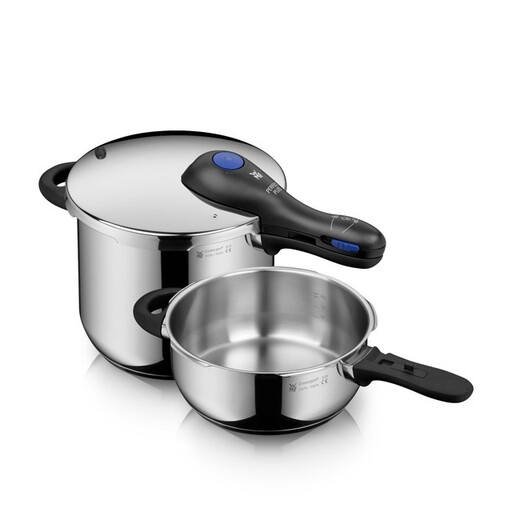
Why it's a good fit: This set, consisting of a 6.5-litre pot and a 3-litre pressure skillet, offers maximum flexibility. It's perfect for preparing complete family meals in the large pot, as well as for smaller side dishes or sauces in the skillet. The universal lid fits both pots, saving storage space.
The TransTherm universal base ensures optimal heat performance on induction hobs (Pitfall 1). The T?V-certified safety system with a residual pressure lock and a removable handle for easy cleaning addresses Pitfall 2.
Two cooking levels (110°C and 119°C) allow for precise cooking. Made from Cromargan 18/10 stainless steel for exceptional durability.
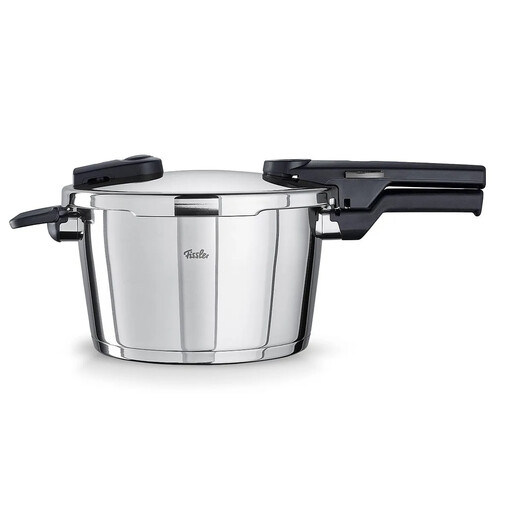
Why it's a good fit: This Fissler model is the ideal size for couples or small families who value durability and precise cooking results. It's a robust workhorse for daily use without being oversized.
The Superthermic base is designed for all hob types, including induction (Pitfall 1). A positioning aid and the locking indicator ensure the lid closes securely (Pitfall 2). The 4.5-litre size is an honest capacity for smaller households (Pitfall 3).
The handle is removable, which makes cleaning and storage in a cupboard much easier. Two cooking levels offer flexibility for delicate foods and those that require a shorter cooking time.
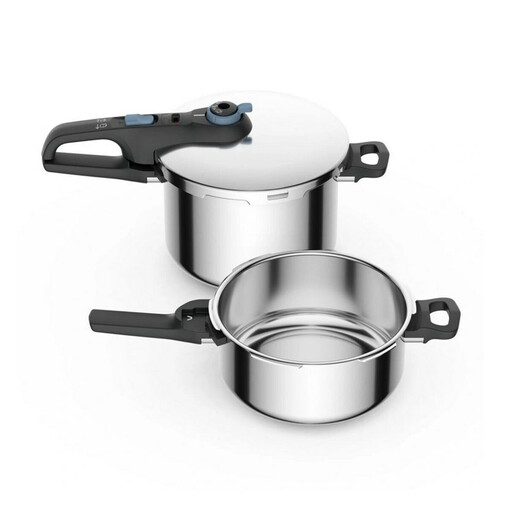
Why it's a good fit: This model offers a generous capacity and all the essential safety features from a well-known brand. It's a solid choice for anyone who wants to try out the benefits of pressure cooking without immediately investing in a premium model.
The pot is made of durable stainless steel and is suitable for all hob types, including induction (Pitfall 1). It features modern safety systems for reliable operation (Pitfall 2).
An included steamer basket expands its functionality, allowing you to steam vegetables, fish, or dumplings, making the pot a versatile all-in-one solution.
We have compiled a complete, up-to-date list of products that fully meet these strict selection criteria and German safety regulations.
After the pot has completely cooled and depressurised, remove the lid. On most modern models, the handle can be detached from the lid. This is important for thoroughly cleaning the sealing ring and valves. The pot itself is usually dishwasher-safe, while the lid, handle, and sealing ring should be cleaned by hand to ensure the longevity of the components. Always follow the manufacturer's specific instructions.
No. For a pressure cooker to work on an induction hob, its base must be magnetic. Look for the "induction-compatible" label or symbols depicting a coil. Models with a high-quality sandwich or encapsulated base are almost always suitable for induction and also ensure optimal heat distribution.
For a two-person household, a capacity of 3 to 4.5 litres is ideal. This size is sufficient for main dishes like stews or goulash, while also allowing for the efficient cooking of smaller portions without wasting energy. A 6-litre pressure cooker would often be too large and unwieldy for daily use.