
Lieferung heute & morgen

Qualitätsgarantie

Willkommens-Angebote freischalten: KOSTENLOSE Lieferung | Bis zu 80 % RABATT | Kostenlose 30-Tage-JoyPlus-Testphase
App herunterladen
A pressure cooker promises to revolutionise your daily cooking routine: dishes that normally take hours are ready in minutes. This not only saves time but also energy, while preserving nutrients. However, the market is crowded, and not every model lives up to its promises. Before you make a decision, it's crucial to understand the common pitfalls that often lead to a poor purchase.
As your Joybuy Product Recommendation Officer, I'll help you distinguish marketing hype from genuine quality features. We'll focus on the facts so you can find a product that truly fits your needs.
Many buyers are drawn to tempting offers without examining the technical details, which often leads to disappointment. Pay close attention to these three points:
To avoid these issues, you should carefully examine three core aspects before buying. These features determine the durability, safety, and functionality of your new kitchen assistant.
The standard material for high-quality pressure cookers is 18/10 stainless steel. This alloy (18% chromium, 10% nickel) is rust-proof, flavour-neutral, acid-resistant, and extremely durable. Look for designations like Cromargan (WMF) or similar high-grade stainless steel types.
Even more important is the pot's base, especially if you're looking for a pressure cooker for induction hobs. A sandwich base (e.g., TransTherm by WMF or SIGMA Classic by Zwilling) is the gold standard here. It consists of three layers: two stainless steel layers enclosing an aluminium core. This construction ensures fast, perfectly even heat distribution on all hob types and prevents the base from warping.
The capacity of a pressure cooker is specified in litres. Use the following values as a guide:
Modern pressure cookers are equipped with multi-stage safety systems. A T?V certification seal is a reliable indicator of tested safety. Important features include:
Instead of making a one-size-fits-all recommendation, we have selected models that meet specific needs.
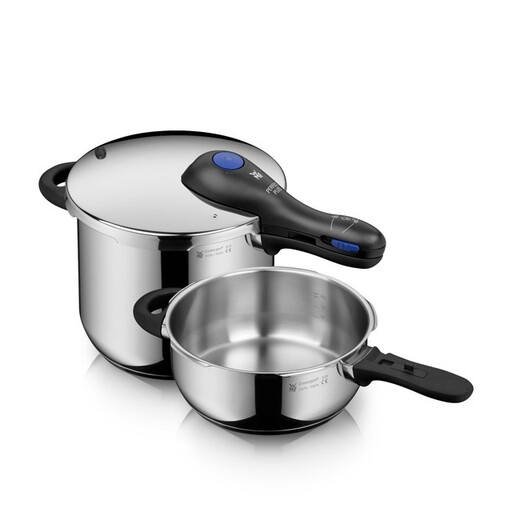
Why This Fits Their Persona: This pressure cooker set offers maximum flexibility. The 6.5-litre pot is ideal for main courses like goulash or stews, while the 3-litre pressure skillet can be used for side dishes or smaller portions. The universal lid fits both pots.
The set solves the capacity problem by combining two practical sizes. The high-quality Cromargan stainless steel and TransTherm base prevent material fatigue and ensure durability.
T?V-certified safety with residual pressure lock; detachable handle for straightforward cleaning; suitable for all hob types, including induction.
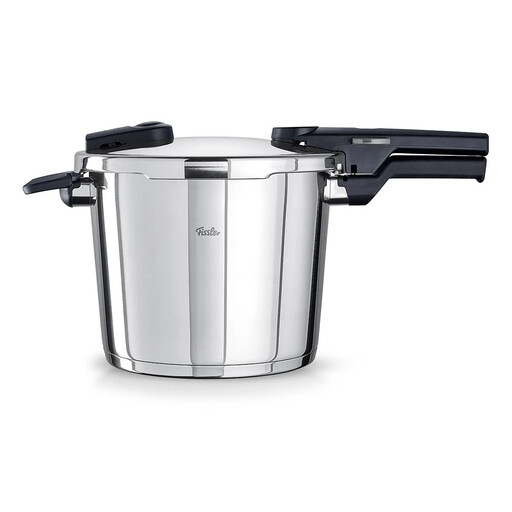
Why This Fits Their Persona: The Fissler pressure cooker focuses on the essentials: first-class materials and a well-engineered, durable design. With a 6-litre capacity, it's the ideal all-rounder for quality-conscious cooks seeking a reliable tool without unnecessary frills.
The encapsulated Superthermic base is extremely warp-resistant and optimised for all hob types. The clear locking indicator on the lid provides visual confirmation and prevents the user errors that can occur with more complex systems.
Made from robust 18/10 stainless steel; positioning aid and locking indicator for secure closing; detachable handle and stackable design for easy cleaning and space-saving storage.
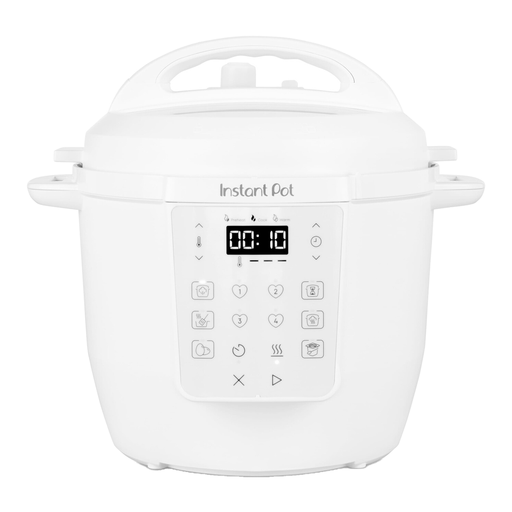
Why This Fits Their Persona: This electric multi-cooker is more than just a pressure cooker. It combines 7 appliances in one, including a slow cooker, rice cooker, and yogurt maker. It's ideal for anyone who wants to prepare healthy meals at the touch of a button using preset programs, all while saving kitchen space.
As an electric appliance, the issue of hob compatibility is completely eliminated. The guided operation and over 10 built-in safety mechanisms, including overheat protection, minimise user error.
7-in-1 functionality for maximum versatility; the stainless steel inner pot is dishwasher-safe for easy cleaning; numerous automatic programs for effortless cooking.
We have compiled a complete, up-to-date list of products that fully meet these strict selection criteria and rigorous safety standards.
Most stainless steel pots are dishwasher-safe. However, the lid requires special attention. On models with a detachable handle, it can be easily removed, and the lid can be cleaned under running water. The sealing ring should also be removed, cleaned by hand, and checked for wear. The handle mechanism itself should not be submerged in water.
Yes. The built-up pressure raises the boiling point of water to as high as 120°C. This reduces cooking times by up to 70% compared to conventional cooking methods. As a result, the hob is in use for a much shorter period, leading to significant energy savings.
18/10 stainless steel is the material of choice. It is extremely durable, rust-proof, easy to clean, and does not leach any substances into food, making it an excellent choice for preparing healthy meals. Models with a high-quality sandwich base are also fully recommended for all hob types, including induction.