
Lieferung heute & morgen

Qualitätsgarantie

Willkommens-Angebote freischalten: KOSTENLOSE Lieferung | Bis zu 80 % RABATT | Kostenlose 30-Tage-JoyPlus-Testphase
App herunterladen
In many households, there's a growing desire to prepare meals more efficiently without compromising on flavour or nutritional value. A modern pressure cooker can be a valuable addition to any kitchen. It allows you to significantly reduce cooking times while also saving energy. This article serves as a guide, outlining the key criteria to consider when choosing the right model. We also present a selection of products that stand out for their specific features.
The decision to buy a new pressure cooker depends on several factors. When researching pressure cooker tests or product comparisons, users often encounter the following criteria, which help in making an informed choice.
A pressure cooker's durability and performance are largely determined by its material. 18/10 stainless steel is a commonly used standard because it is rust-proof, flavour-neutral, and easy to clean. A crucial feature for functionality, especially for a pressure cooker for induction, is the base of the pot. An encapsulated base, such as the TransTherm universal base from WMF or the SIGMA Classic base from Zwilling, consists of multiple layers. An aluminium core ensures fast and very even heat distribution, which supports energy-efficient cooking and prevents food from burning.
The pot's volume should be matched to your household size and typical cooking habits.
Modern pressure cookers feature multi-stage safety systems. These include a locking lid that cannot be opened under pressure, a pressure regulation valve, and a pressure indicator. Operation should be intuitive. Some models, like the WMF pressure cooker from the Perfect Premium series, consolidate all functions into a single control knob, which simplifies handling. Look for an easy-to-read fill level indicator inside the pot to avoid overfilling.
Based on the criteria mentioned, we have compiled a selection of models that stand out for their material quality, functionality, and thoughtful design details.
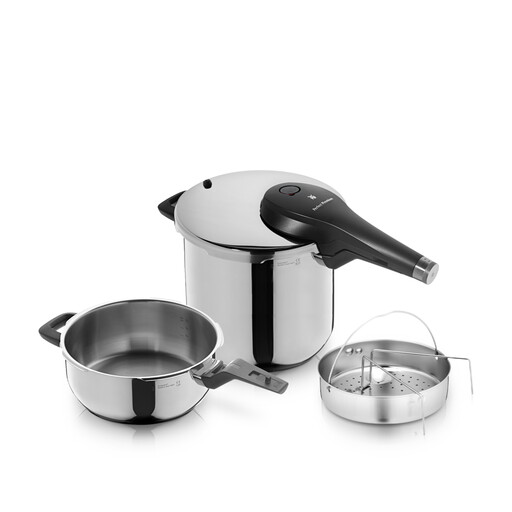
What makes it stand out: This WMF model is distinguished by its all-in-one control concept. All settings – opening, closing, pressure level adjustment, and steam release – are managed via a single control knob on the handle. The TransTherm universal base ensures optimal heat distribution on all types of hobs, including induction.
Advantages:
Who it's for: Users who value exceptionally simple and intuitive handling and are looking for proven brand quality for everyday cooking.
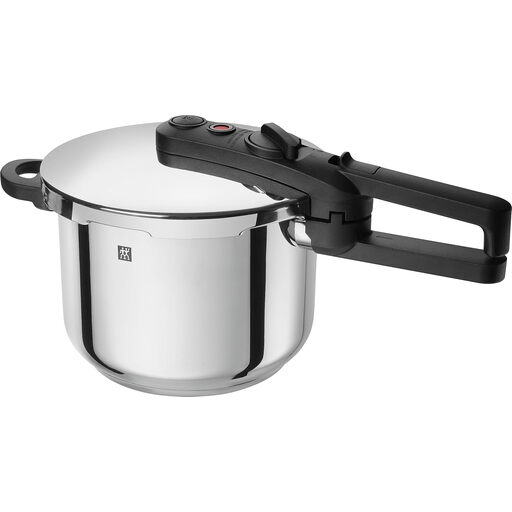
What makes it stand out: The Zwilling pressure cooker from the EcoQuick II series combines high-quality 18/10 stainless steel with a functional design. The SIGMA Classic sandwich base makes it an energy-efficient choice for all hob types. With a 4-litre capacity, it is compact and easy to handle.
Advantages:
Who it's for: Singles, couples, or small families looking for a robust and versatile pressure cooker for regular, but not overly large, needs.
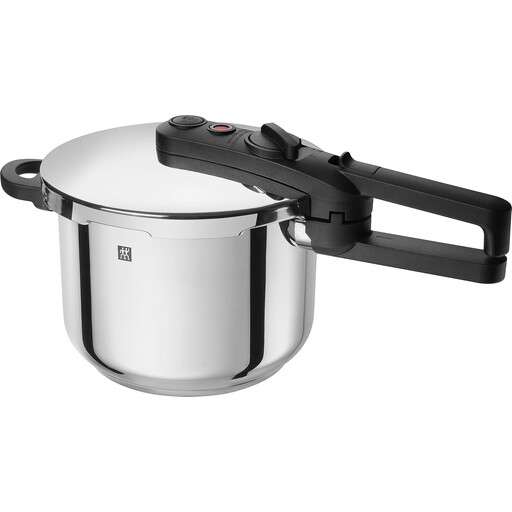
What makes it stand out: This model offers all the advantages of the EcoQuick II series but with a generous 6-litre capacity. This makes it the ideal solution for preparing meals for the whole family, from soups and stews to larger meat dishes.
Advantages:
Who it's for: Families and home cooks who regularly prepare larger quantities and need a durable, safe, and efficient pressure cooker.
If you haven't found the right model for your specific needs yet, there are more options to explore. You can find a wider selection of cookware designed for modern kitchens in our Stainless Steel Cookware category.
A pressure cooker can reduce cooking time by up to 70% compared to conventional cooking. This is achieved by building up pressure inside the pot, which raises the boiling point of water to around 120°C. For example, potatoes cook in about 8-10 minutes instead of 20-25 minutes.
Healthy cooking is an often-cited advantage. Due to the shorter cooking times and minimal oxygen exposure in the sealed system, heat-sensitive vitamins (like Vitamin C) and minerals are better preserved than during long cooking processes in an open pot.
Yes, energy-efficient cooking is a key advantage. The significantly shorter cooking time leads to a much lower energy consumption. Once the operating pressure is reached, the hob's energy supply can be greatly reduced, as the pot efficiently maintains the temperature and pressure. This can lower energy consumption by up to 50%.