If you cook brown rice regularly
If you want to adjust the texture to your liking, check whether the rice programme includes brown rice and whether you can change the cooking time. Rommelsbacher confirms these features for the MD 1000.


Choose a pressure multicooker based first on the planned amount of rice and water, and the filling limit for that specific model. An adjustable rice programme can help you get the texture you want from brown rice. Plan pressure release, transport and serving separately: a keep-warm function alone does not confirm that the rice is at a safe temperature throughout. Usable capacity, cleaning requirements and model-specific replacement parts can also affect your choice.
If you want to adjust the texture to your liking, check whether the rice programme includes brown rice and whether you can change the cooking time. Rommelsbacher confirms these features for the MD 1000.
For a shared pot of rice, the amount of rice and water and the filling limit in the instructions matter more than the stated pot capacity alone. Rommelsbacher distinguishes between the MD 1000’s 6 l pot capacity and 4 l usable capacity; the Instant Pot Duo instructions set a half-full limit for rice that expands during cooking.
If there’s a wait between cooking and serving while you transport the rice or wait to eat, you’ll need a plan to keep it sufficiently hot or cool it quickly. The German Federal Institute for Risk Assessment recommends keeping hot food at a minimum of 60 °C throughout until it is eaten.
First compare the permitted quantity of rice and the rice programme’s features. Then plan how you’ll store the cooked rice until it’s time to serve.
| What matters | What to check before buying | Who should consider it? |
|---|---|---|
| Texture and timing | Check whether the instructions include brown rice in the rice programme, whether you can adjust the cooking time and whether a delay-start function is available for that specific programme. | If I want to adjust the texture of brown rice and plan when cooking starts, I look for a suitable, adjustable rice programme; around 33% of consumers give this priority. |
| Amount of rice and filling limit | Work out how many guests you’re cooking for and the quantity in your recipe, then check it against the usable capacity and rice filling mark in the instructions for that specific model. | If I’m cooking for several guests, the amount of rice and water must stay within the permitted filling limit; around 27% of consumers prioritise getting the portion size right. |
| Storage until serving | Plan to keep the rice sufficiently hot or cool it quickly and transport it chilled. The German Federal Institute for Risk Assessment recommends keeping hot food at a minimum of 60 °C throughout until it is eaten. | If I’m serving the rice later or after transporting it, I need a suitable storage plan; around 27% of consumers prioritise the time between cooking and eating. |
| Cleaning and replacement parts | Check how the removable parts are cleaned and match replacement sealing rings to the full model or product number. | If I plan to use the appliance regularly, I look at how easy it is to clean and whether suitable replacement parts are available; around 13% of consumers put these points first. |
Rice expands as it cooks. The pot capacity or usable capacity alone therefore doesn’t tell you how much rice and water will fit below the permitted filling mark.
First work out how much you need, then check the filling mark in the instructions for the specific appliance. If the permitted amount is too small, you may need to cook in more than one batch.
An appliance feature doesn’t prove that the rice is at the recommended temperature for keeping hot throughout. The German Federal Institute for Risk Assessment recommends a minimum of 60 °C throughout until the food is eaten.
Plan to keep the rice sufficiently hot or cool it quickly and transport it chilled. A keep-warm indicator is no substitute for checking the food’s actual temperature.
According to Rommelsbacher, the MeinHans MD 1000 does not have a delay-start function for its rice programme. You can’t assume this feature is available just because it’s included in the appliance’s general list of functions.
Check whether the programme you want has a start function. If not, plan to start the rice programme yourself at the right time.
Rommelsbacher describes the MD 1000 as dismantlable, but F.A.Z. Kaufkompass still found the tested model awkward to clean. Replacement sealing rings may also be specific to certain product numbers.
Check how the lid parts are cleaned and match replacement sealing rings to the full model number, rather than relying on a general description of the appliance’s features.
The MeinHans MD 1000 combines pressure cooking with a rice programme that the manufacturer says is suitable for brown rice and has an adjustable cooking time.
The Turbo Cuisine CY7548 is a pressure multicooker with a manual mode. Tefal lists a 5.0 l stated capacity and 3.2 l usable capacity.
COSORI offers a pressure cooker with a stated capacity of 5.7 l and several cooking functions, including a rice function according to the manufacturer.
The Duo instructions cover pressure cooking and set a filling limit for rice that expands during cooking.
This selection includes electric pressure multicookers with a rice function, as well as models whose stated capacity and cooking functions may be useful when planning a meal to share.
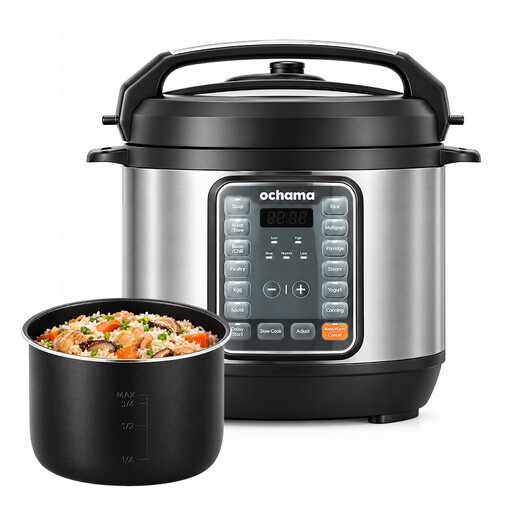 No image available
Described as a home pressure cooker with a rice function; check the instructions for the specific model to find out the permitted amount of rice.
6 l capacity; 1000 W; ceramic non-stick inner pot; keep-warm and delay-start functions according to the product description.
According to the description, it is intended for indoor use. Observe the stated half-full limit for foods that expand, and release all the pressure before opening.
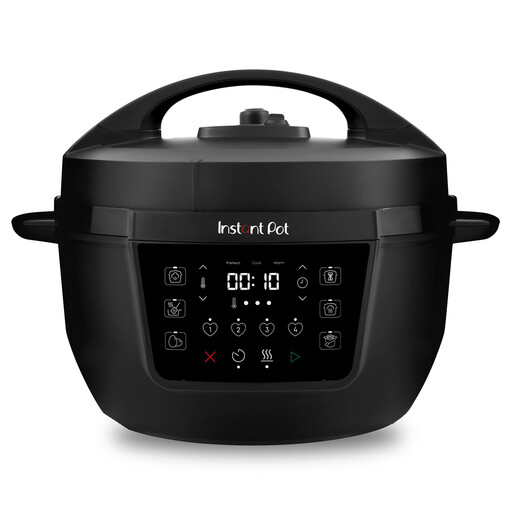 No image available
A larger multicooker for meals shared with others; the permitted portion of rice can’t be worked out from the appliance’s capacity alone.
7.1 l capacity; pressure cooking; described in the product information as suitable for up to eight portions. The lid is described as dishwasher-safe and the inner pot is made of stainless steel.
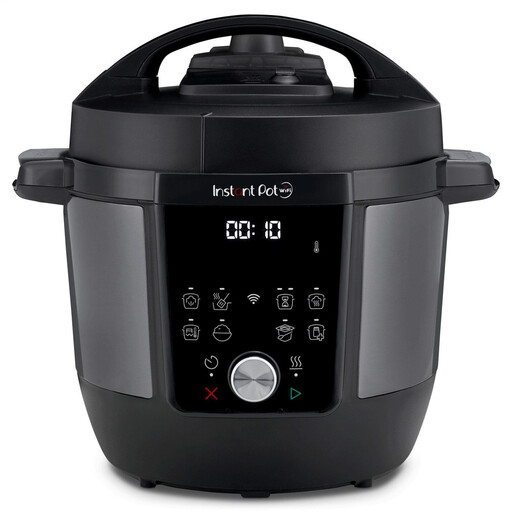 No image available
The pressure-cooking and rice functions described are useful for rice dishes; check the model’s instructions for the permitted amount of rice.
5.7 l capacity; the inner pot is described as dishwasher-safe; app control is also listed.
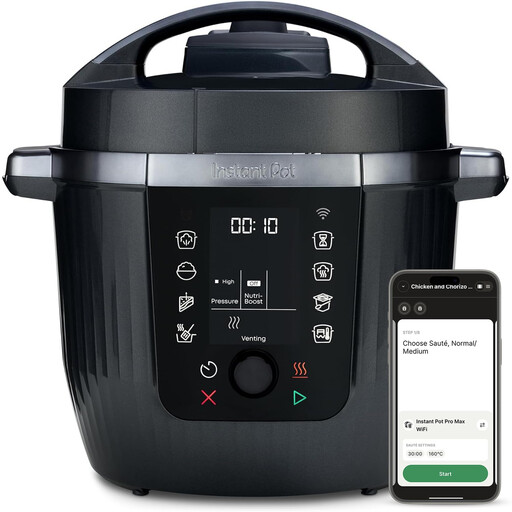 No image available
The product description lists pressure cooking and rice cooking; check the appliance’s instructions for the filling marks and pressure-release steps.
5.7 l capacity; 1200 W; described in the product information as suitable for up to six portions and weekly batch cooking. The inner pot is listed as dishwasher-safe.
Release all the pressure before opening.
 No image available
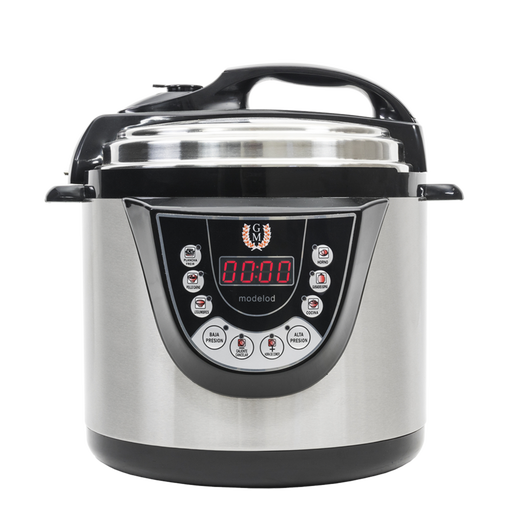
A programmable pressure cooker with several cooking menus; check the instructions to see whether the rice programmes and settings you want suit your recipe.
6 l capacity; nine cooking menus and two pressure settings according to the product name. A searing function and voice function are also listed.
An English-language manual and recipes are not guaranteed according to the product description. Release all the pressure before opening.
You can’t tell from the stated capacity alone. Rommelsbacher lists the MeinHans as having a 6-l pot and 4 l usable capacity. Also check the filling mark for the amount of rice and water you plan to use; the Instant Pot Duo instructions consulted explicitly limit rice that expands during cooking to the halfway mark.
Not using a delay-start function for the rice programme: Rommelsbacher says this function isn’t available for that programme. Plan to start it manually at the right time.
No. The Instant Pot Duo instructions warn against forcing the lid open. You must release all the pressure before opening it. Follow the pressure-release and opening instructions for your own model.
The German Federal Institute for Risk Assessment recommends keeping hot food at a minimum of 60 °C throughout until it is eaten. If you can’t keep the rice sufficiently hot, cool it quickly and transport it chilled. A keep-warm indicator doesn’t confirm the food’s temperature; this recommendation is not a legal temperature requirement established here for a private shared meal.
For products covered by the rules, CE marking is the manufacturer’s declaration that the relevant EU requirements have been met; it is not an independent EU test mark. The Verbraucherzentrale distinguishes statutory consumer rights from a voluntary guarantee. For ordinary new goods, the statutory limitation period is generally two years from delivery.