
Lieferung heute & morgen

Qualitätsgarantie

Willkommens-Angebote freischalten: KOSTENLOSE Lieferung | Bis zu 80 % RABATT | Kostenlose 30-Tage-JoyPlus-Testphase
App herunterladen
A pressure washer promises quick and effortless cleaning for your patio, car, and pathways. But the selection is vast, and the technical specifications are often confusing. Many buyers invest in a unit that doesn't meet their needs or loses performance after a short time. As your Joybuy Product Recommendation Officer, I'll help you understand the key features and avoid common purchasing traps, so you can make an informed decision.
Before we dive into the important performance metrics, let's clear up the most common misconceptions that often lead to disappointment and unnecessary expense.
To buy the right pressure washer, you should focus on three technical metrics that, in combination, determine a unit's true performance.
Think of pressure (in bar) as the force that "blasts" dirt off a surface. The flow rate (in l/h) is the volume of water that washes this dislodged debris away. For efficient cleaning, both are crucial.
The motor power (in watts) of an electric pressure washer indicates the unit's ability to consistently generate high pressure and a high flow rate. A motor with 1800 W or more usually points to a more powerful and robust machine. As mentioned earlier, look for a pump made of aluminium or brass to ensure a long service life.
A classic corded electric pressure washer offers constant power but is limited in its reach by the length of the power cord and high-pressure hose. A cordless pressure washer, on the other hand, offers maximum flexibility. These portable units are ideal for locations without a direct power outlet, such as in a garden or for cleaning a boat at the dock. They often have lower pressure but are a practical solution for many mobile applications.
Instead of making a one-size-fits-all recommendation, we have identified models tailored to specific needs and use cases.
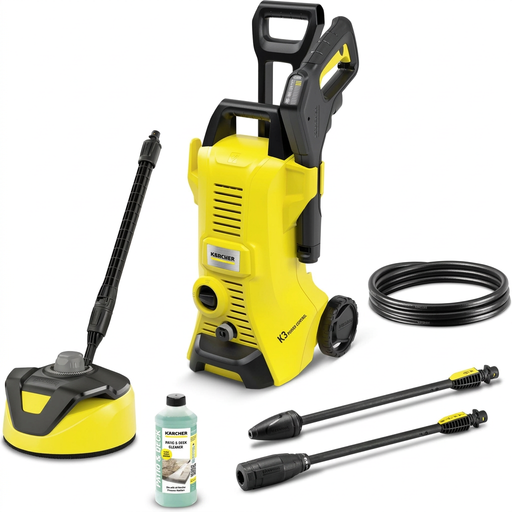
Why it's a great fit: Ideal for anyone looking for a reliable solution for typical cleaning jobs around the house. The app guidance helps you find the right pressure for any surface, which prevents user error.
The "Home" kit already includes the T 5 patio cleaner and detergent. This eliminates hidden accessory costs and allows for splash-free patio cleaning right out of the box.
Performance: 120 bar, 380 l/h. Key Feature: App connectivity for pressure control and a complete accessory set for surfaces included.
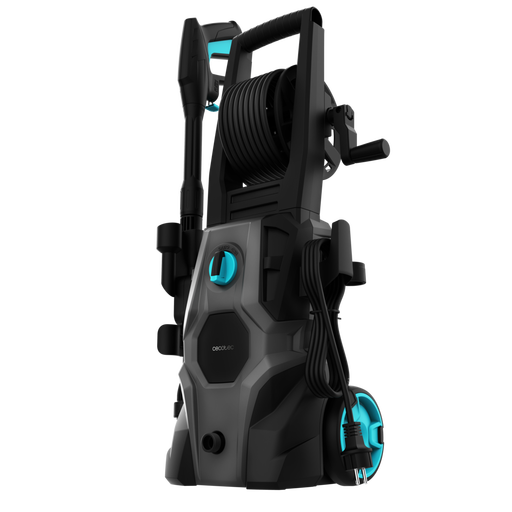
Why it's a great fit: For users who regularly clean larger areas or heavily soiled vehicles and value performance and durability.
The robust aluminium pump promises a longer service life than plastic pumps. The balanced ratio of high pressure and a good flow rate ensures efficient cleaning performance.
Performance: 150 bar, 450 l/h. Key Feature: Durable aluminium pump, a large 14 m operating radius, and a comprehensive accessory kit for car and garden.
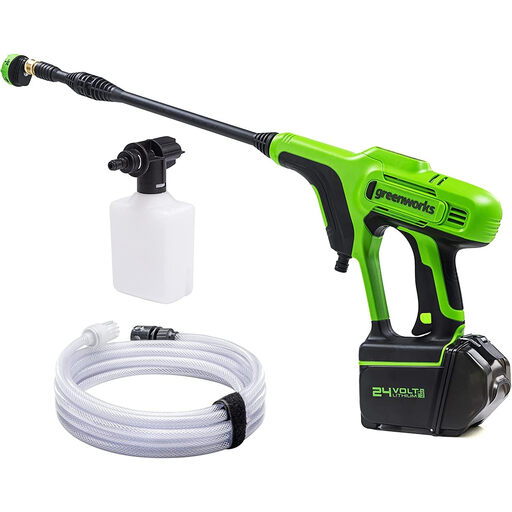
Why it's a great fit: The perfect choice for anyone who needs independence from power and water hookups. Ideal for the quick cleaning of mountain bikes, balconies, or in places without a power socket.
This unit is a specialist tool. It doesn't try to compete with corded models but instead solves the specific problem of mobility. You buy it specifically for its flexibility.
Performance: 24 bar, 180 l/h. Key Feature: Battery-powered, self-priming from any water source (e.g., bucket, lake) via a 6 m hose.
We have compiled a complete, up-to-date list of products that fully meet these strict selection criteria and all relevant safety regulations.
This largely depends on the application. For most household tasks like cleaning patios, garden furniture, or cars, a pressure between 110 and 130 bar combined with a flow rate of around 400 l/h is perfectly sufficient and often gentler on surfaces. Higher pressure above 150 bar is mainly useful for very stubborn dirt, like old moss on concrete, or for cleaning large agricultural equipment.
No, this isn't possible with every model. You need a unit with a self-priming pump and a suitable suction hose, which should ideally have a filter to protect the pump from debris. Many portable cordless pressure washers, in particular, are designed for this type of water supply. Always check the manufacturer's specifications to see if the device is certified for use with external water sources.
Proper maintenance is simple but crucial. After each use, release the pressure from the system by squeezing the trigger on the gun after the machine is turned off. Store the pressure washer and its accessories in a frost-free location, as freezing water inside can irreparably damage the pump and hoses. Also, regularly clean the water inlet filter to ensure consistent performance.