
Lieferung heute & morgen

Qualitätsgarantie

Willkommens-Angebote freischalten: KOSTENLOSE Lieferung | Bis zu 80 % RABATT | Kostenlose 30-Tage-JoyPlus-Testphase
App herunterladen
Moss on the patio tiles, grime on the facade, or stubborn dirt on your car—many home and garden owners are familiar with these recurring cleaning chores. A pressure washer can make these jobs significantly easier. However, the selection of models is vast, and the technical specifications can be confusing.
This article serves as your guide. As your Joybuy Product Recommendation Officer, I will introduce you to a selection of devices and explain the most important criteria to consider for your decision. The goal is to provide you with an objective basis to find the model that best suits your needs.
Before you decide on a model, a few fundamental aspects should be clarified. The following points will help you define your needs and better understand the product features.
The first fundamental decision concerns the power supply. Both options have specific areas of application:
Two key figures are crucial for cleaning performance:
A good balance of high pressure and a sufficient flow rate leads to the most efficient cleaning results.
The included accessories significantly expand the applications of a pressure washer. Pay attention to the type of nozzles:
Here you will find a selection of models that cover different requirements—from powerful corded devices to flexible cordless models.
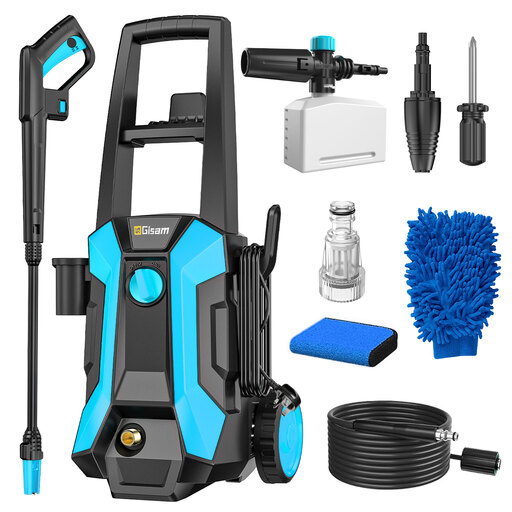
What makes this model stand out This corded model is designed for high performance. With a 2200-watt motor, it generates a pressure of up to 180 bar and a flow rate of 480 L/h. This makes it designed for demanding tasks like removing stubborn dirt from driveways or fences. A practical feature is the integrated hose reel, which makes it easy to neatly wind up the 8-metre high-pressure hose and keeps things tidy.
Advantages:
Who is this device for? For homeowners looking for a powerful and reliable device for regular, intensive cleaning jobs on large surfaces such as patios, paths, and facades.
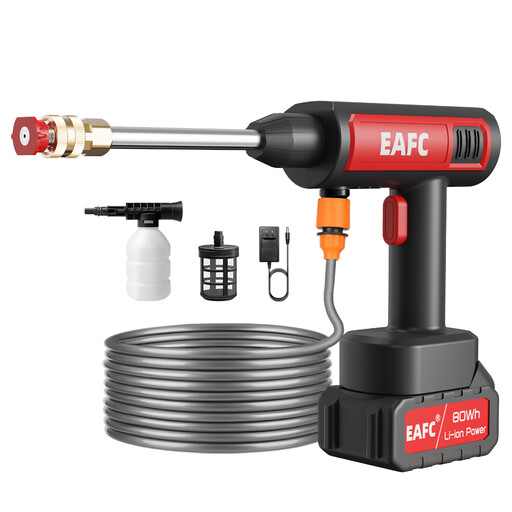
What makes this model stand out The focus of this device is on mobility and flexibility. As a cordless pressure washer, it is independent of a power outlet and can draw water from any source, such as a bucket or a rain barrel. Its lightweight and cordless design make it a practical companion for quick cleaning tasks on the go or in places without a power connection. The adjustable nozzle allows the water jet to be adapted to various tasks.
Advantages:
Who is this device for? For users who need a straightforward solution for the quick cleaning of cars, bicycles, balconies, or garden furniture and who value independence from a power supply.
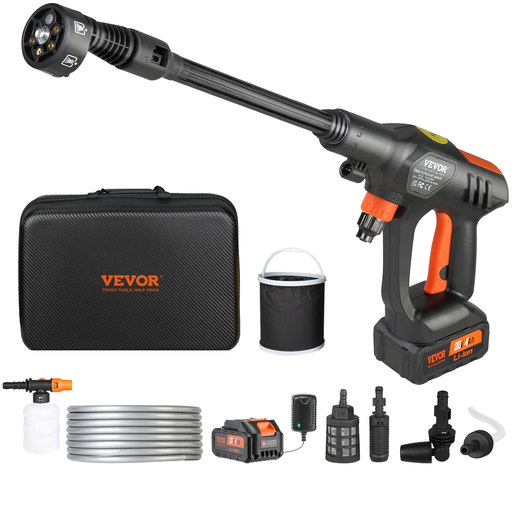
What makes this model stand out This cordless model from VEVOR combines mobility with thoughtful features for comfortable operation. It has a safety lock to prevent accidental start-up. A special feature is the continuous operation function, which means the start button does not need to be held down permanently. The included extension wands make it easier to clean hard-to-reach places, such as high fences or wall areas. According to the manufacturer, the pressure washer reaches up to 50 bar with a flow rate of 4 L/min (240 L/h).
Advantages:
Who is this device for? For users looking for a flexible mobile pressure washer for watering and lighter cleaning tasks, who also value user comfort and the ability to reach higher or more remote spots.
Haven't found the right model for your specific needs yet? There is a wide variety of other devices with different performance features and accessory combinations.
? Discover a wider selection in our Car Spray Cleaners category.
1. How many bar does a pressure washer need for home use? For most applications around the home and garden, a pressure between 110 and 140 bar is a good choice. This is effective for cleaning garden furniture, bicycles, cars, and lightly soiled patios. For stubborn dirt like old moss on stone slabs or for cleaning facades, models with 150 bar or more can be useful.
2. Can you wash a car with a pressure washer? Yes, washing your car with a pressure washer is very efficient. However, it's important to follow a few rules: use a fan nozzle instead of a rotary nozzle, maintain a sufficient distance (at least 30 cm) from the paintwork, and avoid aiming directly at sensitive parts like tyres, seals, or sensors. A lower pressure setting or a device with adjustable pressure is advantageous here. Using a foam nozzle for a pre-wash helps to gently loosen the dirt.
3. What is the difference between a high-pressure washer and a pressure washer? In common usage, the terms high-pressure washer and pressure washer are used interchangeably. Both refer to devices that expel water at high pressure to clean surfaces. Technically, every high-pressure washer generates pressure, which is why both terms are correct.