
Lieferung heute & morgen

Qualitätsgarantie

Willkommens-Angebote freischalten: KOSTENLOSE Lieferung | Bis zu 80 % RABATT | Kostenlose 30-Tage-JoyPlus-Testphase
App herunterladen
A pressure washer promises quick and effortless cleaning for your patio, car, and facade. But the buying process is fraught with pitfalls that can quickly turn that hoped-for convenience into a costly mistake. Many models boast impressive specs but disappoint in practice with poor performance or a short lifespan. This guide will show you what to look for to find a machine that truly meets your needs.
Before you buy a pressure washer, it's crucial to question common marketing claims. Certain features often indicate limited real-world usability.
To objectively evaluate a pressure washer's performance, you should consider two key parameters in tandem.
These two values are the foundation of cleaning performance. You can think of them this way:
A machine with high pressure but a low flow rate will dislodge dirt but wash it away slowly. Conversely, a machine with a high flow rate but low pressure cannot effectively dislodge the dirt. A balanced ratio is therefore crucial.
The choice of power source depends directly on your place of use.
Instead of making a blanket recommendation, we have matched products to typical user profiles.
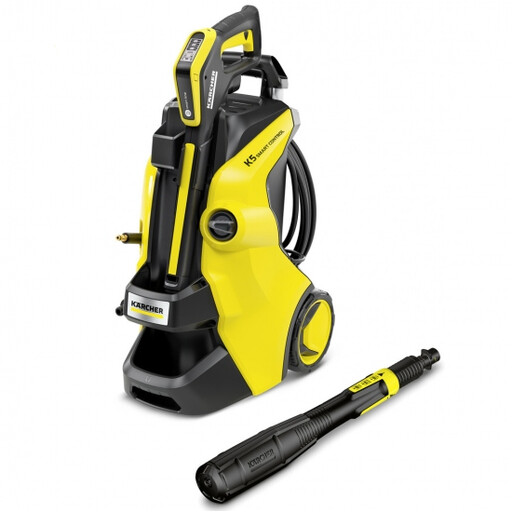
Why this model is a good fit: Ideal for users seeking a powerful and versatile solution for various tasks like cleaning patios, vehicles, and facades. The app control helps find the right pressure for any surface.
This model features a high working pressure of 125 bar and a durable, water-cooled motor with an aluminium pump head. It thus avoids the pitfalls of exaggerated maximum pressure and short-lived plastic pumps.
The Smart Control function with app connectivity and an activatable boost mode allows for precise, application-optimised cleaning that tackles even the most stubborn dirt.
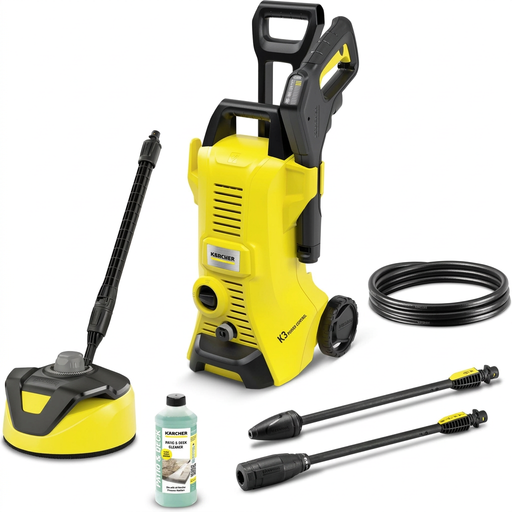
Why this model is a good fit: Perfect for homeowners whose main focus is the splash-free and efficient cleaning of patios and walkways. The set is ready to use out of the box.
This set bypasses the accessory trap by including the crucial T 5 surface cleaner in the package. This saves the cost and effort of a separate purchase.
The "Home Kit" offers a complete solution. The included patio cleaner enables fast, uniform, and above all, splash-free cleaning of large areas—a clear advantage over working with a standard nozzle.
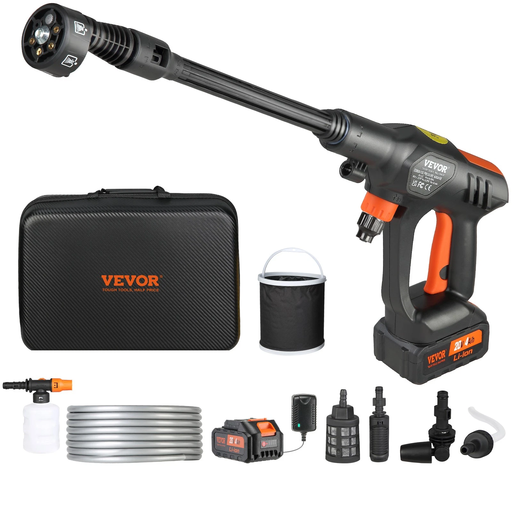
Why this model is a good fit: The ideal choice for quick cleaning tasks without a direct power or water connection. Perfect for mountain bikers, campers, or cleaning balcony furniture.
This device is clearly positioned as a portable pressure washer and doesn't create false expectations of corded-level performance. Its value lies in portability, not maximum pressure.
Complete Independence: The device can draw water from any source (bucket, lake, rain barrel) and can be used anywhere thanks to its battery operation. Includes extensive accessories for various tasks.
We have compiled a complete, up-to-date list of products that fully meet these strict selection criteria and UK safety regulations.
The most important step is to completely drain the unit. Let all water out of the pump, hose, gun, and lance. Then, store the pressure washer in a frost-free location like a basement or an insulated garage. Any water remaining inside the unit can freeze, expand, and irreparably damage the pump or connections.
Generally, yes, but with the right technique. Use a wide-angle nozzle to distribute the pressure over a larger area. Maintain a safe distance of at least 30 cm from the paint surface. Never aim the water jet directly at tyres, rubber seals, or sensitive parts like wheel bearings. A working pressure of around 110 to 130 bar is generally sufficient and safe for car washing.
It depends on the application. For quick, flexible cleaning jobs in places without a power outlet, a cordless pressure washer is a very practical solution. It's excellent for cleaning bicycles, garden tools, small balconies, or camping gear. For intensive, large-scale cleaning of driveways, facades, or heavily mossed patios, a corded model with higher pressure and unlimited runtime is the more suitable choice.