
Lieferung heute & morgen

Qualitätsgarantie

Willkommens-Angebote freischalten: KOSTENLOSE Lieferung | Bis zu 80 % RABATT | Kostenlose 30-Tage-JoyPlus-Testphase
App herunterladen
A pressure washer promises fast, effortless cleaning for patios, driveways, and vehicles. But with a vast selection and often grandiose marketing claims, it's easy to make the wrong choice. Many buyers quickly discover their new device isn't up to the task or that expensive accessories are required to get the job done.
As your Joybuy Product Recommendation Officer, I'm here to cut through the marketing noise. This guide will reveal the three most common pitfalls when buying a pressure washer and explain what you need to look for to make an informed decision.
Before you buy a pressure washer, you should be aware of the typical problems that often only become apparent after the purchase.
To objectively evaluate a pressure washer's performance, focus on the following three core parameters.
These two values together determine the actual cleaning power.
A unit with 130 bar and 450 l/h will clean a large, moderately soiled patio more efficiently than a unit with 150 bar and only 350 l/h.
The longevity of your device depends heavily on the pump. Look for models with an aluminium pump to prevent premature wear. There are two main categories of power sources:
A well-designed accessory kit is what turns a pressure washer into a versatile tool.
Here are some models tailored to specific user profiles that avoid the common pitfalls.
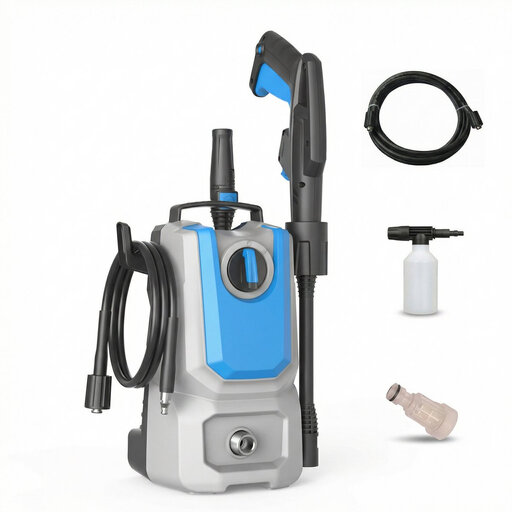
Why This Fits Their Persona: Ideal for users seeking a compact and straightforward device for occasional cleaning tasks around the house and garden, such as washing garden furniture, bicycles, or small balcony areas.
This model bypasses the pump trap with an explicitly mentioned aluminium pump, which ensures durability. It states an honest working pressure of 60 bar instead of advertising an unrealistic maximum pressure.
Compact design for easy storage. The auto-stop system protects the motor and saves energy. Includes an adjustable spray lance for various tasks.
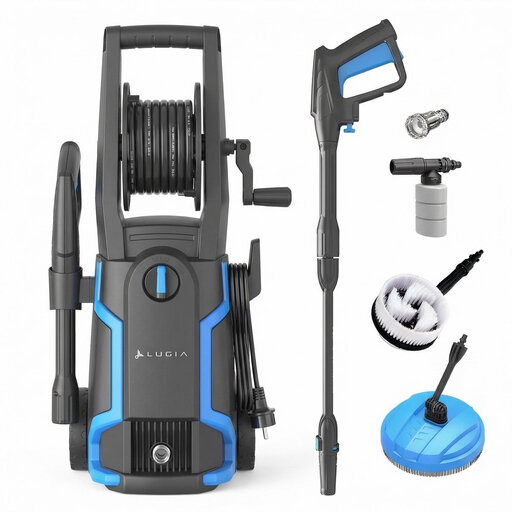
Why This Fits Their Persona: An all-rounder for homeowners who regularly clean patios, driveways, and their car. The performance is sufficient for most types of dirt, and the accessories cover the most common applications.
This model solves the accessory trap by including a complete kit with a patio cleaner, rotating brush, turbo nozzle, and an external foam cannon. There are no hidden follow-up costs for standard applications.
A good balance of working pressure (135 bar) and flow rate (430 l/h). The external foam cannon prevents detergent from damaging the pump, thereby increasing its service life.
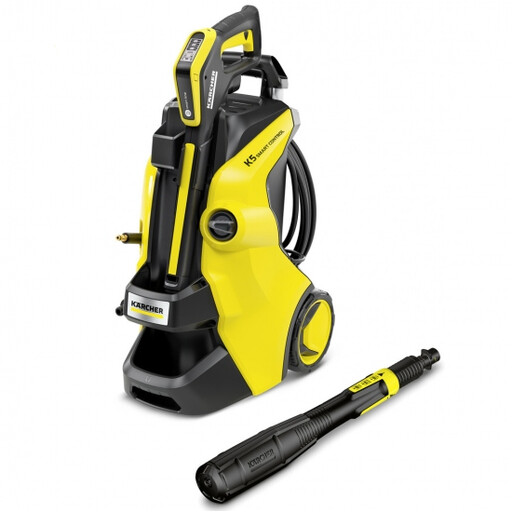
Why This Fits Their Persona: For users who value high performance, durability, and modern technology. Perfect for the regular cleaning of large areas, heavy soiling, and for users who want precise control over the cleaning process.
This model avoids the performance deception with clear specifications: 145 bar maximum pressure and a high flow rate of 500 l/h. The water-cooled motor and aluminium pump signify high-quality materials, avoiding the trap of short-lived components.
Bluetooth connectivity with an app for application tips and pressure adjustments. Boost mode for extra power on stubborn dirt. The 3-in-1 Multi Jet spray lance allows for flexible switching between spray types.
We have compiled a complete, up-to-date list of products that fully meet these strict selection criteria and all relevant safety standards.
1. How much pressure (bar/PSI) does a good pressure washer need? It depends on the application. For light cleaning tasks (garden furniture, bicycles), 80–110 bar (approx. 1160–1600 PSI) is sufficient. For cleaning patios, driveways, or removing moss, a working pressure of 120–150 bar (approx. 1740–2175 PSI) is a good guideline. More pressure isn't always better, as excessive pressure can damage sensitive surfaces like wood or car paint.
2. Can I use any pressure washer on my car? Not without caution. For car washing, it's important that the pressure is adjustable or that a special, gentle nozzle is used. A distance of at least 30 cm (12 inches) from the paintwork should be maintained. It's ideal to use a foam nozzle to pre-soak the dirt before the main wash, which helps prevent paint scratches.
3. What is the difference between a pressure washer and a steam cleaner? A pressure washer uses cold or lukewarm water under high pressure to mechanically remove dirt. A steam cleaner (or hot water pressure washer) heats the water to over 100°C (212°F). The hot steam is particularly effective at dissolving oily and greasy grime and has a sanitising effect. For typical home use, a cold water pressure washer is usually sufficient and more energy-efficient. The term "steam cleaner" is sometimes used colloquially and incorrectly to refer to standard pressure washers.