
Lieferung heute & morgen

Qualitätsgarantie

Willkommens-Angebote freischalten: KOSTENLOSE Lieferung | Bis zu 80 % RABATT | Kostenlose 30-Tage-JoyPlus-Testphase
App herunterladen
A powerful pressure washer can make cleaning your patio, driveway, and vehicle significantly easier. But the market is flooded with models whose performance specs often overpromise and underdeliver. Many buyers invest in a unit that is either underpowered for the job or requires expensive add-on accessories. This guide will help you identify the crucial features and make an informed decision.
Written by: Joybuy Product Recommendation OfficerDate: July 28, 2026
Before you choose a model, you should be aware of the most common marketing pitfalls that often lead to dissatisfaction and extra costs.
The 'Maximum Pressure' Fallacy: Manufacturers often advertise with impressively high bar ratings. However, this "maximum pressure" is typically a theoretical peak value that isn't achievable during continuous operation. A more crucial, yet often overlooked, metric is the water flow rate (L/h). A unit with high pressure but a low flow rate produces only a thin jet, which makes cleaning large areas like cleaning paving stones a test of patience. A balanced combination of both values is essential for efficient cleaning.
The Hidden Costs of Accessories: A low base price is tempting, but crucial accessories are often missing. A patio cleaner for splash-free, even surface cleaning or a foam nozzle for a gentle car wash must then be purchased separately at a premium. A pressure washer with accessories included in a set often offers better value for money and ensures the unit is equipped for all your intended tasks.
To find the right unit, focus on these three objective criteria. They determine the true performance and versatility of your pressure washer.
A pressure washer's cleaning power is a result of the combination of pressure and water volume.
The choice of power source depends directly on your area of use.
The right accessories turn a pressure washer into a versatile cleaning tool.
Here are some models tailored to specific user profiles and their requirements.
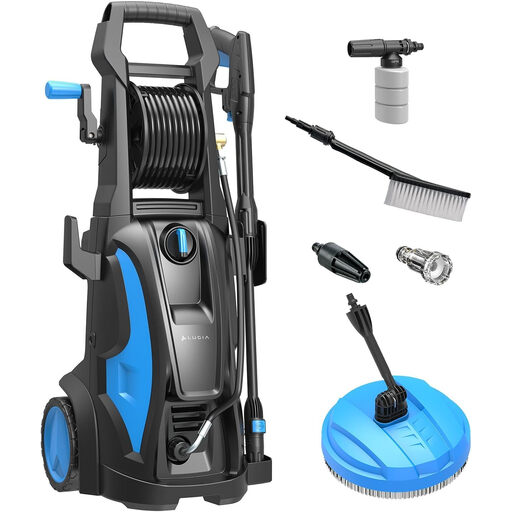
Why This Fits Their Persona: This model is a powerful all-in-one solution for homeowners who want to tackle various cleaning tasks—from the patio and driveway to the car—with a single device. Its high performance ensures fast results even on heavy grime.
It combines a high pressure of 185 bar with a strong water flow rate of 550 L/h for true efficiency. Furthermore, it comes with a complete accessory kit, including a patio cleaner and a turbo nozzle, which prevents costly subsequent purchases.
High cleaning performance for demanding tasks. Comprehensive accessory package for versatile applications right out of the box.
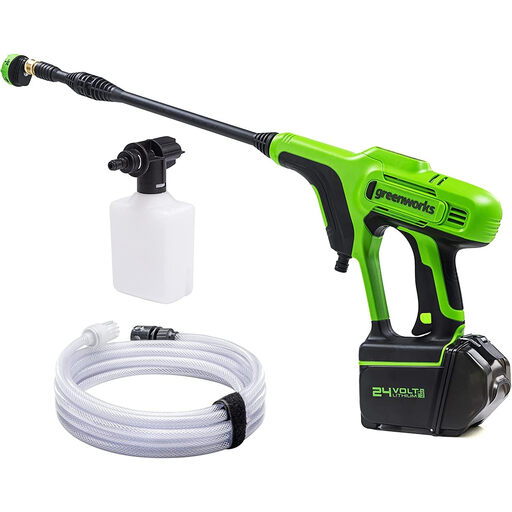
Why This Fits Their Persona: Ideal for users looking for a lightweight and straightforward solution for smaller cleaning tasks like bicycles, garden furniture, or balconies. Its independence from power and water connections offers maximum freedom.
This device doesn't overpromise on performance. Its value lies in its portability and ease of use for light-duty tasks, not in raw power. It sidesteps the trap of a pure pressure comparison by offering a clear benefit for specific, mobile applications.
Battery-powered and self-priming from any water source (e.g., a bucket). Lightweight, compact, and easy to store.
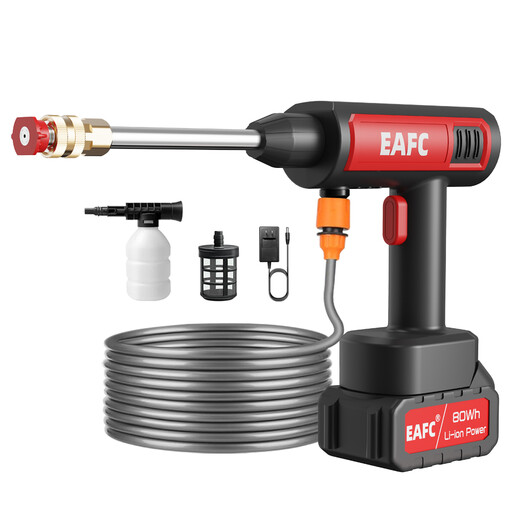
Why This Fits Their Persona: Specifically for car lovers who want to clean their vehicle flexibly and thoroughly, even without direct access to a power or water connection. The included foam sprayer is a key feature for a professional car wash.
This kit is designed as a complete solution for car care. It already includes a foam sprayer, so no additional, often expensive, accessories need to be purchased for its main purpose.
Battery-powered and self-priming from a bucket. Includes a foam sprayer for an effective and paint-safe pre-wash.
We have compiled a complete, up-to-date list of products that fully meet these strict selection criteria and German safety regulations.
1. How many bar does a pressure washer really need? The required pressure heavily depends on the application. For light tasks like cleaning bicycles or garden furniture, models with 20 to 40 bar are often sufficient. For general use around the house, including car washing and patio cleaning, a working pressure of 110 to 130 bar is a good benchmark. Units with 140 bar and more are suitable for stubborn dirt on robust surfaces like concrete or for large-scale cleaning jobs.
2. Can I use any pressure washer for a car wash? Generally, yes, but with caution. Never use a rotary or point jet nozzle (dirt blaster), as this can permanently damage the paint. A fan-spray nozzle is the correct choice. Additionally, maintain a safe distance of at least 30 cm from the paint surface. A pressure of around 110 bar is perfectly adequate for car washing. For an especially gentle clean, using a foam nozzle for a pre-wash is recommended.
3. How do I store a pressure washer in the winter? Protecting it from frost is crucial for your unit's lifespan. Before storage, all water must be drained from the unit, pump, hose, and lance. To do this, briefly pull the trigger on the gun while the unit is turned off and disconnected from the water supply. Then, store the pressure washer in a frost-free location, such as a basement or an insulated garage. Any remaining water in the system can freeze, expand, and cause irreparable damage to the pump and seals.