
Lieferung heute & morgen

Qualitätsgarantie

Willkommens-Angebote freischalten: KOSTENLOSE Lieferung | Bis zu 80 % RABATT | Kostenlose 30-Tage-JoyPlus-Testphase
App herunterladen
A powerful pressure washer can transform the tedious chore of cleaning patios, driveways, and vehicles into a quick and satisfying task. However, the market is flooded with machines whose advertised performance specs often promise more than they deliver. Before you make a purchase, it's crucial to understand the common pitfalls that can lead to disappointment and unnecessary expense. As your Joybuy Product Recommendation Officer, I'll help you identify the key features and make an informed choice.
Many buyers focus on big numbers and extensive accessory kits, only to find later that the machine fails to meet their expectations. Pay close attention to these three points:
To avoid a bad purchase, you should focus on the technical data that truly counts. A good electric pressure washer is characterised by a balanced ratio of these core parameters.
Think of water pressure as the force that loosens dirt from the surface. The flow rate is the amount of water that carries this loosened dirt away. Both values must be well-matched.
The pump is the most heavily stressed component. Its material determines the longevity of the entire device.
Instead of focusing on the sheer quantity of accessories, check if the parts that are important to you are included. For gently pressure washing your car, a car foam sprayer is essential to protect the paint from scratches. A surface cleaner with rotating nozzles ensures a streak-free clean on large areas and prevents splash-back on house walls.
We have selected products tailored to specific user needs that avoid the pitfalls mentioned above.
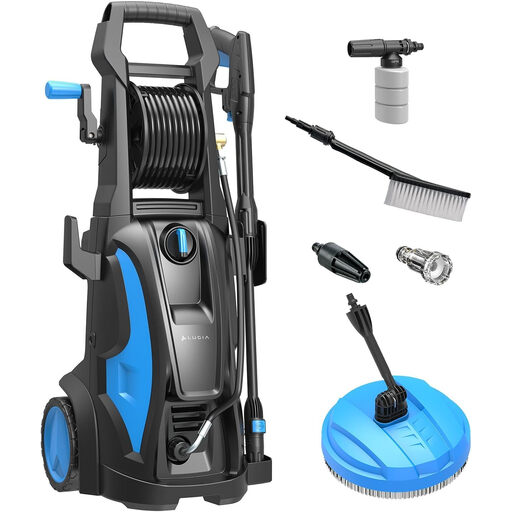
Why This Fits Their Persona: Ideal for homeowners seeking a versatile machine for various cleaning tasks around the house and garden, from the patio to the car, without spending a fortune.
This model bypasses the 'bar bluff' with a powerful combination of 185 bar maximum pressure and a very high flow rate of 550 L/h. It avoids the accessory trap by providing a practical set including a patio cleaner and a rotating brush, which offer real added value.
The high water flow rate ensures fast and thorough cleaning of large surfaces. The comprehensive accessory package covers the most common applications right out of the box.
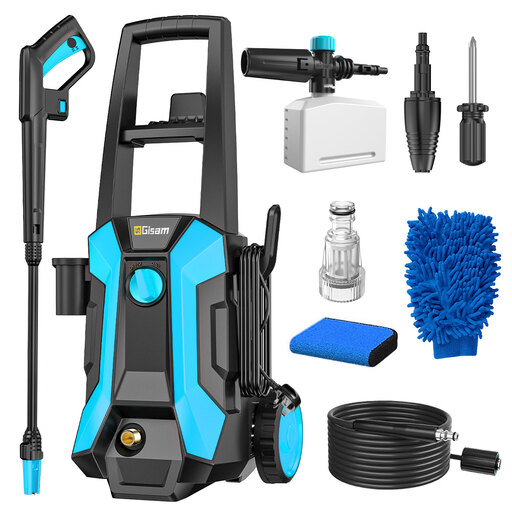
Why This Fits Their Persona: Perfect for users who value convenience and tidiness. Ideal for cleaning larger properties where a long reach and easy handling are top priorities.
This unit addresses the clutter often associated with pressure washers. The integrated hose reel is a practical quality-of-life feature that sidesteps the accessory trap by focusing on real user comfort instead of useless gimmicks. The performance specs of 180 bar and 480 L/h are solid and transparent.
The hose reel allows for quick, clean winding and unwinding of the 8-metre hose. This prevents kinks, extends the life of the hose, and ensures tidy storage.
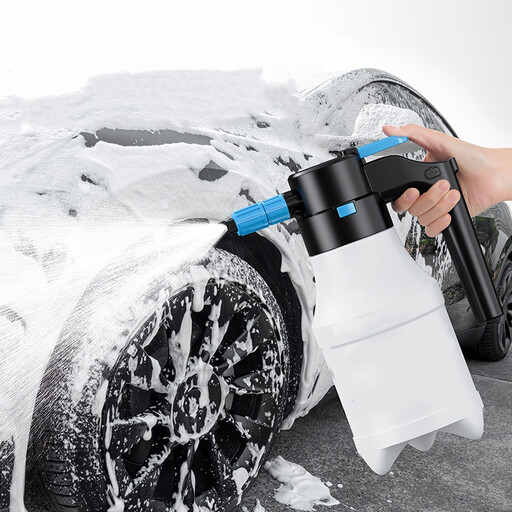
Why This Fits Their Persona: For car enthusiasts who want to perform a paint-safe and thorough pre-wash. This specialised tool is the perfect complement to a pressure washer or can be used alone for gentle cleaning.
This device avoids the trap of applying too much pressure to sensitive car paint. Instead of brute force, it relies on the chemical cleaning power of thick foam, which safely encapsulates dirt particles and enables a scratch-free wash. It's a prime example of a specialised, practical accessory.
The cordless operation allows for maximum flexibility without cables or manual pumping. The adjustable nozzle produces a thick, clinging foam that is ideal for the pre-wash stage of a pressure wash car wash.
We have compiled a complete, up-to-date list of products that fully meet these strict selection criteria and UK safety regulations.
For robust surfaces like concrete or paving stones, a working pressure of 130 to 160 bar combined with a flow rate of at least 450 L/h is very effective. For wooden decks, the pressure should be significantly reduced to avoid damaging the material. Using a special patio cleaner attachment is essential for an even, splash-free result.
Yes, but with the right technique. Use a wide-angle nozzle (40-degree or fan nozzle) and maintain a safe distance of at least 30–50 cm from the paint surface. Never aim the jet directly at tyres, rubber seals, or sensitive sensors. For a particularly paint-friendly clean, a pre-wash with a car foam sprayer is recommended to gently loosen coarse dirt before rinsing it off with low pressure.
Protecting it from frost is crucial. Before storage, the unit must be completely drained. This includes the pump, hose, gun, and all connected accessories. Then, store the pressure washer in a dry, frost-free place like a basement or garage. Residual water in the system can freeze, expand, and cause irreparable damage to the pump.