
Lieferung heute & morgen

Qualitätsgarantie

Willkommens-Angebote freischalten: KOSTENLOSE Lieferung | Bis zu 80 % RABATT | Kostenlose 30-Tage-JoyPlus-Testphase
App herunterladen
By: Joybuy Product Recommendation OfficerDate: July 14, 2026
Moss-covered patio slabs, a facade coated in road grime, or a car in desperate need of a wash—many home and garden owners are familiar with these recurring cleaning chores. A pressure washer can make the job much easier and save a significant amount of time. However, the market is filled with a wide variety of models, each with different performance specs and features.
This guide is designed to give you a clear overview of the key features to consider. We'll introduce different types of units and explain which specifications are relevant for various applications, helping you make an informed decision that suits your needs.
Choosing the right device depends heavily on your intended uses. The following three points will help guide your selection.
The power source determines the unit's performance and flexibility.
Two values are crucial for cleaning performance:
The included accessories significantly expand the applications of a pressure washer. A foam nozzle, for instance, is useful for applying detergent evenly when washing your car with a pressure washer. Rotating nozzles (turbo nozzles) concentrate the power for stubborn grime, while fan-pattern nozzles provide a wider, gentler clean. Adjustable nozzles offer the flexibility to tackle different tasks with a single attachment.
Based on different user profiles, we have curated a selection of devices that cover a range of needs—from light garden care to intensive surface cleaning.
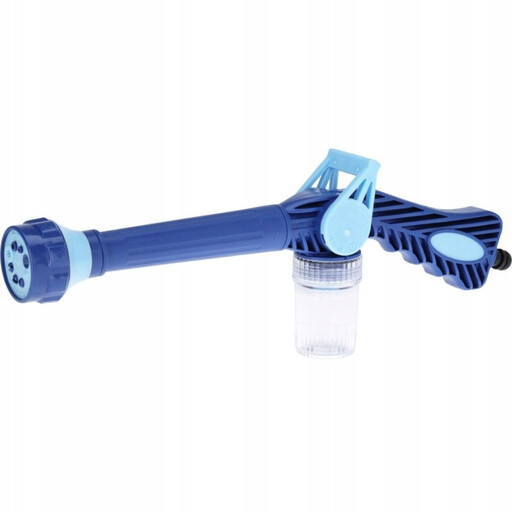
Why It Stands Out: This tool combines a cleaning wand with a garden sprayer. The integrated, transparent container allows you to add detergents, making it a practical garden hose sprayer with a container.
Pros:
Who It's For: Garden owners looking for a straightforward tool for watering and occasional light cleaning jobs, without needing to invest in heavy equipment.
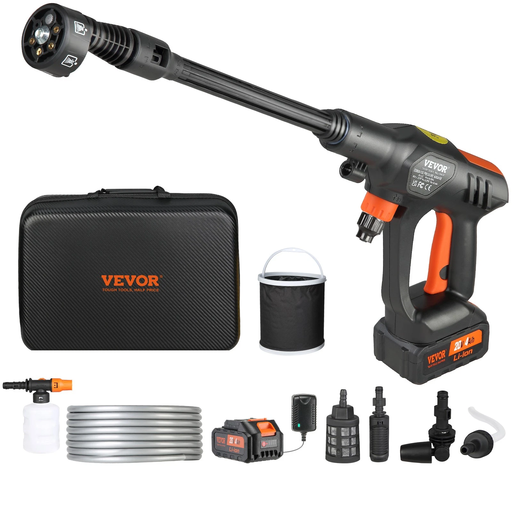
Why It Stands Out: This battery-powered pressure washer delivers remarkable power for a cordless device, with its 21V system and pressure of up to 50 bar. The continuous spray function enhances user comfort.
Pros:
Who It's For: Users who need the flexibility to clean cars, bikes, boats, or garden areas without direct access to a power outlet. Ideal for quick, on-the-spot cleaning tasks.
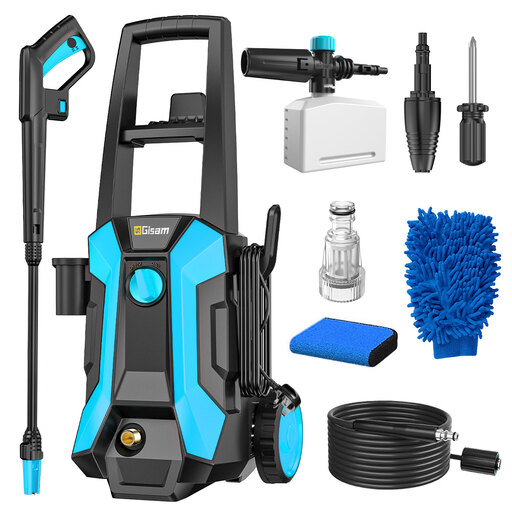
Why It Stands Out: As a classic electric pressure washer, this model delivers the power needed for stubborn dirt on large surfaces with its 2200 watts of power, 180 bar of pressure, and a flow rate of 480 L/h.
Pros:
Who It's For: Homeowners looking for a powerful and reliable solution for regular, intensive cleaning tasks on large, durable surfaces.
The products featured here cover common use cases. However, if you are looking for more specific solutions or different types of cleaning nozzles, you can find a wider selection in our category.
? Explore more models in the Spray Gun category
For cleaning stone or concrete patios, a pressure between 120 and 150 bar is generally recommended. This is sufficient to effectively remove algae, moss, and general grime. For wooden decks, the pressure should be set lower, and you should use a fan-pattern nozzle while maintaining a safe distance to avoid damaging the material.
Yes, washing a car with a pressure washer is possible and very efficient. However, it's important to follow a few rules: always maintain a sufficient distance (at least 30 cm) from the paintwork and use a wide fan-pattern nozzle instead of a rotating turbo nozzle. The direct jet should never be aimed at tires, seals, or sensitive electronic components. Using a foam nozzle for a pre-wash helps to gently loosen dirt.
A pressure washer uses high-pressure water, typically cold, to mechanically dislodge dirt. A steam cleaner (or hot water pressure washer) also heats the water to high temperatures. The hot steam or water is particularly effective at dissolving oily and greasy grime and can have a disinfecting effect. For typical home use to remove weather-related dirt, a cold water pressure washer is usually sufficient.