
Lieferung heute & morgen

Qualitätsgarantie

Willkommens-Angebote freischalten: KOSTENLOSE Lieferung | Bis zu 80 % RABATT | Kostenlose 30-Tage-JoyPlus-Testphase
App herunterladen
Purchasing a new pressure washer can quickly become overwhelming. The market is filled with models that advertise high pressure ratings and a long list of features. But not every specification is relevant for your needs, and some well-intentioned features can later turn into costly drawbacks. Before you buy a pressure washer, it's crucial to understand the common pitfalls to make an informed decision.
As your Joybuy Product Recommendation Officer, I'll help you separate marketing promises from genuine performance features. We'll focus on the three most common sources of error that lead to dissatisfaction and unnecessary expenses.
To find the right pressure washer for your needs, you should focus on the technical specifications that make a real difference in practice.
The true cleaning power of a device comes from the combination of two values:
A good balance is key: high pressure combined with a solid flow rate ensures efficient and time-saving cleaning.
The pump is the most stressed component of a pressure washer. Its material has a direct impact on the longevity of the entire device. Pumps with a housing made of aluminium or even brass are significantly more robust and corrosion-resistant than basic plastic versions. Likewise, motors with copper windings generally offer greater durability and better heat dissipation.
A well-thought-out accessory package transforms a simple cleaning device into a versatile tool. Make sure that the attachments important to you are already included. A good pressure washer for the patio, for example, should always come equipped with a special surface cleaner attachment to work without splashing and to achieve an even result. An external foam lance (Foam Cannon) is an excellent alternative to an internal tank, as it protects the pump and produces a thick cleaning foam.
Based on these objective criteria, we have compiled a selection of devices for different user profiles.
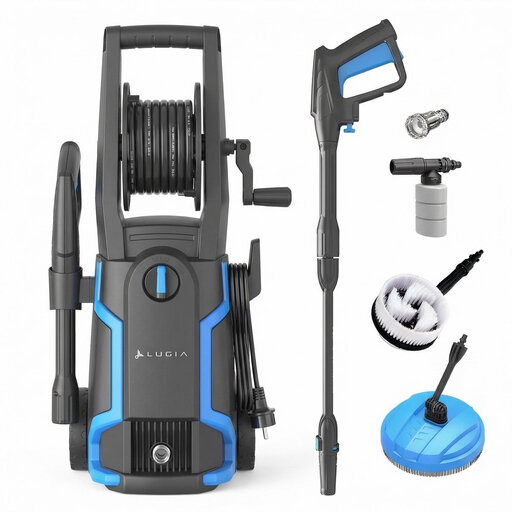
Why this model is a match: Ideal for users who want a single device for various tasks like cleaning cars, patios, and garden furniture, and don't want to buy extra accessories for every application. The combination of 135 bar and 430 L/h provides solid performance for all common cleaning jobs.
It bypasses the accessory cost trap with a complete set that includes a patio cleaner and a rotating brush. The external foam container protects the pump and avoids the drawbacks of an internal tank.
Comprehensive accessory package for out-of-the-box readiness; pump with an aluminium housing and a motor with copper windings for a longer lifespan.
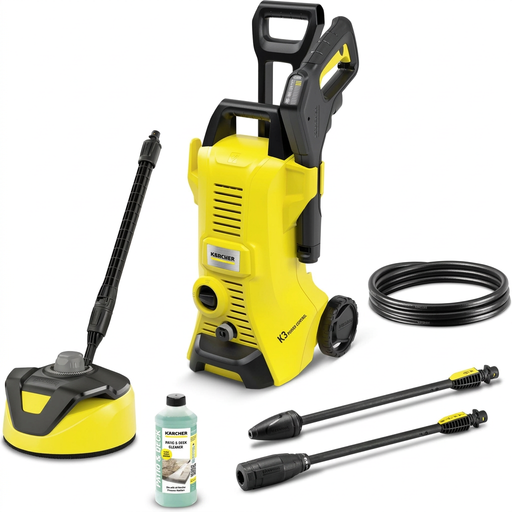
Why this model is a match: Perfect for homeowners looking for a reliable solution from a well-known brand, specifically for the efficient and splash-free cleaning of patios and pathways. The app support helps in selecting the right pressure level for any surface.
The "Home Kit" includes the specialised T 5 surface cleaner. This is an effective tool for a specific purpose, not an unsuitable all-purpose attachment, thus avoiding the trap of useless accessories.
Specialised set for surface cleaning; app integration to assist the user; established brand name of K?rcher pressure washers.
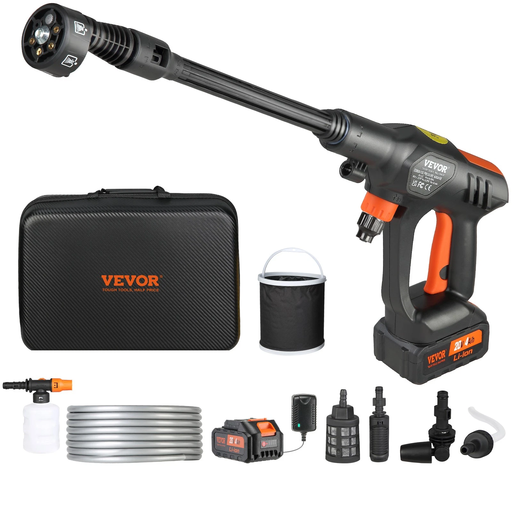
Why this model is a match: The ideal solution for quick cleaning jobs without direct access to a power outlet, such as cleaning a bike after a ride, for balconies in apartment buildings, or for a motorhome at a campsite.
This cordless pressure washer completely bypasses the fundamental limitation of corded models. The dependency on a power outlet and a long extension cord, a potential user error for mobile applications, doesn't exist here.
Cordless operation for maximum flexibility; lightweight and compact for easy transport and storage.
We have compiled a complete, up-to-date list of products that fully meet these strict selection criteria and UK safety regulations.
For most typical cleaning tasks around the house, such as cleaning patios, garden furniture, bicycles, or cars, an operating pressure between 110 and 135 bar is generally optimal. Significantly higher pressure is rarely necessary and increases the risk of damaging sensitive surfaces like wood or car paint. Also, ensure a sufficient water flow rate of at least 380 L/h for efficient work.
Yes, this risk exists with improper use. If you use a pencil jet nozzle or a dirt blaster with too much pressure and at too close a distance, the powerful water jet can wash out the jointing material. To avoid this, it is recommended to use a special patio cleaner. This attachment distributes the pressure evenly over a larger area, and a hood prevents water and dirt from splashing uncontrollably.
The pressure washer is the base unit that generates the water pressure. The patio cleaner (also called a surface cleaner) is a special accessory attachment that connects to the pressure washer's gun. It consists of a hood under which two or more nozzles rotate. This design allows for very even, fast, and above all, splash-free cleaning of large, flat surfaces like patios, driveways, or walkways.