
Lieferung heute & morgen

Qualitätsgarantie

Willkommens-Angebote freischalten: KOSTENLOSE Lieferung | Bis zu 80 % RABATT | Kostenlose 30-Tage-JoyPlus-Testphase
App herunterladen
A pressure washer can clean cars, patios, garden furniture and bicycles much faster than a garden hose. However, a high bar rating alone does not automatically mean you have found the right appliance. Many poor purchases result from misleading performance figures, impractical accessories or an inaccurate assessment of how the pressure washer will be used.
Manufacturers often state the maximum pressure, which can be reached briefly under certain conditions. For regular cleaning, the working pressure is more meaningful. For example, a pressure washer with a maximum pressure of 145 Bar may operate at a working pressure of 125 Bar, according to the product specifications.
You should therefore always check both figures before choosing a model. A 135 Bar pressure washer or a 145 Bar pressure washer may be suitable for patios and vehicles, but the actual cleaning performance also depends on the water flow rate, nozzle and distance from the surface.
Wood, painted vehicle surfaces, grouting, plastic and delicate garden furniture all react differently to water jets. A rotary nozzle or turbo attachment concentrates the jet significantly and should not be directed straight at sensitive materials.
Look for:
An appliance without the right accessories can be impractical despite having good performance figures. A foam cannon and soft brush are useful for washing cars. For patios, a patio cleaner makes it easier to work evenly and reduces splashback.
Before buying, check whether the hose, power cable, nozzles, brushes and detergent attachment are included. When it comes to replacement and additional parts, compatibility with the gun and connection is also crucial.
Pressure is measured in Bar, while the water flow rate is given in litres per hour. Higher pressure can remove stubborn dirt, while a higher flow rate rinses surfaces more quickly. For domestic use, a balanced combination is usually more practical than focusing on a single peak figure.
For example, according to the product specifications, the Lugia pressure washer delivers 135 Bar working pressure, 1,600 watts of power and up to 430 litres of water per hour. The Kärcher K 5 Smart Control is listed with 145 Bar maximum pressure, 125 Bar operating pressure and up to 500 litres per hour.
An electric pressure washer with a 230-volt connection is suitable for longer cleaning jobs near a socket. Pay attention to the cable length, hose length and the storage space available. Wheels and a sturdy handle make it easier to transport the appliance over even surfaces.
A battery pressure washer or mobile pressure washer is useful when there is no socket or fixed water connection available. In this case, battery life, charging time, water source and actual pressure are particularly important. Some compact appliances use an intake filter and can draw water from a bucket, water tank or similar container. Always observe the manufacturer’s specific limitations.
Wear safety goggles and non-slip footwear. Depending on the pressure, the gun can produce significant kickback. Never point the water jet at people, animals, electrical appliances or the pressure washer itself.
For an electric pressure washer, the following are also essential:
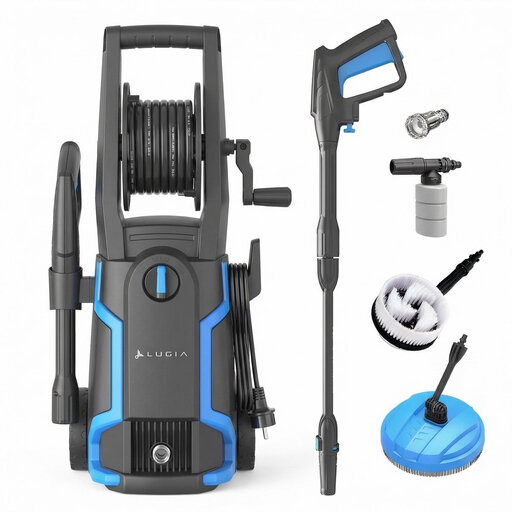
Why this product suits this profile: The appliance combines a 5-metre high-pressure hose and a 5-metre power cable with wheels and a carry handle. It is suitable for everyday jobs involving cars, bicycles, patios and garden furniture.
The adjustable nozzle lets you adapt the cleaning intensity. A patio cleaner, rotating brush, turbo nozzle and external foam cannon are also listed as included accessories.
135 Bar working pressure, a water flow rate of 430 l/h and a start-stop function according to the product description.
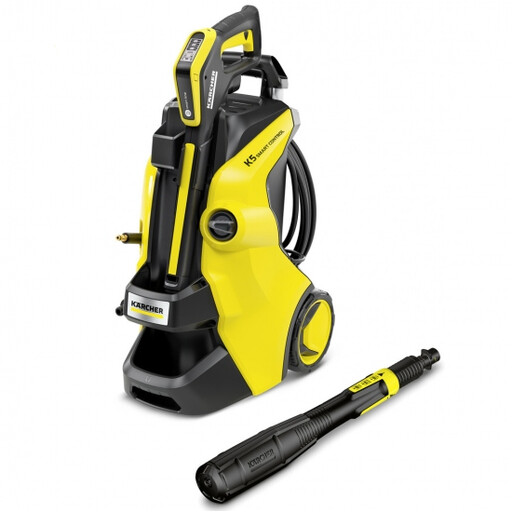
Why this product suits this profile: Its specifications include a water-cooled induction motor, Bluetooth control and a 3-in-1 Multi Jet lance. This suits users who want to compare settings and features systematically.
Listing maximum and operating pressure separately prevents the bar rating from being assessed in isolation. According to the data sheet, the pressure can be adjusted at the gun.
125 Bar operating pressure, up to 500 l/h, an appliance weight of 15 kg and 230-volt mains operation according to the product specifications.
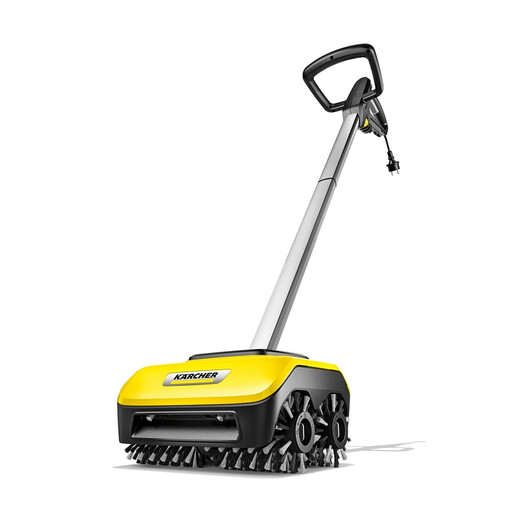
Why this product suits this profile: This electrically powered patio cleaner operates at lower pressure and is designed for wood and WPC surfaces. Four counter-rotating brush rollers cover a working width of 300 mm.
The low pressure reduces the risk of stressing wood or WPC surfaces with a concentrated high-pressure jet. A splash guard helps keep the surrounding area cleaner.
Maximum 10 Bar, water consumption of up to 180 l/h and a height-adjustable handle according to the specification.
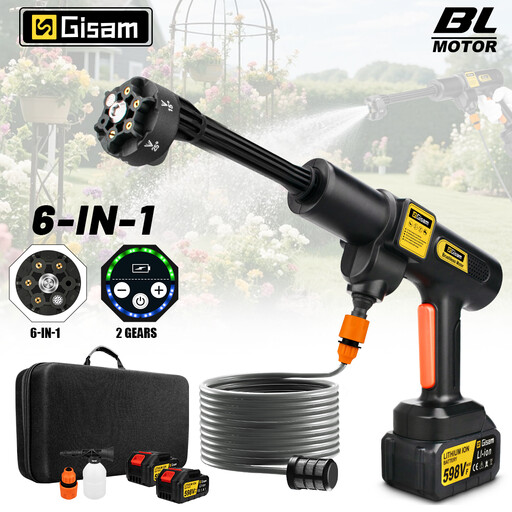
Why this product suits this profile: The cordless appliance is designed for camping, vehicles, bicycles and gardening jobs. According to the product description, an intake filter allows water to be drawn from containers or other suitable water sources.
The pressure setting from 25 to 65 Bar allows for gentler use. The notes on the water connection and the lack of a flow-stop function should be considered before use.
Two batteries, a 5-metre hose, foam attachment, 6-in-1 nozzle and carry bag according to the contents supplied.
We have put together a complete, regularly updated list of products that fully meet these strict selection criteria and the safety regulations applicable in the EU.
When washing a car, use a greater distance from the paintwork and a wide, adjustable nozzle. A foam cannon can distribute detergent evenly. The vehicle should then be rinsed with a sufficient flow of water. Seals, tyre sidewalls and electrical components must not be treated with the high-pressure jet from close range.
On patios, the right method depends on the material. Stone can be cleaned with a suitable patio cleaner. Wood and WPC require a lower pressure setting or a brush attachment specifically designed for these surfaces. Test the setting first in an inconspicuous area.
For a car, the maximum possible pressure is not the deciding factor. An adjustable nozzle, a sufficient distance and a suitable attachment are more important. Appliances in the region of around 100 to 145 Bar can handle a range of tasks, but should be used carefully on vehicles.
Water consumption is determined by the flow rate in litres per hour and the actual operating time. An appliance with a flow rate of 430 l/h will theoretically use more water during one hour of continuous operation than a model rated at 180 l/h. Electricity costs depend on power consumption and usage time. Actual overall costs are also affected by detergent, replacement nozzles and maintenance.
Service life depends on how intensively the appliance is used, water quality, storage and care. The hose and pump should be emptied after every use. Frost can damage components. Only use approved detergents and accessories, and regularly check connections for leaks.