
Lieferung heute & morgen

Qualitätsgarantie

Willkommens-Angebote freischalten: KOSTENLOSE Lieferung | Bis zu 80 % RABATT | Kostenlose 30-Tage-JoyPlus-Testphase
App herunterladen
Purchasing a pressure washer promises a quick and effortless solution for stubborn dirt on patios, fa?ades, or vehicles. But the market is saturated, and many buying decisions lead to frustration when the device doesn't deliver the expected performance or fails after a short time. As your Joybuy Product Recommendation Officer, I'll help you identify the common pitfalls and make an informed decision.
A common mistake is focusing solely on a high bar rating, which is prominently featured in advertising. However, high pressure is ineffective without a sufficient water flow rate. Another cost trap is low-quality or missing accessories. An inexpensive base model can quickly become expensive if every nozzle and brush has to be purchased separately. Finally, the lifespan is often shortened by choosing an unsuitable motor type for the intended use.
To avoid a bad purchase, it's important to interpret the technical data correctly. Instead of being guided by marketing promises, you should check three core parameters that determine the performance and longevity of your device.
The cleaning performance of a pressure washer is not determined by pressure alone, but by the combination of pressure and water flow rate.
Rule of thumb: For cleaning large areas like driveways or patios, a high flow rate (from 450 l/h) is more important. For targeted, stubborn dirt, high pressure is key. A balanced ratio is ideal.
The heart of every pressure washer is the motor-pump unit. There are significant differences here that affect noise level, weight, and lifespan.
A good pressure washer is only as versatile as its accessories. Before buying, check which attachments are included and which are needed for your planned tasks.
Based on these objective criteria, we have compiled a selection of devices for different user profiles.
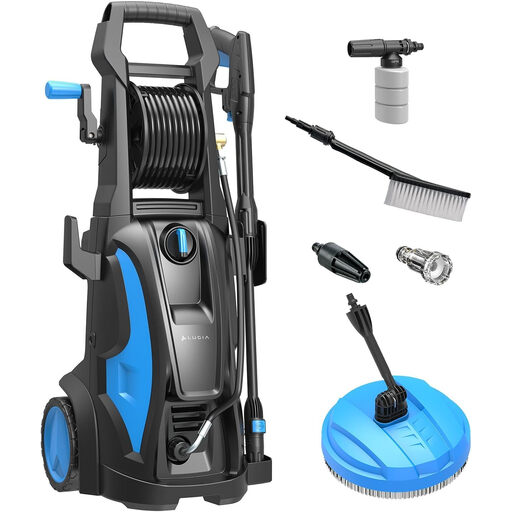
Why This Fits Their Persona: This model offers a powerful combination of high pressure and a high flow rate, which is more than sufficient for most cleaning tasks around the house and garden. It is a pragmatic choice for users who want high performance without the cost of a premium brand.
Includes a complete accessory set, including a surface cleaner and a rotary brush. This avoids hidden follow-up costs for necessary attachments.
High performance specs (185 bar, 550 l/h) and a comprehensive, ready-to-use accessory package.
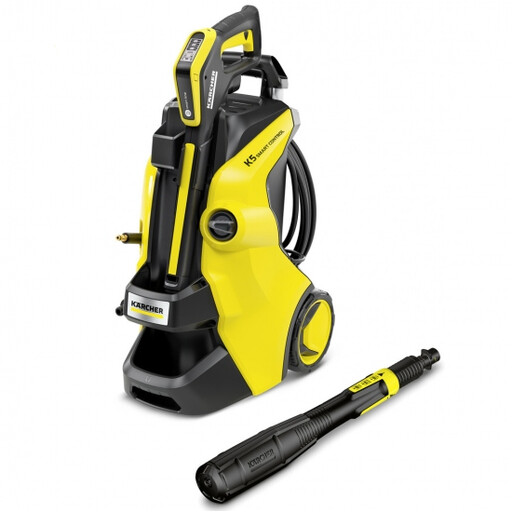
Why This Fits Their Persona: Ideal for users who value durability, performance, and modern features. The app connectivity allows for precise pressure regulation for different surfaces, while the motor is designed for frequent and intensive use.
Addresses the pitfall of the wrong motor type by using a durable, water-cooled induction motor designed for high-frequency use.
App control for precise pressure adjustment and a boost mode for extra power. Durable induction motor with an aluminum pump head.
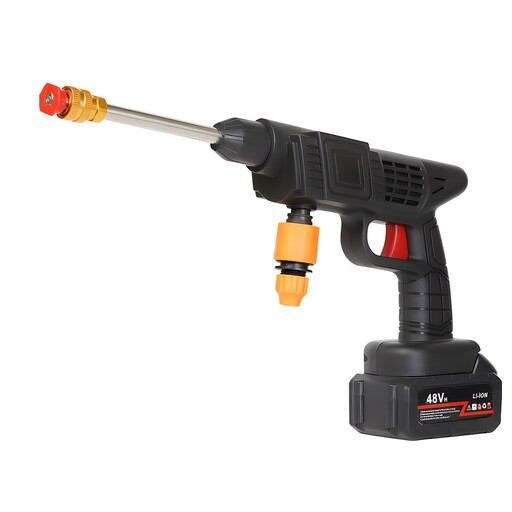
Why This Fits Their Persona: Perfect for users without direct access to a power outlet or for quick cleaning jobs where setting up a corded device would be too cumbersome. Ideal for cleaning bicycles, garden furniture, or small balconies.
This device is clearly positioned as a specialised solution for mobility and doesn't create the false impression of being a full-fledged replacement for a powerful, corded model.
Battery-powered for unrestricted mobility. Low weight and compact design for easy handling and storage.
There are specialised devices available, particularly for maintaining wood and stone patios. We have compiled a selection of products optimised for this task.
Both values are important and must be considered in context. High pressure (bar) breaks up the dirt, while a high flow rate (l/h) washes away the dislodged dirt and increases the area you can cover. For large, lightly soiled areas, the flow rate is more relevant. For small, stubborn spots, pressure is crucial. A balanced ratio of both values leads to the most efficient results.
Yes, but with caution. Never use the rotary nozzle (dirt blaster) on car paint, as it can damage the finish. Instead, use a flat-jet nozzle or a special car wash brush at a sufficient distance (at least 30 cm). A foam nozzle for pre-cleaning is highly recommended to prevent scratches from dirt particles. Be careful not to aim the water jet directly at sensitive parts like tyre valves or seals.
Frost is the biggest enemy of a pressure washer. Before storing it for the winter, the device must be completely drained. To do this, let all the water out of the unit, hoses, and spray gun. The safest method is to briefly run the machine without a water supply (for no more than a few seconds) to remove residual water from the pump. Store the pressure washer and its accessories in a frost-free place like a basement or garage.