
Lieferung heute & morgen

Qualitätsgarantie

Willkommens-Angebote freischalten: KOSTENLOSE Lieferung | Bis zu 80 % RABATT | Kostenlose 30-Tage-JoyPlus-Testphase
App herunterladen
A pressure washer promises quick and effortless cleaning for your patio, facade, and vehicle. But the buying process is filled with pitfalls that can quickly turn this helpful tool into a costly mistake. Many models advertise impressive numbers, but not every specification is relevant to your needs. As your Joybuy Product Recommendation Officer, I'll help you identify the crucial features and distinguish marketing hype from genuine performance.
Before you buy a pressure washer, you should be aware of three common problems that often only become apparent after your purchase:
To find the right pressure washer for your needs, focus on the interplay of these three core factors. A supposed pressure washer test online can be confusing, but these objective criteria will guide your selection.
These two values are inextricably linked and define the actual cleaning performance.
Rule of thumb: For large areas (patios, driveways), a high water flow rate (from 450 l/h) is crucial for working quickly. For targeted, stubborn dirt, high pressure is more important. A good machine offers a balanced combination of both.
The quality of the integrated pump determines your machine's longevity. Pumps with a pump head made of aluminum or, in the premium range, brass are significantly more robust and durable than those made of plastic. Another aspect is motor cooling. Water-cooled motors are often quieter and designed for longer operating times than air-cooled versions.
The right accessories turn a good pressure washer into a versatile tool. Make sure the attachments most important to you are already included in the box:
Here are three models tailored to different user profiles and their specific requirements.
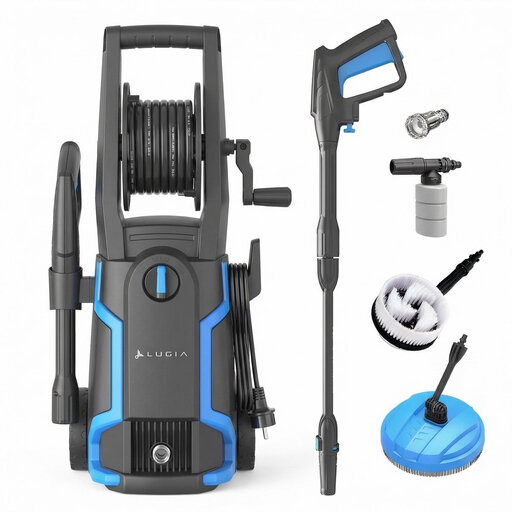
Why this model is a great fit: Ideal for homeowners looking for a reliable machine for typical cleaning jobs like garden furniture, small patios, or the car, without spending a fortune. The performance is perfectly adequate for most standard tasks.
It bypasses the accessory trap with a complete set including a patio cleaner, rotating brush, and external foam cannon. No expensive follow-up purchases are needed for the most common applications.
The external foam cannon protects the pump, as detergent doesn't flow through the machine. The start-stop system reduces wear and saves energy.
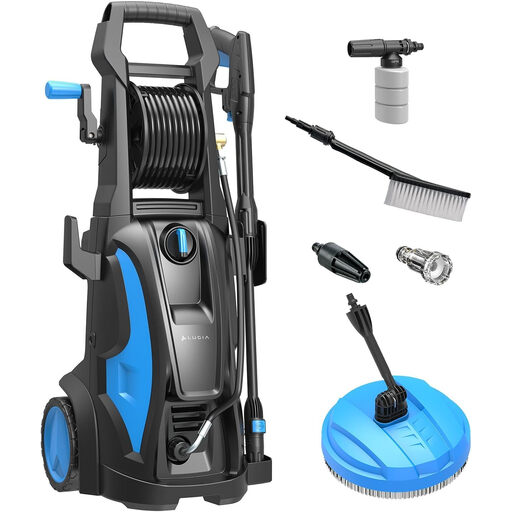
Why this model is a great fit: For users with large surfaces, heavy algae growth, or frequent, intensive cleaning needs. Its high power handles demanding projects like facade cleaning or washing large driveways.
It avoids the "pressure-only" trap through an excellent balance: the high pressure of 185 bar is combined with a strong water flow rate of 550 l/h. This ensures high area coverage and fast work.
High cleaning performance for rapid progress on large and heavily soiled areas. The comprehensive accessory set, including a patio cleaner and turbo nozzle, covers all demanding tasks.
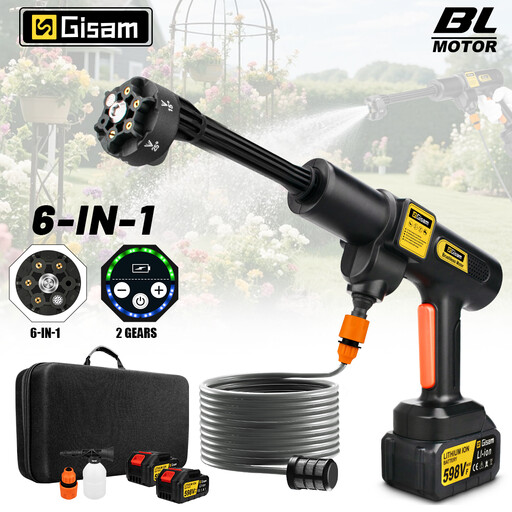
Why this model is a great fit: Perfect for anyone without a nearby power outlet or who needs a lightweight, portable device for quick jobs—such as cleaning bicycles, balcony furniture, or for use while camping.
It avoids the "wrong power class" trap by being clearly positioned as a flexible solution for lighter tasks. The adjustable pressure is ideal for delicate applications and prevents damage.
Complete independence from power and water connections. Thanks to the included hose with a filter, water can be drawn from any source (e.g., a bucket, rain barrel). Two batteries ensure a longer runtime.
We have compiled a complete, up-to-date list of products that fully meet these strict selection criteria and applicable safety regulations.
For most tasks around the house and garden, such as cleaning patios, garden furniture, and cars, a pressure between 110 and 140 bar combined with a good water flow rate (approx. 400-500 l/h) is ideal. Higher pressure above 150 bar is usually only necessary for very stubborn dirt on non-sensitive surfaces like concrete or paving stones.
Caution is advised. Pressure that is too high or a distance that is too short can damage the car's paint. Use a fan nozzle with reduced pressure and maintain a sufficient distance (at least 30 cm). A pressure washer for car applications benefits greatly from a foam lance to gently pre-loosen dirt. Avoid using rotating nozzles on your vehicle.
Although the terms are sometimes confused, they are different devices. A pressure washer cleans with cold or lukewarm water under high pressure. A steam cleaner (or hot water pressure washer) heats the water to over 100°C. The hot steam is particularly effective at dissolving oily and greasy dirt and has a disinfecting effect, but it is rarer and more expensive for private use.