
Lieferung heute & morgen

Qualitätsgarantie

Willkommens-Angebote freischalten: KOSTENLOSE Lieferung | Bis zu 80 % RABATT | Kostenlose 30-Tage-JoyPlus-Testphase
App herunterladen
A pressure washer can clean vehicles, patios, balconies, garden furniture and driveways much faster than a conventional garden hose. However, a high pressure rating alone won’t guarantee you choose the right machine. What matters is how you plan to use it, the water supply, portability and the accessories included.
If you focus only on big numbers in the product description, you may overlook important details. In particular, three common buying mistakes can leave you with a pressure washer that’s impractical for everyday use.
Figures such as 150 bar or 180 bar describe the maximum possible pressure, not necessarily the pressure delivered in every situation. For delicate surfaces such as car paint, grouting, wood or plastic, a controllable water jet matters more than the highest possible pressure rating.
An electric pressure washer with a higher pressure rating can be useful for stubborn dirt on concrete, driveways or durable patios. For a car or garden furniture, however, you should use a suitable nozzle and keep it at an appropriate distance.
A short pressure hose means you’ll have to move the machine more often. So check the hose length, working radius and cable length. Wheels, large tyres and a sturdy handle make it easier to move the machine around the garden or home.
An integrated hose reel can make storage easier. However, it’s only useful if you can wind the hose in and out without kinking it.
Having lots of nozzles doesn’t automatically make a pressure washer more useful. For the job you have in mind, you should have at least an adjustable nozzle, a foam unit or foam sprayer and, where appropriate, a surface cleaner.
A patio cleaner distributes the water jet more evenly and can reduce splashing. A foam cannon for car washing or a separate foam sprayer helps you apply detergent, but it doesn’t replace correct dosing or proper care of the surface.
Pressure is measured in bar, while the water flow rate is usually given in litres per hour. If you’re looking for a pressure washer for your car and home, adjustable pressure is particularly important. A machine rated at 150 bar may be suitable for patios, balconies and vehicles, provided you adjust the nozzle and distance accordingly.
A model rated at 180 bar with a higher water flow rate is better suited to larger outdoor areas such as driveways, fences or heavily soiled hard surfaces. Actual water consumption depends on how long the machine runs and its flow rate. An automatic start-stop function can save water by stopping the pump when you release the trigger.
An electric pressure washer provides a steady power supply for longer cleaning jobs. Check that there’s a suitable socket within reach and that the cable is long enough for where you’ll be using it.
A battery-powered pressure washer is more flexible, especially when camping, on a large property or in places without a mains connection. In this case, battery capacity, charging time and runtime are key considerations. Compact battery-powered models often operate at considerably lower pressure than mains-powered machines. They’re better suited to light or moderate cleaning jobs, watering plants or a quick car wash.
Not every portable pressure washer can be connected directly to a tap. Some battery-powered models draw water from a bucket, container or water butt. A filter can trap impurities, but the water source should still be free of coarse sand and grit.
When it comes to the pump, check its design and the manufacturer’s specifications. For example, the Cecotec model features an Aluminium HardPump. You should also check connections, seals, filters and the pressure hose regularly for wear.
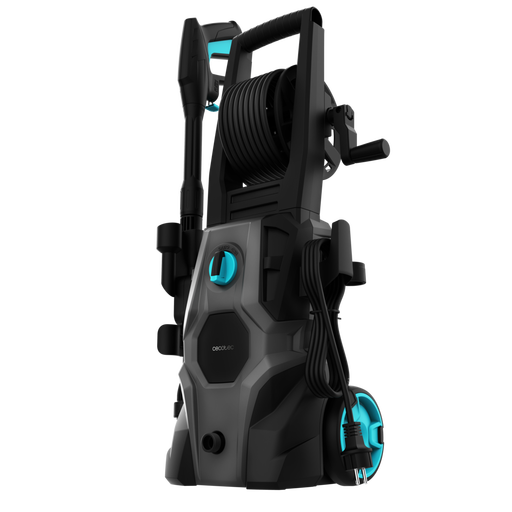
Why this product suits these needs: This mains-powered pressure washer combines 2,000 W, 150 bar and 450 l/h for regular cleaning jobs around the car, patio, balcony and home.
The pressure and flow rate are complemented by an 8-m pressure hose, wheels, a handle and automatic start-stop. Accessories include a foam bottle, surface cleaner and several brushes.
Aluminium pump, 450 l/h flow rate and accessories for hard surfaces, wheels and foam application.
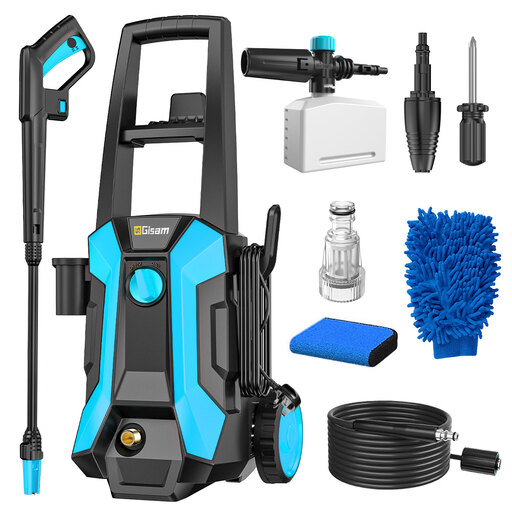
Why this product suits these needs: With 2,200 W, 180 bar and a flow rate of 480 l/h, this model is designed for larger outdoor areas, fences, patios and driveways.
The 8-m hose extends your working range. A hose reel helps keep the hose neatly stored and reduces the risk of kinks.
Rotating nozzle, foam nozzle, detergent container and pressure gun for different surfaces.
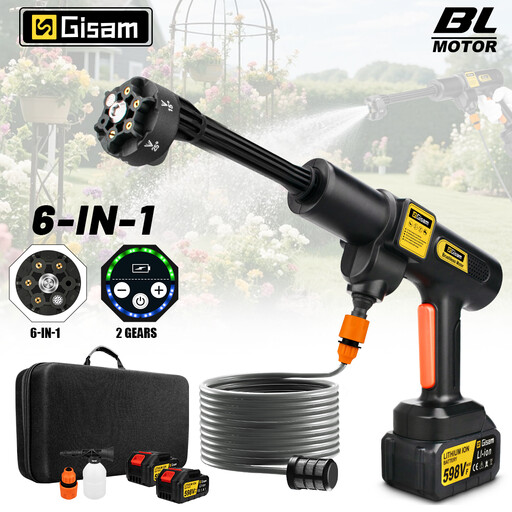
Why this product suits these needs: This portable battery-powered pressure washer is designed for camping, motorhomes, cars, gardens and cleaning jobs where there’s no fixed water connection.
According to the product specifications, the pressure can be adjusted from 25 to 65 bar. This lets you switch between cleaning jobs and gently watering plants.
Two batteries, 5-m hose, 6-in-1 nozzle, foam attachment, filter and storage bag; draws water from a bucket, water butt or similar source.
We’ve put together a complete, regularly updated list of products that meet these strict selection criteria and fully comply with the safety regulations in force in the EU.
For washing a car, the maximum pressure isn’t the only thing that matters. An adjustable nozzle, keeping a suitable distance and using a foam sprayer are all important to avoid putting unnecessary strain on the paintwork, seals and plastic parts. Machines with a lower pressure setting may be easier to control around delicate areas.
Its lifespan depends on how often you use it, water quality, storage and maintenance. After use, drain any remaining water from the hose and machine, clean the filter and check that the connections are watertight. In winter, store it somewhere dry and protected from frost.
Running costs are mainly made up of electricity, water and, where applicable, detergent. For a realistic estimate, compare the power consumption with the actual running time and take the stated water flow rate into account. An automatic start-stop system can reduce consumption during short breaks in use.